
By the Crown Trim Roofers team · Published · Updated
Most failures on a commercial roof in Southern California are not dramatic. A drain clogs in October, a few inches of water sit through a February storm, a sealant bead at a rooftop unit dries out, and a ceiling tile in a tenant suite turns brown. A maintenance plan, part of our commercial roofing work, exists to catch those small things while they cost little. Our commercial roof maintenance service page covers how we run visits. This post is about what the plan itself should say, whoever carries it out.
What should a commercial roof maintenance plan cover?
A plan has to be specific or nobody can be held to it. Ask for these items in writing.
- Visit schedule. Dates or seasons, not "as needed."
- Roof map. A numbered plan of each roof section, so findings can be matched to locations year after year.
- Inspection scope. Membrane or panels, seams, flashings, edges, drains and scuppers, penetrations, rooftop equipment curbs, skylights and access points.
- Minor repairs included. Resealing a pipe boot, clearing a drain, tightening loose fasteners. Say what is covered and what gets quoted separately.
- Reporting. Photos, findings and a priority list after each visit.
- Roles. Who calls whom when a leak shows up between visits, and who can authorize spending.
If a proposal is a single paragraph promising "regular inspections," it is not a plan yet.
Which parts of a flat roof need the most attention?
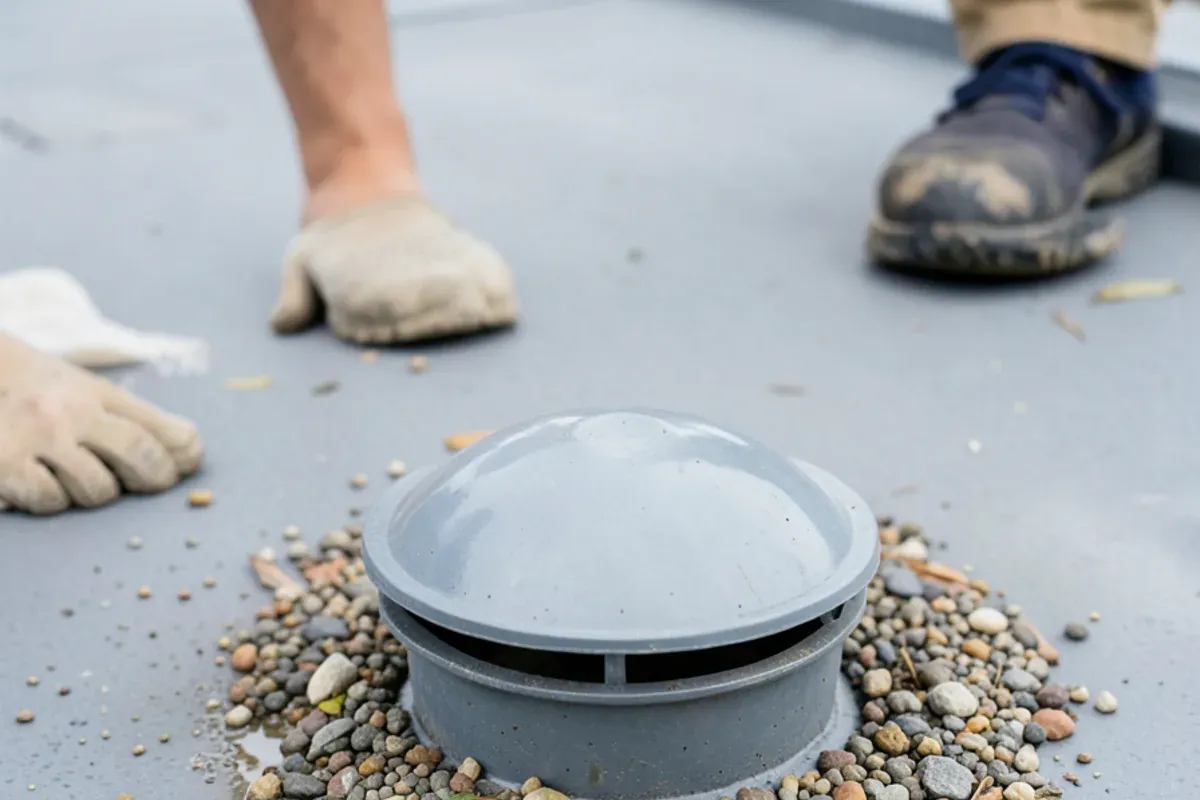
Flat and low-slope roofs shed water slowly, so anything that slows it more causes trouble. These are the spots to put on the property manager roof checklist:
| Area | What goes wrong | What a visit does |
|---|---|---|
| Roof drains and scuppers | Leaves, trash and grit block flow; ponding follows | Clear, flush, check strainers and overflow paths |
| Seams and laps | Open edges, lifted tape, cracked sealant | Probe seams, re-seal or patch |
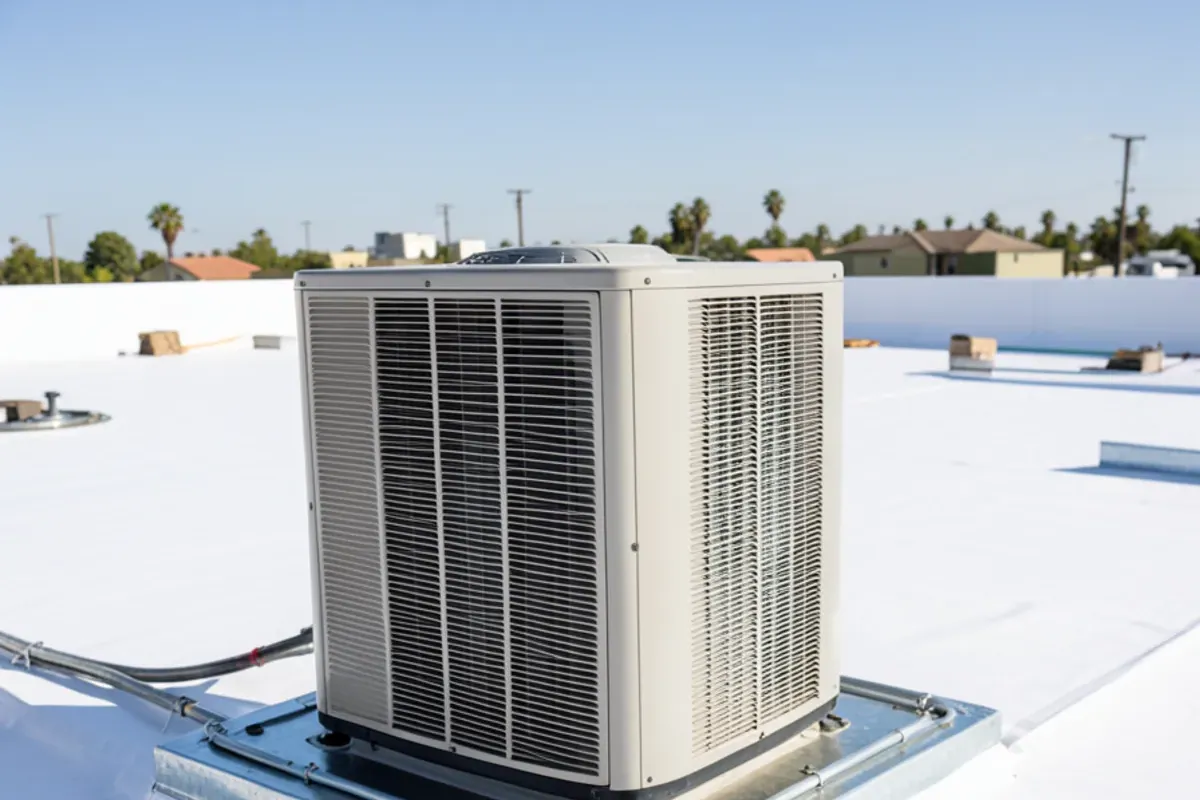
| Curbs and equipment | Dried sealant, loose counterflashing, condensate lines dumping on the membrane | Reseal, re-secure, redirect water |
| Penetrations | Cracked pipe boots, open conduit entries | Replace boots, seal entries |
| Parapets and edges | Failed coping joints, open terminations | Seal joints, secure edge metal |
| Walk paths | Foot traffic wears the surface near units | Add or replace walk pads |
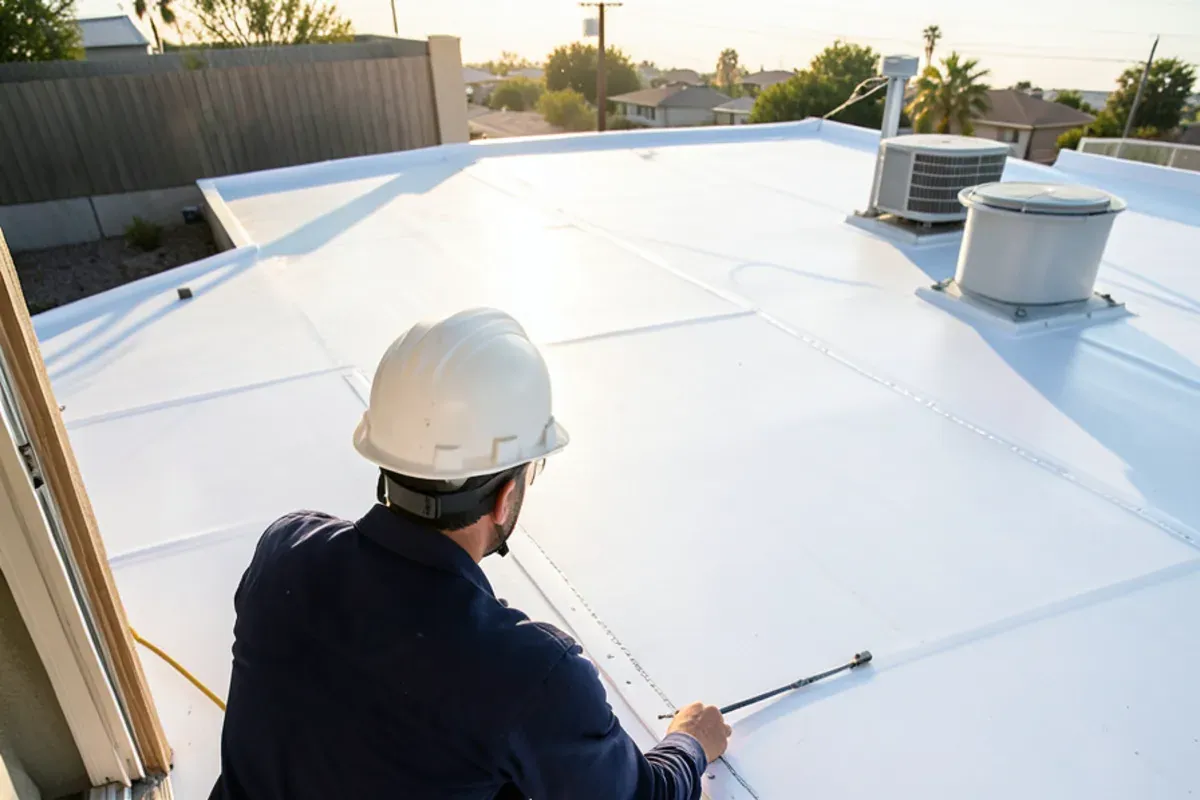
Standing water deserves its own note. A roof that holds a puddle for days after rain is telling you the slope, a drain or a deck is off. Our post on ponding water on a flat roof explains how much is too much.
Why does drain maintenance come first?
Drains carry the whole roof's water. When one clogs, water finds the lowest weak point instead, and that is usually a seam or a curb. Southern California adds its own twist. We get about 14 inches of rain a year, mostly in the winter months, so debris builds all summer and then gets hit with a storm. Drain maintenance in late October is the single cheapest visit on the calendar.
Check also that overflow scuppers are open. Roofs with parapets rely on them as a second exit when the main drains block.
What does a year of visits look like in the South Bay?
The calendar below fits a typical low-slope roof in our climate. Torrance gets about 14 inches of rain a year, with February the wettest month at roughly 3.5 inches, so the schedule leans toward the fall.
- Early to mid October. The pre-rain visit. Clear drains and scuppers, probe seams, check curbs and pipe boots, and fix what can be fixed before the first storm.
- After the first big storm. Look for ponding that lasts more than a day or two, new stains inside the building and debris blown onto the roof.
- February or March. A short check at the peak of the wet season, mostly drains and any repair that was patched as a temporary measure.
- April or May. The post-season visit. Record winter damage, plan larger repairs while the weather is dry and set next year's budget.
- After other trades. Any time an HVAC, solar, signage or cabling crew works on the roof, have the roofer look at the penetrations and walk paths they used.
Buildings under trees, or next to a dusty lot or construction site, may need an extra drain visit in late summer.
How does a plan protect a roof warranty?
Membrane and metal panel warranties commonly ask the owner to keep the roof maintained and to keep records. The wording varies by manufacturer and by contract, so read yours. Typical expectations include periodic inspections, prompt repair of damage, and no unapproved work or penetrations by other trades. A dated condition report after each visit is the evidence that you did your part. Our guide to roof warranties, material versus workmanship explains the difference between the two types.
If an air conditioning contractor cuts a new penetration, have the roofer reseal it and note it in the log. That one habit prevents many warranty disputes.
What decides what a maintenance plan costs?
A fair price cannot be set without seeing the roof, and we do not quote prices in a blog post. What moves the number is easy to list.
- Roof area and the number of separate roof sections.
- Roof type. A membrane roof with long seams takes more time to probe than a metal panel roof with few.
- Access. A fixed ladder, an interior hatch or a lift each changes the setup.
- Penetrations and rooftop units. Every one is a place to check and reseal.
- Visits per year, and whether drain clearing and minor repairs are bundled in or billed as found.
- Roof condition. A roof that has gone years without attention needs a baseline repair visit before a routine schedule makes sense.
- Reporting depth. A photo log tied to a roof map takes longer than a one-page checklist.
Published 2026 cost guides put typical roof repairs at about $300 to $1,500. Use that range as a sanity check on a single repair, not as a price for a contract. Ask each provider to price the same visit count and the same inclusions.
How do you manage a plan across several buildings?
With more than one roof, a spreadsheet beats a binder. Give each roof an ID and record the roof type, install year, warranty end date if known, last inspection date and the next action. Rank the roofs by age and condition, then spend time and budget on the worst ones first. A roof near the end of its life needs more frequent visits and an early replacement budget, while a newer one may need a single visit a year.

Keep one contact per site for roof access, since a roofer who cannot reach the hatch or the lift key loses the visit. If you hire different providers for different sites, ask for the same report format so your records match.
What do our roofers look for on a visit?
This is the part of the day owners rarely see, so here is how we think about it. We walk the whole roof, not just the areas near known leaks. We look at drains first, then curbs and penetrations, then seams and edges, and we photograph each finding so you can see it too. We pay attention to the roof's age, because a 1960s-era commercial building in Torrance may be on its second or third roof, with older layers underneath that hold moisture.
We explain repair and replacement options in plain terms. If a small repair will do, we say so. A maintenance report should help you decide when a roof is worth keeping and when to start budgeting for commercial roof replacement, not push you toward one.
What goes into a roof condition report?
Treat the report as a living file for the building:
- Identification. Address, roof section numbers, approximate area, roof type and age if known.
- Photos. Dated, tied to the roof map.
- Findings. Plain description of each defect and its location.
- Work done. What was repaired or cleared on the visit.
- Action items. Ranked as immediate, within the season, or monitor.
- Outlook. A frank estimate of how much life the roof has and when to budget for the next big step.
Lenders, insurers, buyers and new management companies all ask for this kind of record. Having it ready saves a scramble.
Next step
If you manage one building or twenty, start by getting a written baseline of each roof. Our commercial roofers are happy to look at yours, show you photos of what they find and explain the options. A free inspection is the easiest first page of the file. If your building is in Torrance or nearby, we can usually schedule same day or next day service for urgent leaks. For help setting up a schedule, talk to a roofing contractor in Torrance about your portfolio.