
Commercial Roofing in Torrance, CA
- 4.8★ from 73 Google reviews
- Free estimates
- Same day or next day service
- Photos of what we find
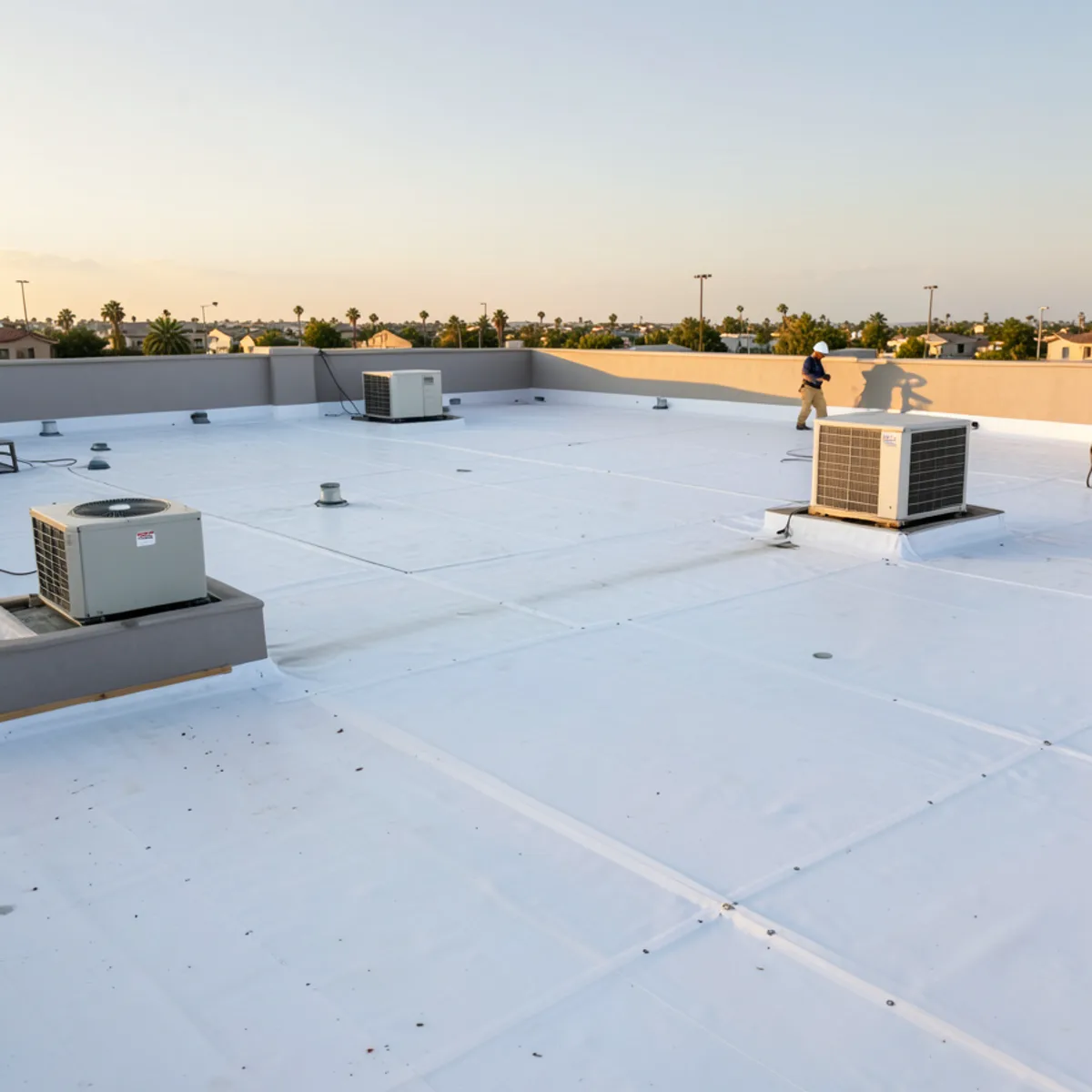
Commercial roofing in Torrance, CA is mostly low-slope work: membranes, seams, drains, parapets and the curbs that hold rooftop equipment. These roofs fail in ways a pitched house roof does not, and the owner often learns about it from a tenant, not from the roof. This page explains the building types we work on, how we assess a flat roof and where to go next for repair, replacement or upkeep.
Commercial roofing in Torrance: the buildings we work on
The South Bay mixes everything on a few miles of road. Shops and offices along Hawthorne Boulevard and Pacific Coast Highway, apartment buildings on the side streets, industrial buildings toward the airport side of town, storage yards and metal-roofed units tucked behind them. Each one carries a different roof and a different owner.
We work on homes, apartments, HOAs, storage facilities and commercial buildings. The service pages below split that work by what the building needs:
- Commercial roof repair for leaks over tenant space, failed seams and equipment curbs.
- Commercial roof replacement for retail, office and industrial re-roofs.
- Commercial roof maintenance for scheduled inspections and drain care.
- Warehouse and industrial roofing for tilt-up and large low-slope roofs.
- Metal building and storage facility roofing for panels, seams and fasteners.
- Apartment and HOA roofing for multi-building properties and resident notice.
One Google reviewer described managing a storage facility in Torrance and needing important repairs on the metal roofing and storage units. That is the sort of job where the roof is part of the business, because a leak means damaged goods and an unhappy customer.
What does a commercial roofing job include?
Scope changes with the building, but the deliverables stay consistent. Each visit should leave you with something you can hand to an owner, a lender or a board.
- A walk of the whole roof with photos of seams, drains, flashing, penetrations and equipment curbs.
- A sorted findings list: leaks to fix now, items that can wait, and replacement planning for later.
- Repair of the failed detail, whether that is a seam, a pipe boot, a curb or a drain collar.
- Replacement options explained in plain terms, with line items you can compare, when the system is past repair.
- Permit details on re-roofs, tenant access planning and thorough cleanup around the building.
- Scheduled upkeep for owners who want drains cleared and the roof checked before each rainy season.
Ceiling tile and drywall inside a tenant space are outside roofing scope, but we document the roof side so whoever repairs the interior knows the cause.
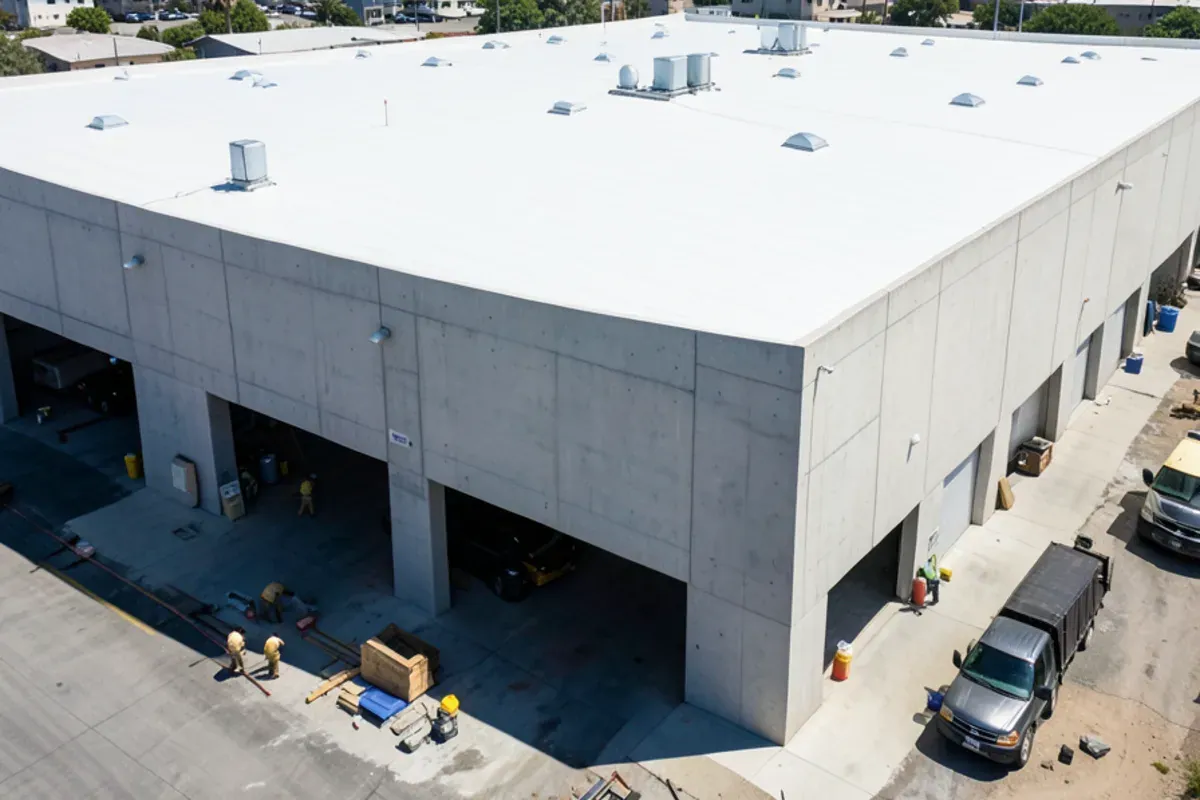
Why do low-slope commercial roofs fail differently from house roofs?
A pitched roof sheds water by gravity. A flat roof holds it, even if only for a few hours, and every weak point gets tested each time it rains. The failures we see most often are in the details, not the open field:
- Seams in the membrane that open as the material expands and contracts in the sun.
- Drains and scuppers clogged with debris, which leaves water standing against laps.
- Flashing at parapets and walls that has cracked or pulled away.
- Penetrations, such as pipes, conduit and vents, where sealant has aged out.
- Curbs under HVAC units, where vibration and service traffic wear the surface.
- Foot traffic from technicians, which punctures thin membranes.
Tenants usually spot the trouble first: a stained ceiling tile, a musty smell near a wall, or a drip that only shows after wind-driven rain. On the roof, look for water still standing two days after a storm, blistered or bubbled membrane, and sealant that has cracked open at a pipe or curb.
Our flat roofing pages cover those systems in more depth. If you want the repair view first, flat roof repair explains how we handle the smaller failures.
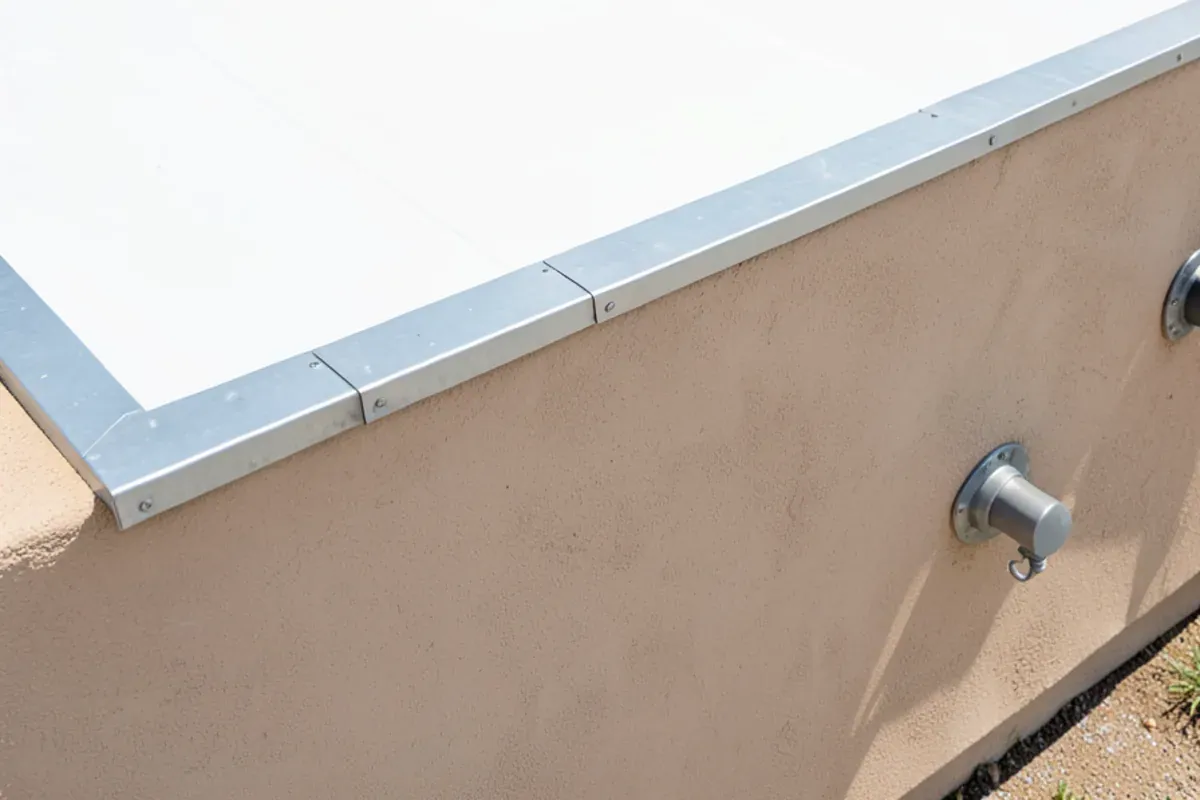
Choosing a system for a large flat or low-slope roof
There is no single correct material. The choice follows the deck, the drainage, what sits on the roof and how long the owner plans to hold the building. A rough comparison:
| System | Where it fits | Trade-off |
|---|---|---|
| TPO or PVC single-ply | Large roofs, reflective surface, heat-welded seams | Seam quality depends on workmanship; punctures need patching |
| Modified bitumen (torch down) | Roofs with steady foot traffic | Multiple layers add weight; open-flame methods need extra care |
| Built-up roofing (hot mop) | Layered redundancy on older buildings | Heavier, slower, and fume and fire planning matter |
| Fluid-applied coating | Roofs with sound substrate that need a new surface | Only works when the existing roof is dry and still solid |
| Metal panels | Pitched or low-slope metal buildings | Fasteners, laps and sealant need regular attention |
Our pages on TPO and PVC roofing, hot mop and built-up roofing and roof coatings go through each in detail. Energy code rules, including cool roof requirements for low-slope roofs, come from the California Energy Commission and depend on climate zone and how much of the roof is replaced. Confirm them for your address with the city building department.
When business roof repair is enough
Most leaks that reach a ceiling tile come from one detail. A seam, a curb, a drain collar, a cracked sealant joint. We find the entry point, show you photos and repair that spot, and we say so plainly when a repair will not hold. Wet insulation across a wide area or a membrane that has gone brittle everywhere is a different conversation, and then we explain replacement options in plain terms without pushing a full tear-off.
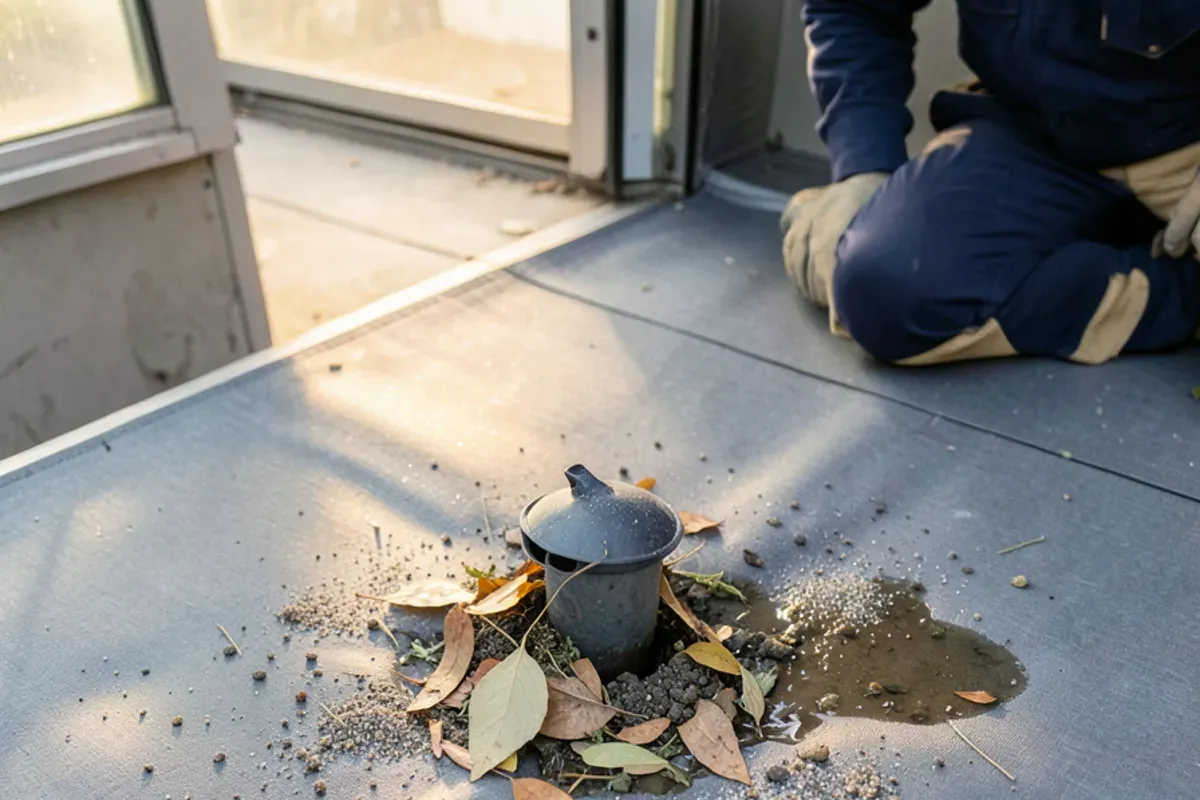
Leaks over a tenant space add pressure, because the tenant wants an answer today. We offer same day or next day visits, and we can place temporary protection while a permanent repair waits for dry weather.
What does property manager roofing look like in practice?
Managers need three things from a roofer: a clear picture of the roof's condition, a way to explain it to an owner or board, and a schedule that respects tenants. We put that into practice like this:
- We walk the roof and record its condition with photos.
- We sort findings into urgent leaks, items that can wait and long-term replacement planning.
- We explain each option in plain terms so you can pass it along.
- We coordinate access, parking and tenant notice with you before work starts.
- We clean up thoroughly and protect landscaping and driveways around the building.
If the property has a reserve study or a lender asking questions, bring it to the estimate. Roof age and condition feed directly into those numbers.
What moves the price of a commercial roof?
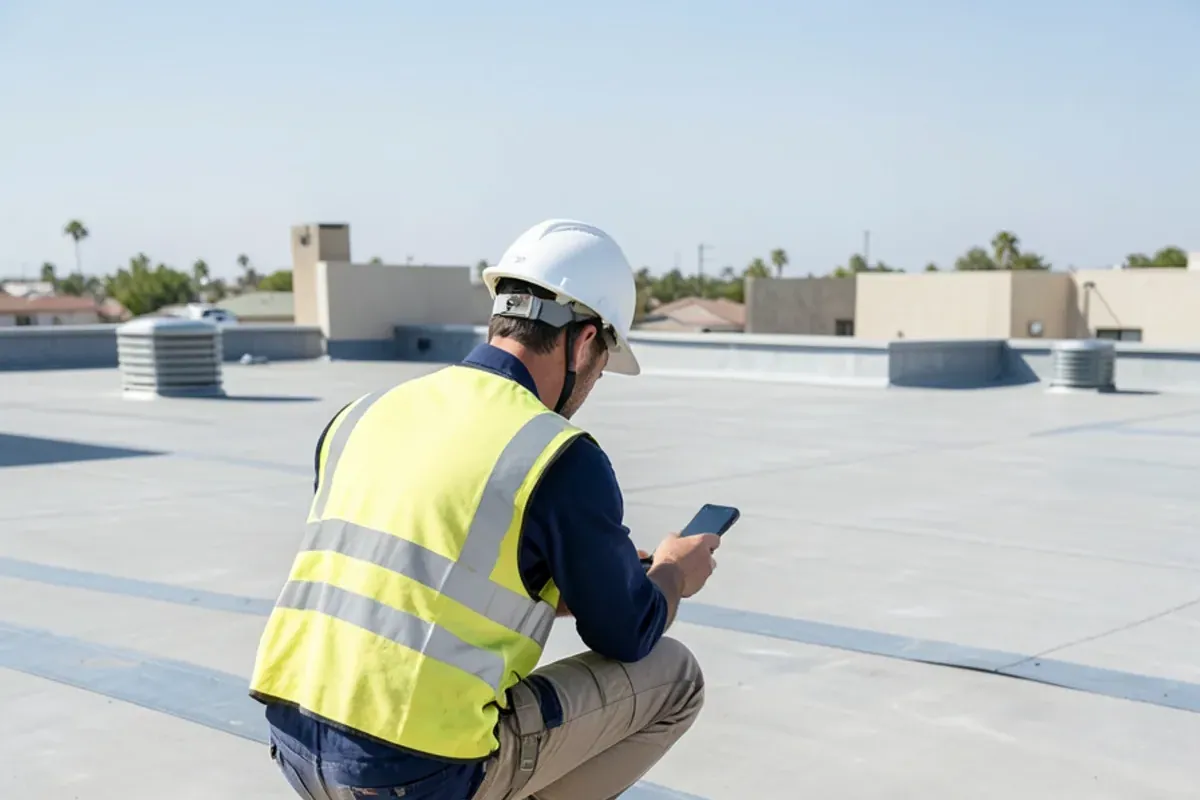
Estimates and roof inspections are free, and we do not quote prices on a web page. Published cost guides for roof repair sit well below those for replacement, and commercial work varies far more than residential because the roofs are bigger and more varied. The factors that move a commercial number:
- Roof area, and how many separate roof levels there are
- The existing system and whether it can be recovered or must be torn off
- Deck condition and wet insulation
- Equipment on the roof that must be disconnected or flashed around
- Access, hoisting and staging, especially for multi-story buildings
- Phasing around tenants, working hours and noise limits
- Permit and energy code requirements for the building
Ask about financing at your estimate if a large project needs it spread out.
Who regulates a commercial roof in Torrance?
Inside city limits, roofing permits come from Torrance Building & Safety, which can be reached at (310) 618-5910. Buildings in unincorporated county areas go through LA County Public Works, and City of Los Angeles addresses go through LADBS. Energy rules for nonresidential roofs sit in Title 24, Part 6, set by the California Energy Commission, and cool roof requirements for low-slope roofs depend on climate zone and how much of the roof is replaced. Rated products are listed in the Cool Roof Rating Council directory. California roofers are licensed through the Contractors State License Board, so check any roofer's license on the CSLB website before you sign.
Why Crown Trim for commercial roofs?
- Reviewers rate us 4.8 stars across 73 Google reviews.
- We show you photos of what we find, and we explain repair and replacement options in plain terms.
- A repair comes first when a repair will do.
- Free estimates and free roof inspections, with same day or next day service.
- We handle permit details on re-roofs and keep cleanup thorough.
Reaching Carson, Hawthorne and the rest of the South Bay
Our base is on Pacific Coast Highway in Torrance, and commercial work runs across the surrounding cities. In Carson and Gardena the roofs tend to be larger industrial and warehouse buildings. Hawthorne and Redondo Beach mix retail strips, offices and apartments. On the hillsides of Rancho Palos Verdes, the commercial buildings are fewer and wind exposure is higher. Each city has its own building department, so permit steps differ by address.
Where we do commercial roofing around Torrance
Each place brings its own version of this job.
- Carson: Carson's refinery-belt and warehouse roofs along the 405 and 110 are large low-slope systems where seams, drains and equipment curbs decide the maintenance schedule.
- Gardena: Small industrial lots mixed with older commercial strips mean Gardena owners often need a repair-or-replace answer on mid-sized flat roofs.
- Hawthorne: Hawthorne's aerospace-era buildings and many small apartment blocks sit on flat or low-slope roofs that need drain care and clear tenant notice.
- El Segundo: Office, aerospace and industrial roofs east of Sepulveda carry heavy rooftop equipment, so curb flashing and walk-pad wear matter here.
- Redondo Beach: Salt air near King Harbor and the Pacific Coast Highway corridor corrodes metal flashing and fasteners faster on retail and condo roofs.
- Long Beach: Port-side commercial buildings and older retail blocks make Long Beach the widest range of low-slope roofs within reach of our Torrance base.
- West Rancho Dominguez: Warehouses stand beside older composition houses near Rosecrans and the 110, and county permits apply rather than a city building department.
- Vernon: An almost entirely industrial city where cold-storage, food-processing and warehouse roofs are the whole market and downtime is costly.
- Rancho Palos Verdes: Fewer commercial buildings, but hillside wind exposure and marine air make roof edges and flashing on retail and institutional roofs work harder.
- Irvine: Irvine Spectrum's large commercial roofs sit among master-planned villages, so we inspect and explain repair or replacement options for owners and property managers.
What customers say about this work
Crown Trim Roofers holds 4.8 stars from 73 Google reviews. Read all reviews
“I recently needed a roof repair on my rental property, and Kingston from Crown Trim Roofers came out to take a look.”
“Kingston got back to us right away, checked the damage, explained the needed roof and gutter repairs, gave us a fair estimate, and scheduled the job.”
“The whole process, from getting an estimate to the final clean-up, was smooth and stress-free.”
Commercial Roofing: common questions
Can you work on a commercial roof without shutting down our business?
Usually yes, though it depends on the building and the scope. Roof work happens above your tenants, so we plan access, staging and noise with you before we start, and we work section by section on larger jobs. Leak repairs are often small enough to run during normal hours. Tell us your busiest hours and we build the schedule around them.
What information does a Torrance property manager need for a roof budget?
Start with the roof type, approximate square footage, age, and any past repair records. Add leak locations and which tenants were affected. We inspect, photograph the condition and explain repair and replacement options in plain terms, so your budget rests on what the roof actually needs. If the building is in a reserve study or sale process, tell us that up front.
Which roof system fits a large low-slope commercial building?
Single-ply membranes such as TPO or PVC, built-up roofing, modified bitumen and coating systems all suit low-slope roofs, and each has trade-offs in seams, foot traffic, reflectivity and repair. The right pick depends on the deck, drainage, equipment on the roof and your budget. See TPO and PVC roofing and torch down roofing for the differences.
Do you handle permits for a commercial re-roof in Torrance?
We handle permit details on re-roofs. Torrance Building & Safety issues roofing permits inside city limits, and its number is (310) 618-5910. Requirements, including energy code rules for low-slope roofs, depend on the building and how much of the roof is replaced, so confirm them for your address before work is priced.
Do you work on apartment buildings and HOA properties?
Yes. We work on homes, apartments, HOAs, storage facilities and commercial buildings. Multi-building properties are normally scheduled in phases, and resident or tenant notice is planned with the property manager or board. See apartment and HOA roofing for how those projects are run.
How do I know whether my commercial roof needs repair or replacement?
Look at how widespread the problem is. A few failed seams, a cracked pipe boot or one leaking curb is a repair. Wet insulation across large areas, repeated leaks in different places, or a membrane that is brittle across the field points toward replacement. We show you photos and explain both paths before you decide.
Related services and guides
Commercial Roof Repair
Commercial Roof Replacement
Commercial Roof Maintenance
Commercial Roof Maintenance Plans for Property Managers
HOA Roof Replacement: A Board Member's Guide
Warehouse Roof Leaks in Torrance: Finding the Source
Where we work: Carson, Hawthorne, Redondo Beach, Gardena, Rancho Palos Verdes and the rest of our service areas.
Flat roof, tenants below? Get the roof looked at first.
Call first. A roofer picks it up from there.