
By the Crown Trim Roofers team · Published · Updated
A skylight is a hole in the roof with a window in it, so it has several ways to go wrong. The good news is that the three main causes behave differently if you watch when and where the water shows up. This post is part of our skylight guides, and the repair itself is described on our skylight repair page.
Why does the same stain have three possible causes?
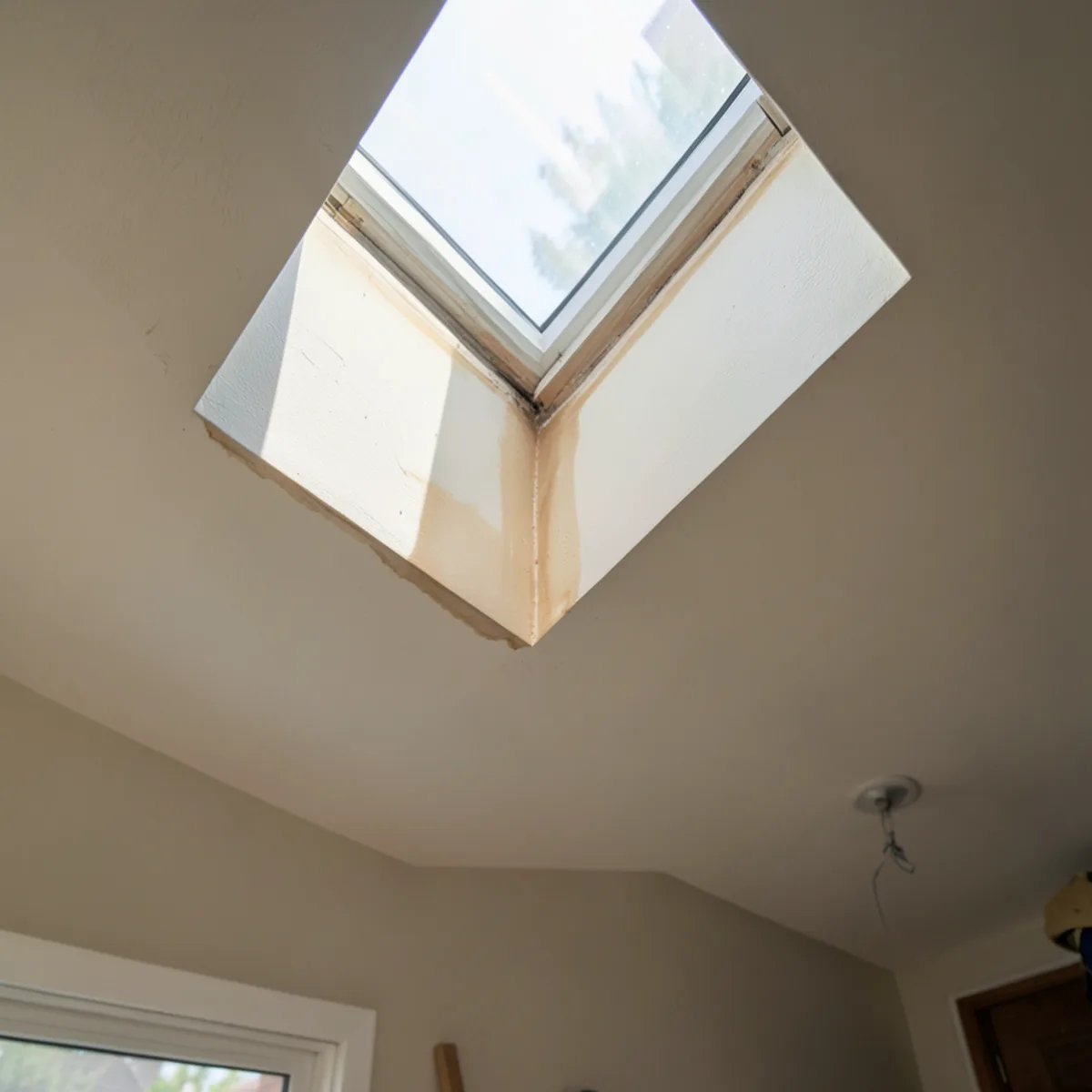
Water, mold and fogged glass all show up around the same spot inside the house, and each starts somewhere different.
- Flashing or curb failure. Rain gets past the metal that seals the skylight to the roof.
- Seal failure in the glass unit. The factory seal between two panes breaks and moisture gets in.
- Condensation. Indoor humidity forms droplets on cold glass. Nothing is leaking.
Before you replace anything, sort out which one you have.
How do you tell a flashing leak from condensation?
Time and weather give it away. Check the table, then try the test below it.
| Clue | Flashing leak | Failed glass seal | Condensation |
|---|---|---|---|
| When it shows | During or right after rain | Any day, as a haze | Cool, damp mornings |
| Where | Light well, ceiling edge, framing | Between the two panes | Inside surface of the glass or frame |
| Dries on its own? | Slowly, days after rain | No, the haze stays | Yes, by midday |
| Stain on drywall | Often | No | Rarely, unless it runs for months |
A simple check: wipe the glass and frame dry on a dry morning. If moisture returns without rain, it is condensation. If you see staining only after storms, it is water coming in from outside.
Where does flashing let water in?
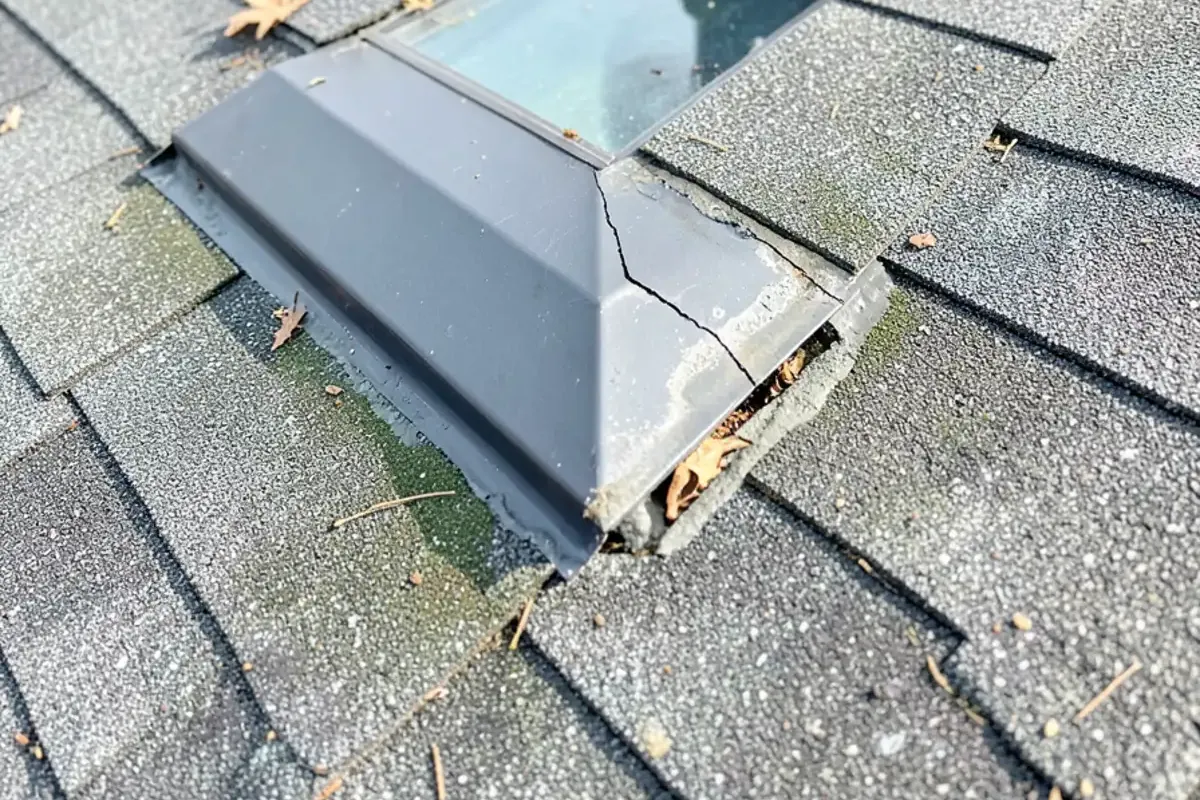
The curb and flashing take the most abuse.
- Upper corners and the high side. Water flows down the roof and piles against the skylight, so a small gap at the top gets the most flow.
- Rusted or lifted step flashing along the sides, especially on older roofs.
- Cracked sealant. Caulk someone added in an earlier repair hardens, shrinks and splits.
- Debris against the curb. Leaves and grit dam water and force it into seams.
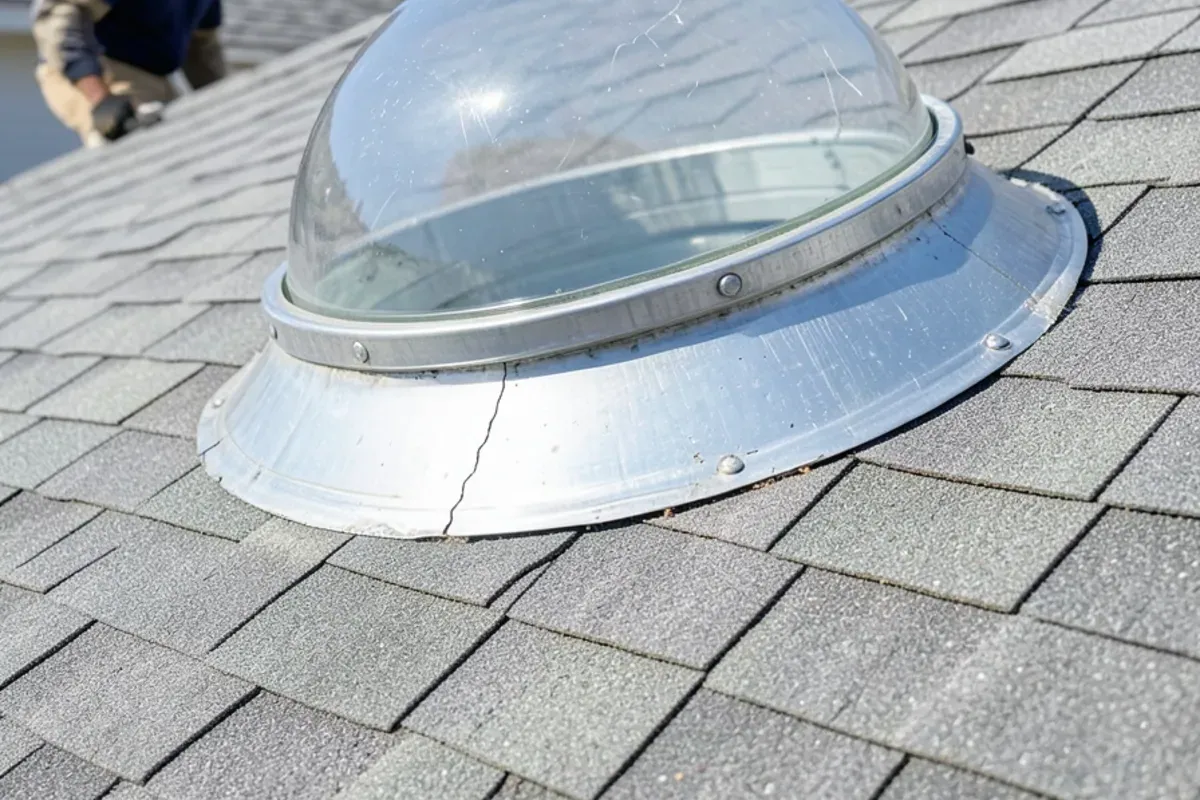
- A cracked acrylic dome that has yellowed and gone brittle in the sun.
One Google reviewer named an older skylight among the extra challenges on a roofing project. Another reviewer said the roofer mentioned updating a skylight but was upfront that theirs still had several good years left, with no pressure to replace it. That is the right spirit: a leak at the flashing is not an automatic reason to replace the unit.
Do all skylights leak the same way?
No. The way a skylight is mounted changes where it fails.
| Skylight type | How it is sealed | Where leaks usually start |
|---|---|---|
| Curb-mounted (box on a raised frame) | Flashing wraps the curb and tucks under shingles | Upper corners, step flashing, old caulk |
| Deck-mounted (low profile) | Flashing kit sits close to the roof surface | Kit seams, nail heads, shingle overlap |
| Tubular daylighting skylight | Round flashing collar around the tube | Cracked collar, dome seal, shrunken sealant |
| Venting or opening skylight | Same flashing plus a gasket at the sash | Worn gasket, hinge, drain channel clogged |
Tubular units are the ones people forget. If a stain sits in a hallway or closet with no skylight window in sight, a tube might be overhead. A skylight replacement is sometimes the better answer for a unit that has leaked repeatedly, while a single failed flashing is a repair.
How does a roofer water-test a skylight?
Testing replaces guessing. A test runs from the bottom up so the first wet spot is the cause:
- Someone inside watches the light well and the ceiling edge with a flashlight.
- The roofer wets the shingles below the skylight first and waits several minutes.
- Water moves to the side flashing, one section at a time, with a pause between sections.
- The high side, where most of the runoff arrives, is wet last.
- The first drip inside marks the entry, and the roofer checks that spot for rust, a gap or lost sealant.
- The glass unit is checked separately for fog between the panes.
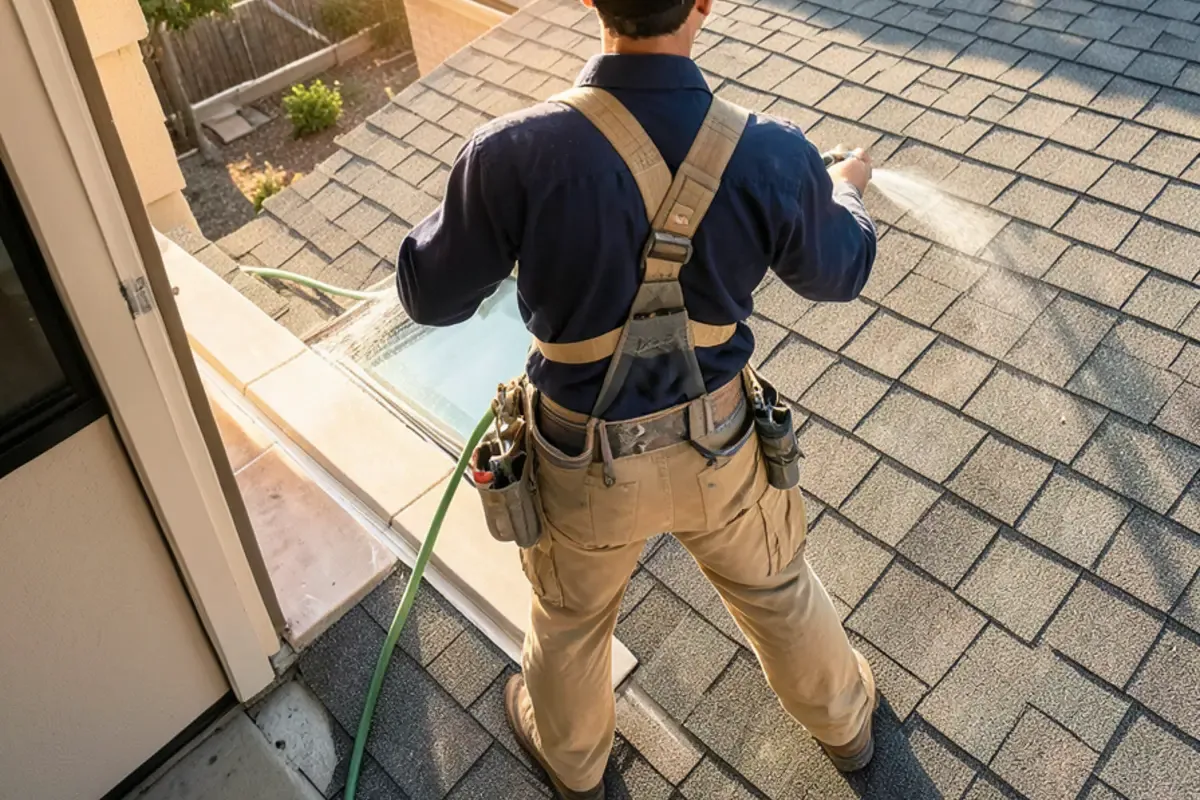
A test only works in a dry spell with no rain forecast, because the area has to be covered up afterward if you do not fix it that day.
Why does condensation look like a leak?
In Torrance, cool coastal mornings meet warm, humid indoor air from showers, cooking and laundry. When that air hits the cold glass or frame of a skylight, droplets form and run down. Single-pane glass and older metal frames make it worse, because the surface stays cold.
Condensation is a humidity problem, not a roofing one. Running a bathroom fan, opening a window or fixing a vent that dumps into the attic often helps. If the staining on the drywall is old and widespread, however, moisture may have been present long enough to soften the paint and trim, so the cause is worth confirming.
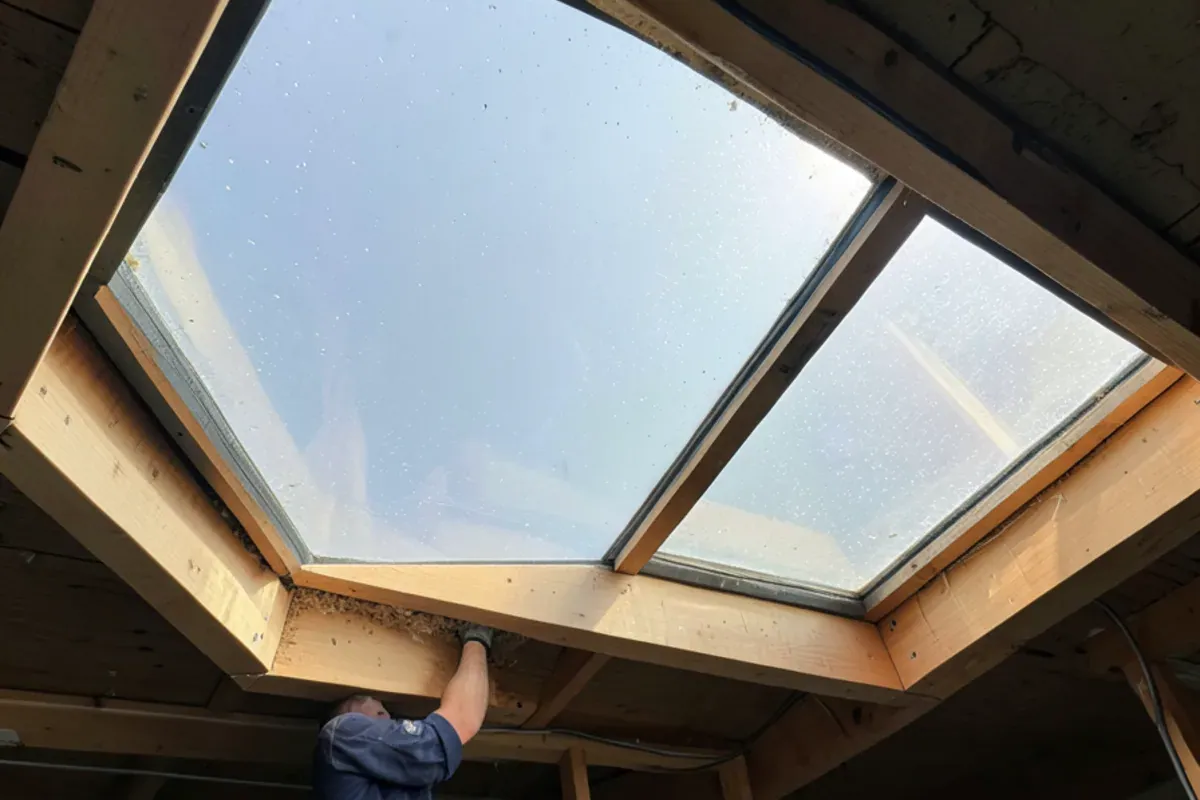
What cuts down on skylight condensation?
Because condensation is about humidity and cold glass, most fixes are indoors. Try these in order:
- Run the bathroom fan for the whole shower and for a while afterward, and make sure its duct goes outside, not into the attic.
- Use the kitchen fan when you cook, and cover pots.
- Open a window for a few minutes on cool mornings.
- Keep houseplants and drying laundry out of rooms with skylights.
- Wipe dry droplets from the frame before they soak into paint or trim.
If the problem is worst on a single-pane or older metal-framed unit, upgrading the glazing helps, and the National Fenestration Rating Council label tells you how a new unit performs. A skylight that fogs between panes is a seal failure, not condensation, and no amount of ventilation will clear it.
What does a skylight repair cost, and what decides it?
Published 2026 cost guides put roof repairs at roughly $300 to $1,500, a market range and not a quote. Where a skylight job lands depends on a short list: whether the flashing can be reworked or the curb has rotted, how high and steep the roof is, the size and type of the unit, and whether the drywall light well needs repair after water got in. Resealing a sound unit costs far less than replacing a fogged or cracked one, which is why the diagnosis comes first.
What roofers tell customers about skylight leaks
- Check the glass first, the roof second. Fog between the panes cannot be fixed from the roof.
- Ask for a controlled test. A hose run low to high around the curb, one section at a time, finds the entry point without guesswork.
- Do not seal over a moving problem. Fresh caulk on a gap in flashing usually fails within a season.
- Compare repair and replacement honestly. We show you photos of what we find and explain the options in plain terms. A repair comes first when a repair will do.
Pinning down the skylight leak
Note when the water appears, photograph the stain and wipe the glass on a dry morning to test for condensation. A free roof inspection from a roofing contractor in Torrance can then check the curb, the flashing and the glass unit and explain which of the three you are dealing with. If rain is coming, set a bucket under the drip and put a towel along the light well so the drywall stays dry.
Sources
- U.S. Environmental Protection Agency: Mold
- U.S. Department of Energy: Energy Saver, Skylights
- National Fenestration Rating Council
- National Roofing Contractors Association