
By the Crown Trim Roofers team · Published · Updated
A permit sounds like paperwork, and it is. It is also the only independent look at your roof deck while it is bare. If you are weighing a full roof replacement, knowing how the permit side works up front keeps the schedule from stalling halfway through the job.
Who pulls the permit for a Torrance re-roof?
The roofing contractor usually files it. Rules differ on whether an owner can do it, and the Contractors State License Board publishes the owner-builder rules if you want to go that route. As a roofing contractor in Torrance, we handle the permit details on re-roofs, and we tell you what the city asked for.
Whoever files, check three things before work begins:
- The permit is actually issued before the first shingle comes off.
- The name on the permit matches the company doing the work.
- You know which inspections the city will call out and who is meeting the inspector.
Torrance Building & Safety can be reached at (310) 618-5910. The city also runs an online permit portal. Hours and procedures move around, so confirm them before you drive down.
The Permit Center sits at 3031 Torrance Blvd. Its published counter hours run 8:00 AM to 5:00 PM with alternating Fridays closed, and Wednesday walk-in hours end at noon. Applications, fee payments and status checks can also go through the city's online permitting system. A clear scope on paper, with the layer count, roof area and product spec sheets, makes the visit shorter.

What does a Torrance building and safety roof permit cost?
We do not quote permit fees, and a number from a blog post would be stale by the time you read it. The city publishes a fee schedule, and fees in California usually track the size or valuation of the work. Ask Building & Safety for the current figure for your address, then compare it with the line item on your estimate. A roofing permit cost that shows up unexplained on a bid is worth a question.
What does a re-roof inspection involve?
Cities set their own inspection list, so treat this as the typical pattern rather than the Torrance checklist. A neighboring city's published handout, Rancho Palos Verdes, describes a sheathing inspection once the old covering is off, then a final when the work is done. Torrance may call it differently. Ask which stops apply to you.
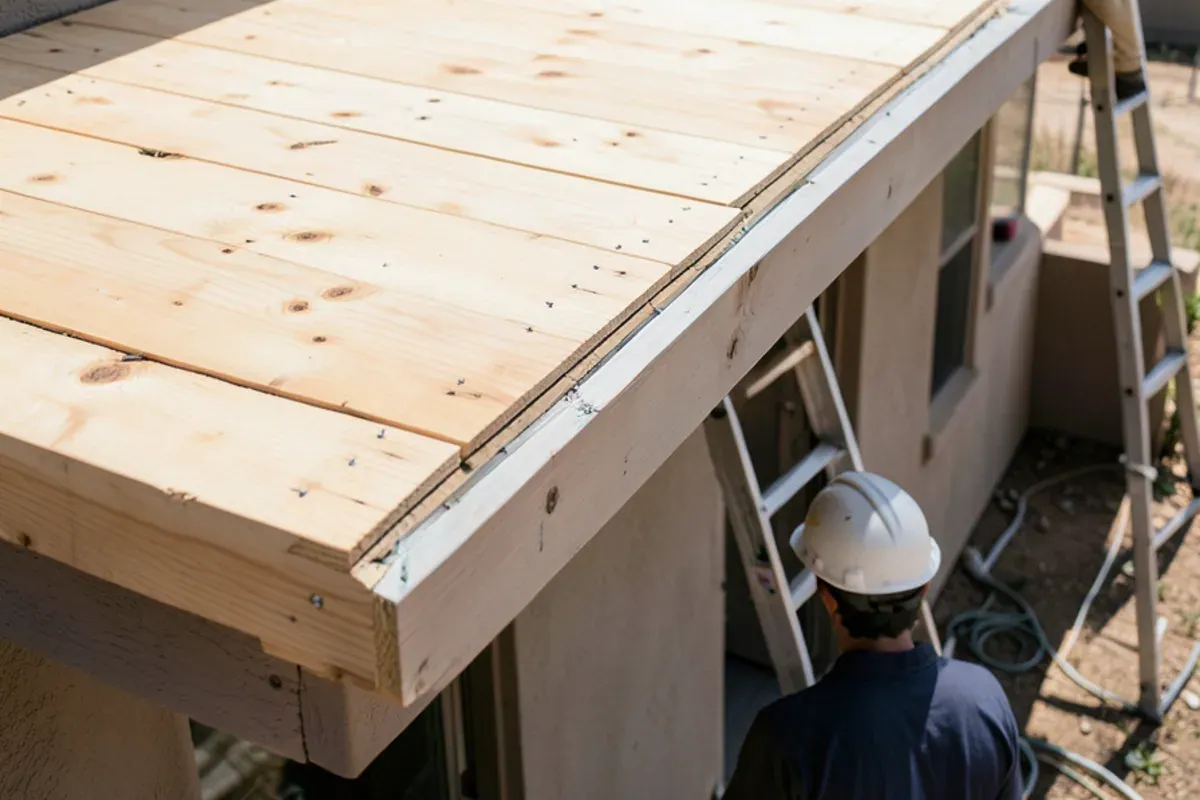
- Tear-off and deck check. The inspector confirms how many layers came off and whether the sheathing is sound or rotted.
- Deck repairs. Bad boards get replaced before anything covers them.
- Underlayment and flashing. Work goes in under the new covering and around penetrations.
- Final inspection. The inspector checks flashing, laps and the finished surface, and a ladder has to be ready to reach the roof.
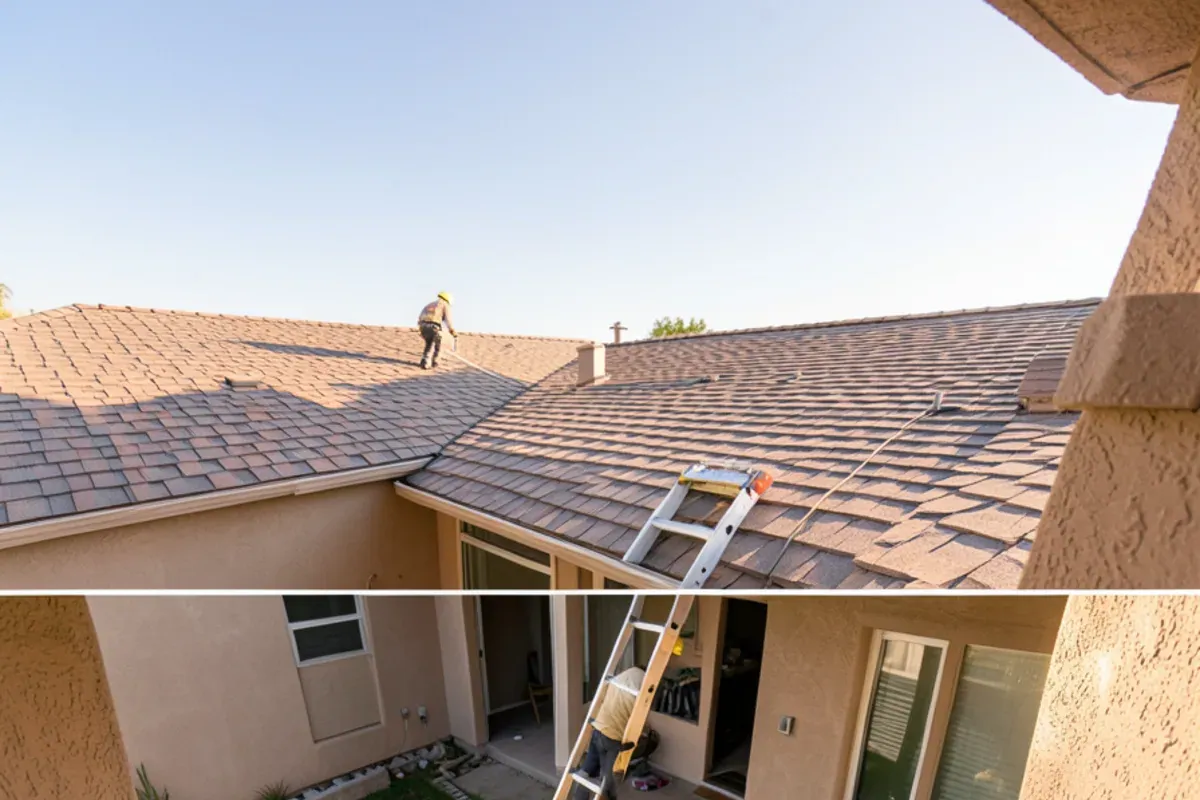
Our roof tear-off page explains the stage the inspector sees first. The building code states that a replacement removes existing layers of roof covering down to the deck, with listed exceptions. A recover over an old layer is not allowed once a roof already carries two applications. That is why a bare deck inspection matters on older homes. In Torrance the median home was built in 1964, and 82.3 percent predate 1980, so layered roofs are common.
How does Title 24 affect a Torrance reroof?
Title 24, Part 6 is California's energy code. For roofs it mostly shows up as cool roof rules: the roofing product has to meet reflectance and emittance values, and it has to carry a Cool Roof Rating Council label. Published city and utility guides describe the requirement as triggered when around half or more of the roof is replaced. They word the trigger slightly differently, which is a good reason to ask Torrance how it measures.
What applies to your house depends on slope, climate zone and building type. Low-slope and steep-slope roofs are treated differently, and steep-slope roofs often have exceptions, such as certain attic or insulation conditions. We will not tell you a number for your house here. The California Energy Commission and Torrance Building & Safety are the right authorities, and the answer should be on your permit paperwork.
Here is how that plays out when you choose material:
| Question | Why it matters |
|---|---|
| Is the product listed with the Cool Roof Rating Council? | The label is what the inspector looks for. |
| Is the roof steep or low slope? | The energy rules differ for each. |
| How much of the roof is being replaced? | The trigger depends on the share replaced. |
| Does the attic insulation or sheathing change? | Extra items can apply when the whole deck is replaced. |
What changed when the 2025 Energy Code took effect?
The 2025 Energy Code applies to permit applications filed on or after January 1, 2026. For a re-roof, summaries from the Cool Roof Rating Council and neighboring cities keep the same basic shape. The cool roof provisions apply when more than 50 percent of the roof is replaced. Steep-slope and low-slope roofs have separate rows, and each row lists the climate zones where it applies. A product with no CRRC label is assigned a very low default reflectance, so an unlabeled shingle is a hard sell at the permit counter.
Published exceptions often decide the product list:
- Existing ceiling insulation or a radiant barrier in the attic can count as equivalent for some steep-slope roofs.
- Some climate zones accept a house with no ducts in the attic.
- Very heavy roof constructions, at least 25 pounds per square foot, are exempt.
- If the whole deck over a ventilated attic is replaced, the insulation or radiant barrier items can apply.
Cities that publish a form name for 2025 residential re-roofs use CF1R-ALT-01-E. Ask Torrance which form it expects with the application. You can find your climate zone on the California Energy Commission's lookup by address or ZIP code.
Who signs off, and what do you receive?
At the end you should hold a signed-off permit record and the product information for the material on the roof. Keep both with your home files. They help at resale, and they are useful if an insurer or a buyer's inspector asks what is on the house.
What should you have ready before the permit is filed?
A short packet saves a second trip:
- Your address and, if you have it, the assessor parcel number from your tax bill.
- The scope in plain terms: full tear-off, one slope or a repair, plus the roof area.
- The roofing product's name and its CRRC product ID, taken from the spec sheet.
- Notes on anything attached to the roof, such as solar panels, skylights or a chimney.
- A note on attic insulation or a radiant barrier, if you know of one, because the energy forms ask.
Ask your roofer to show you the filed application, not only the permit number. It is the quickest way to confirm that the scope on paper matches the scope on your estimate.
What roofers tell customers about the permit
Here is what we check and what we say on a Torrance estimate:
- We ask whether the job is a repair or a replacement, because that decides whether the permit question comes up.
- We look at the deck as soon as the old covering is off, and we show you photos of anything soft or sagging.
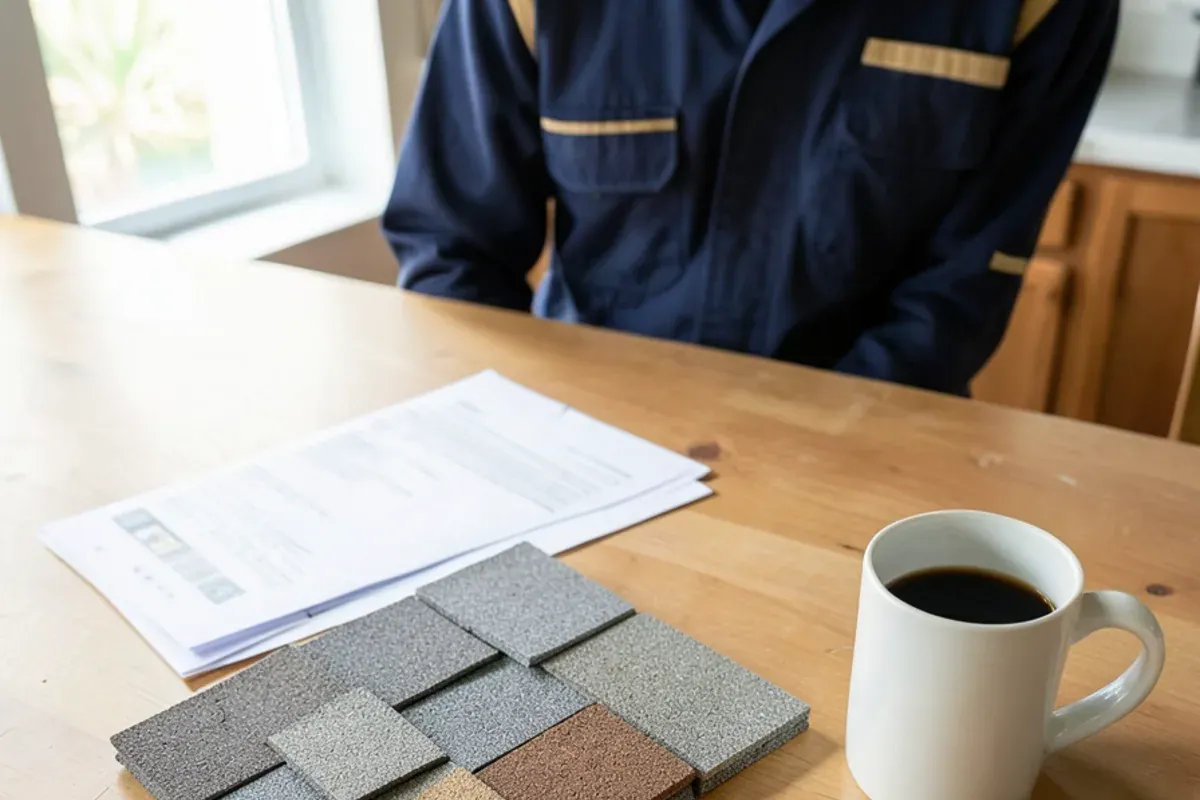
- We explain material options in plain terms and bring shingle samples, so the color you like is also one that satisfies the energy rules.
- If the city changes how it counts a partial re-roof, we tell you, because that can affect the scope.
One Google reviewer described a contractor who organized the whole project, from handling permit details to tearing off the old shingles and correcting a sagging section of the roof deck. That is the standard we aim for.
Starting your Torrance re-roof paperwork
Call Torrance Building & Safety with your address and ask three things: the current fee, the inspection stops, and how the city handles the cool roof requirement for your roof. Then get a written scope from your roofer that matches. If you want us to walk the roof first, Crown Trim Roofers offers free estimates and free roof inspections.
Sources
- City of Torrance Building & Safety
- California Residential Code, Section R908 Reroofing
- BayREN: Residential Roofing, Guide to 2022 Energy Code Requirements
- California Energy Commission: Building Energy Efficiency Standards
- Cool Roof Rating Council
- California Contractors State License Board
- Cool Roof Rating Council: 2025 California Energy Code cool roof summary
- City of Rancho Palos Verdes: Reroofing and cool roof requirements handout