
Emergency Roof Tarping in Torrance, CA
- 4.8★ from 73 Google reviews
- Free estimates
- Same day or next day service
- Photos of what we find
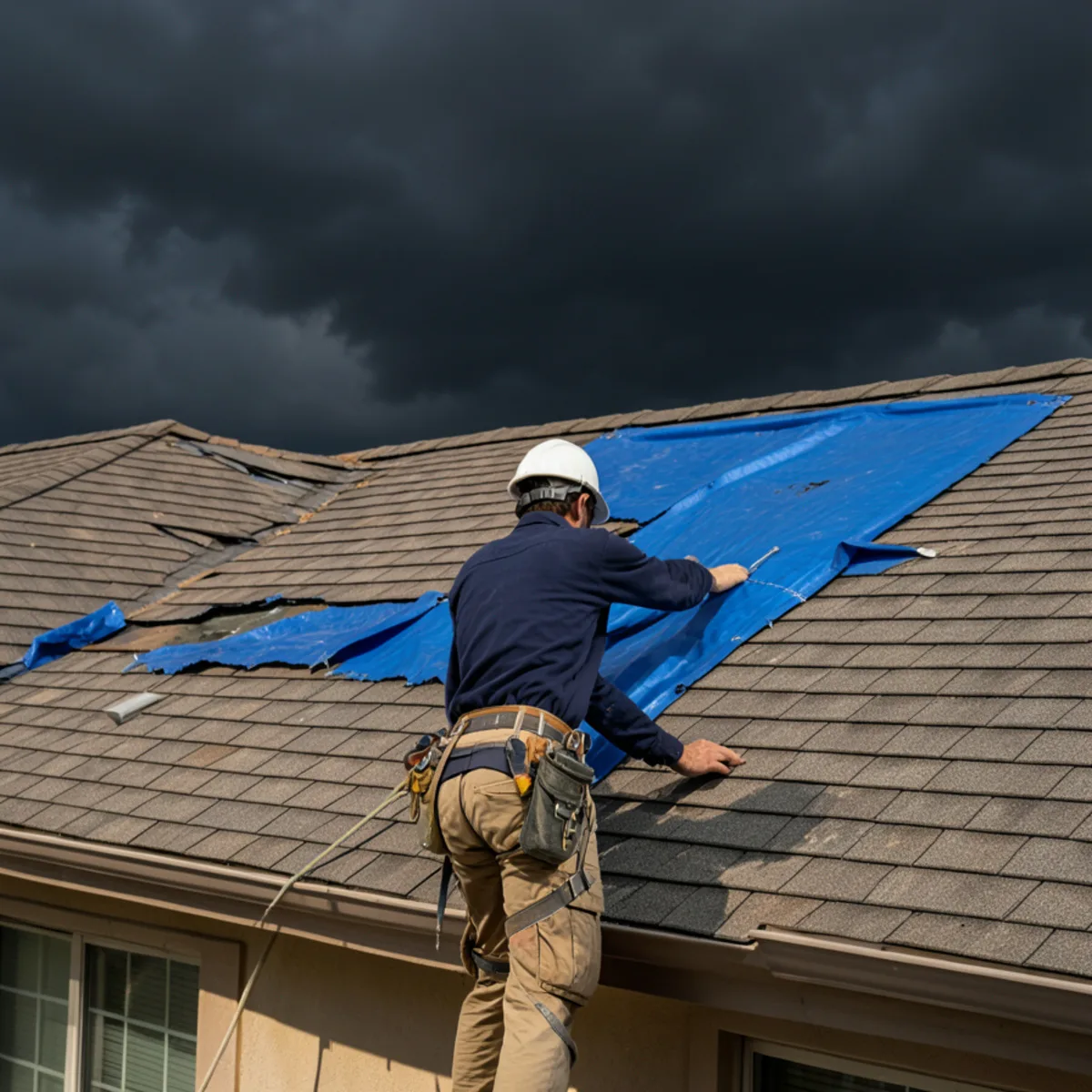
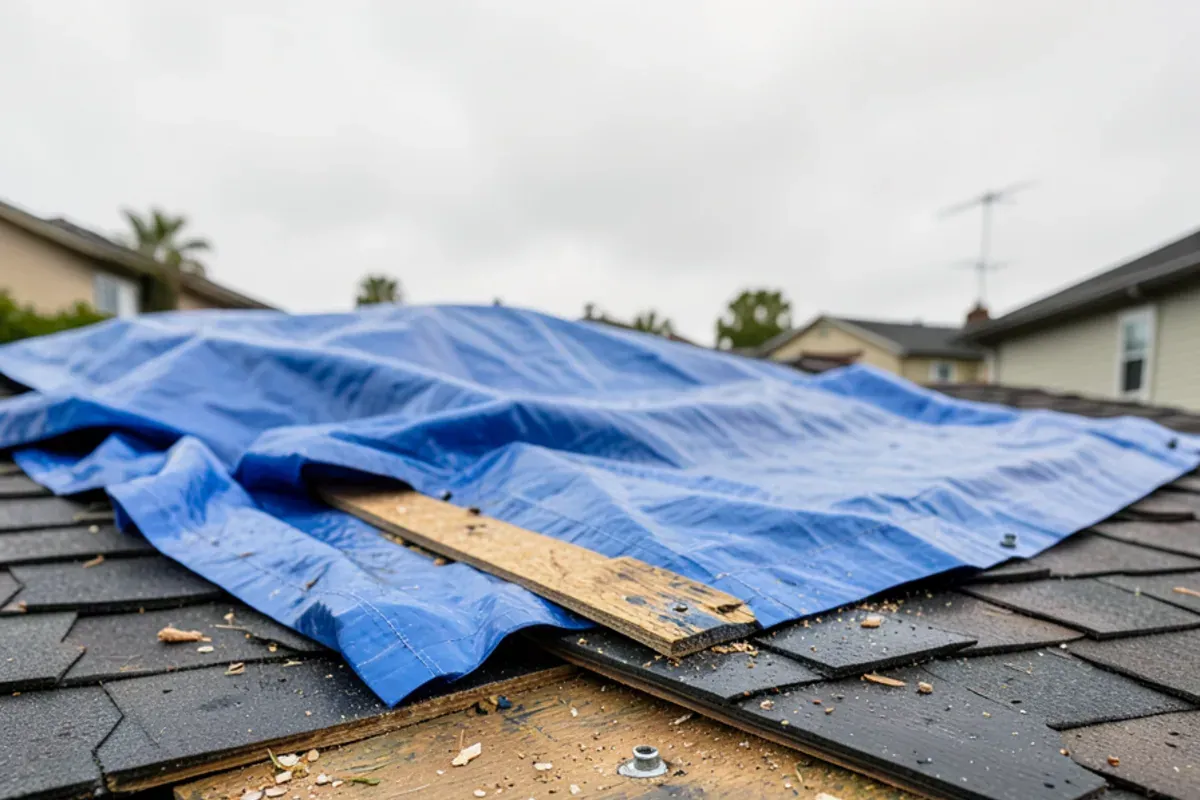
A tarp does one job: it keeps water out of your house while the permanent repair waits for dry weather and a proper schedule. It is part of our wider emergency roof repair service, and it works best when it goes on fast, goes on right and comes with a plan for what follows.
What does a roof tarp service in Torrance include?
We do more than throw a sheet over the damage. A cover only works if the water path is understood, the damage is on record and the plan after it is clear. The scope of a tarp visit is:
- A look at the roof and attic to find where the water is entering
- Dated photos of the damage before it is covered
- A cover sized to extend past the damage and up over the ridge where needed
- Fastening that suits your roof material
- A plain explanation of what the tarp is protecting, and what has to happen next
- Cleanup of loose debris, with landscaping and driveways protected
- A check of the tarp after the first storm if the permanent repair has to wait
One Google reviewer described a roofer who "placed a tarp over the damaged area to protect the roof until the repair could be completed." That is how it should read: the tarp is the pause, and the repair is the finish.
When is a tarp over a roof leak the right call?
A tarp makes sense when the roof is open or cannot be repaired safely right now. Typical cases:
- A limb, branch or debris has broken the deck or torn through shingles
- Wind has stripped shingles or tile from a section and left underlayment exposed
- A leak is active, rain is forecast and the roof is too wet or the wind too strong for permanent work
- A repair needs materials or a dry window you do not have yet
- Fire or impact damage has left an opening
On older Torrance homes the causes repeat. A median build year of 1964 means aged shingles, brittle flashing and thin sheathing, and a strong gust or a fallen palm frond can open a slope that was already marginal. Look for daylight in the attic, shingle pieces in the yard, a dripping fixture or a stain that spreads after each rain. Any of those, with a forecast storm behind it, is a reason to cover the roof first and repair it after.
A tarp is not the right answer for every leak. A single failed vent boot may be fixed in one visit with no tarp at all. We tell you which situation you are in. Our storm damage roof repair page covers what happens after the cover is on.
Storm tarp installation, step by step
- Photograph first. The damage is documented before anything covers it. This also protects you if you file a claim.
- Clear the area. Loose shingles, broken tile and debris come off so the tarp lies flat on a sound surface.
- Choose the cover. A hole in the deck gets plywood first. A torn slope gets a tarp that runs from above the damage to below it, so water sheds over the edge, not under it.
- Lay and lap correctly. The upper edge goes under intact material or over the ridge. Water must flow downhill over the tarp, never behind it.
- Fasten. Battens and fasteners hold the edges. Corners and seams get extra attention, because wind finds them first.
- Check the attic. We look for fresh drips while the tarp is going on, so we know it is working.
- Explain the plan. You get the next steps, an honest read on how long the cover should stay, and the signs that mean it needs checking.
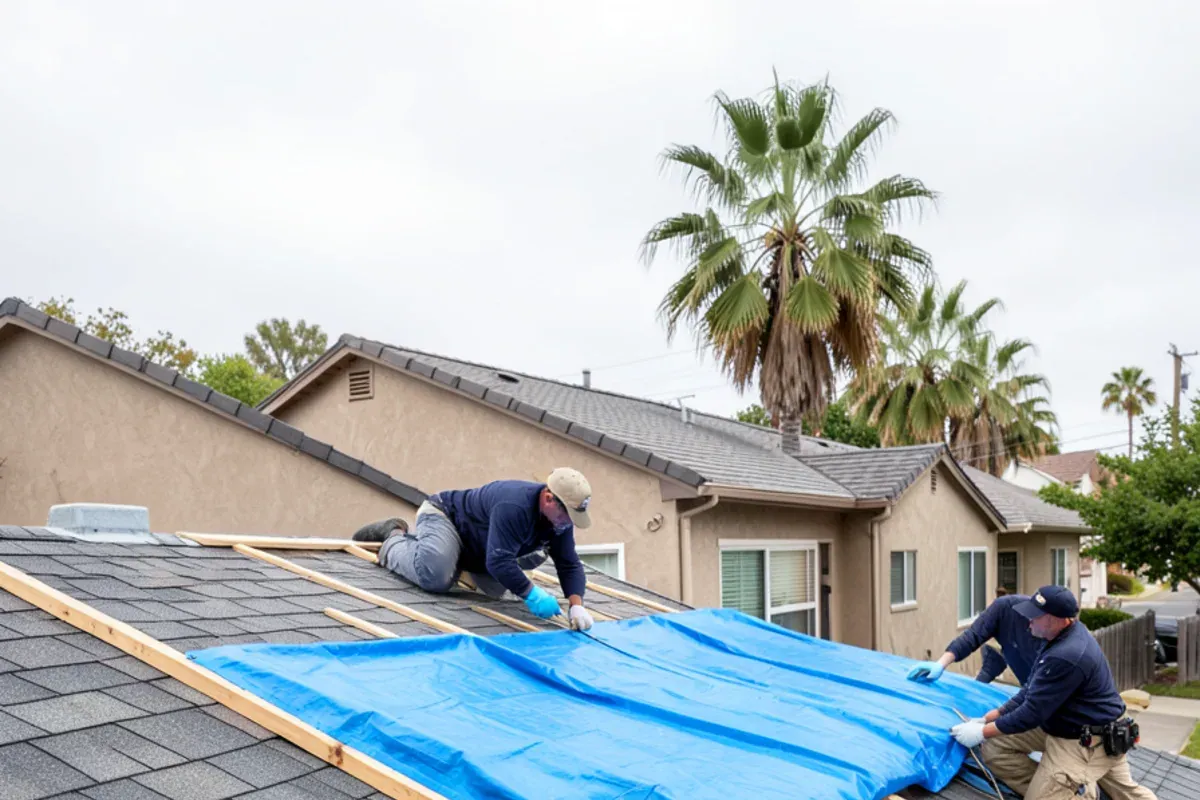
How is a tarp attached without causing more roof damage?
This is the right worry. Every fastener leaves a hole, and an overlarge, flapping tarp can scuff shingles. On a shingle roof, we use wood battens along the tarp edges so the fasteners spread the load and the sheet cannot whip. The holes are small, and we patch them as part of the permanent repair.
Tile roofs need more care, because tile cracks under a boot. We keep foot traffic to a minimum, work from edges and framing, and anchor the cover so it does not slide. Metal panels are slick when wet, and we fasten differently to avoid punching through seams. Sandbags and bricks alone are not a fix. Wind lifts them, and they can slide into gutters or hit someone below.
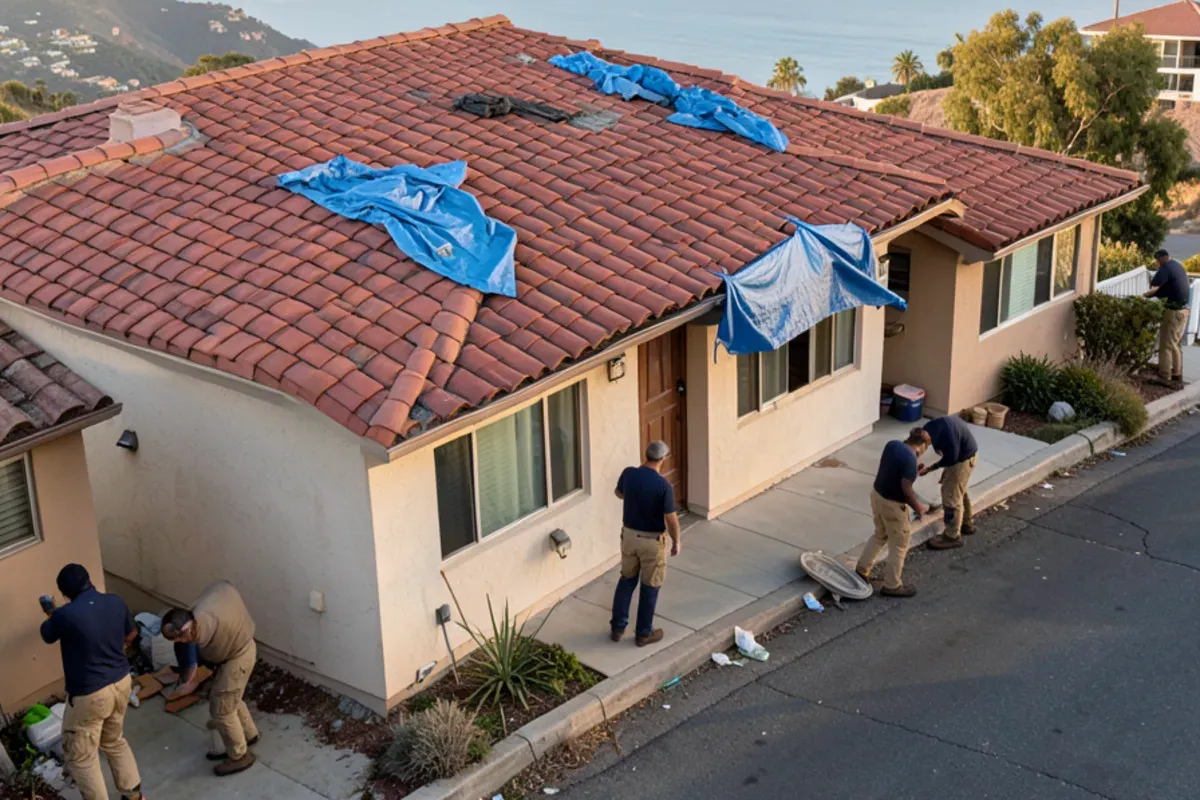
Blue tarp or board-up: which one does your roof need?
The two are often used together.
| Situation | Best cover | Why |
|---|---|---|
| Torn or stripped shingles, deck intact | Tarp over the slope | Fast, covers a wide area |
| Hole in the roof deck | Plywood first, tarp over it | The deck needs a solid surface, not just fabric |
| Broken tile section | Tarp anchored at edges | Avoids walking on loose tile |
| Damage near a chimney or wall | Tarp tucked and battened above the joint | Water often enters at the flashing |
Roof boarding up is also used on skylights, vent openings and dormer sides. If the opening is small, a sealed patch can do the same job with less hardware.
How long can a roof tarp stay on safely?
A tarp is a weeks-long fix. Sun degrades the fabric, wind loosens the edges, and pooled water can sag in a low spot. We would rather call it temporary and schedule the permanent repair quickly. If the repair has to wait for weather, a part or an insurance step, we check the cover, and we tell you what to look for after wind or rain.
Look at it yourself from the ground after each storm. Flapping edges, tears, water pooling in a belly, or new stains in the ceiling all mean it needs attention.
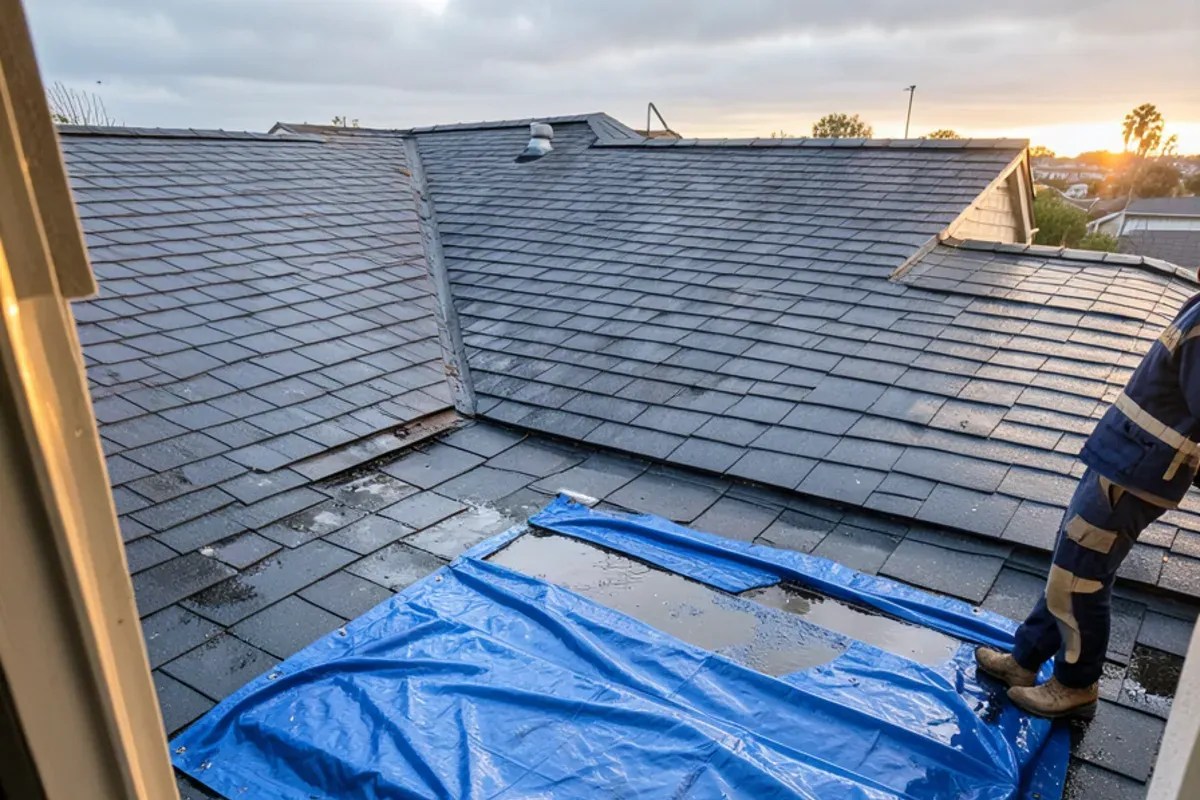
What does tarp cost depend on?
The estimate is free, and we do not post prices. A tarp job is a small repair in market terms, and 2026 published cost guides place most roof repairs between $300 and $1,500, which is market data and not a quote. What moves the number:
- Size of the area to cover, and whether the cover must reach over the ridge
- Roof pitch, height and material, which set how safely we can work
- Whether a plywood board-up is needed under the tarp
- How hard the site is to reach, such as a steep street or a hillside lot
- Whether it is a first cover or a re-cover after wind or a long wait
A tarp is priced separately from the permanent repair on our estimate, so you can see what the stopgap costs and what the finished fix adds. Because most Torrance rain falls from November to March, calls bunch up in the same few days, and an open roof is handled before a slow drip.
Permits, licensing and rules for roof covers
A temporary tarp does not normally need a permit. The permanent repair can, particularly if decking or framing is replaced. In Torrance that is the City of Torrance Building & Safety at (310) 618-5910, in unincorporated areas it is LA County Public Works, and in the City of LA it is LADBS. Confirm the rule for your address with the issuing office. For any contractor you hire, check the license on the California Contractors State License Board site, which requires one for most jobs over $1,000.
Why Crown Trim for emergency tarping
- Same day or next day service when the roof is open, with a plain answer on the phone about when we can arrive.
- Free estimate and free inspection, with photos of what we find under the tarp so you see the real damage.
- We document damage with photos and can be on site for the insurance adjuster's inspection. We do not negotiate claims, and you pay your deductible.
- The tarp is a first step. A repair comes first when a repair will do, and replacement only when the evidence supports it.
- Thorough cleanup, with landscaping and driveways protected.
- Reviewers rate us 4.8 stars across 73 Google reviews.
Tarping across the South Bay
We cover roofs in Carson, Redondo Beach and Rancho Palos Verdes, as well as Torrance. Peninsula hillsides add wind and steep access. Storms that start with wind may also need our wind damage roof repair service. Our emergency tarp guide explains in detail how long a tarp lasts.
Where we do emergency roof tarping around Torrance
Each place brings its own version of this job.
- Rancho Palos Verdes: Hillside access and constant ocean wind on Palos Verdes Drive mean tarp edges need extra battens and a recheck after the next gust.
- Palos Verdes Estates: Red clay tile is the signature roof here, so the cover is anchored at the edges and framing to avoid walking on loose tile.
- Redondo Beach: Salt air corrodes fasteners and flashing on coastal homes, so a damaged section often needs a cover before the metal can be replaced.
- Rolling Hills: Long roof runs on acre-plus lots can mean a large exposed area, so tarp size and sheet overlap matter more than usual.
- Rolling Hills Estates: Wind coming off the hills tests tarp edges around Peninsula Center ranch homes, where long driveways also help with access.
- Lomita: Bungalows with old layered composition roofs a few minutes away tear in wind, and a quick cover buys time for a proper repair.
- Carson: Tract homes with aged composition roofs and low-slope refinery-belt buildings both turn up here, so covers range from shingle slopes to flat sections.
- Hawthorne: Small apartment buildings with flat roofs hold water under a cover, so drainage and a tight lap matter as much as the fabric.
- Hermosa Beach: Roof decks and tight lots near The Strand limit staging space, so covers are fitted around railings and shared walls.
- Manhattan Beach: Hill Section view homes and rebuilt Sand Section houses have complex rooflines where a cover must be tucked under high-end finishes.
What customers say about this work
Crown Trim Roofers holds 4.8 stars from 73 Google reviews. Read all reviews
“In less than an hour, he was at my door, inspected the problem, and placed a tarp over the damaged area to protect the roof until the repair could be completed.”
“After a few storms in Torrance, I started noticing more shingles on the ground instead of staying on my roof.”
“He worked with the adjuster, and the roofing job was finished fast and looks great.”
Emergency Roof Tarping: common questions
How long can a roof tarp stay on safely?
Think in weeks, not seasons. Southern California sun breaks down tarp fabric, wind works at the edges, and fastener holes are a small weakness. A well-installed tarp can hold through a rainy stretch, but it is a stopgap. We help you plan the permanent repair soon after, and we check the tarp if a long wait or a new storm is coming.
Does my insurance pay for emergency tarping?
It depends on your policy and the cause of the damage. Many policies expect you to take reasonable steps to prevent further damage after a covered loss, so keep photos and receipts. We photograph the roof before and after the tarp goes on. We do not advise on coverage or negotiate claims, and you pay your deductible. Ask your insurer, or the California Department of Insurance.
How is a tarp attached without causing more roof damage?
On shingle roofs the tarp goes over the ridge and is held with wood battens, so the load spreads. Some fastener holes are unavoidable, and we patch them when the permanent repair is done. On tile we avoid walking on the field of tiles and anchor the tarp at edges and framing. Weights alone fail in wind, so we use proper fastening.
Can you tarp a roof while it is still raining?
Often yes, if the roof is safe to work on. We do not go up during lightning or strong gusts. If conditions are too dangerous, we protect the interior first, then tarp as soon as the weather allows. A tarp can go on a wet roof; sealants and permanent repairs cannot. That is why tarping exists.
Do I have to replace the roof after it has been tarped?
No. A tarp means the roof is open or compromised, not that it has to be replaced. Once it is uncovered we photograph the real damage. Most storm-opened roofs need a section repaired. We recommend replacement only when the damage is widespread, and you see the photos before deciding.
Will the tarp stop the water that is already in my ceiling?
It stops new water. Water already in the insulation and drywall will keep dripping for a while. Keep the bucket, open a bulging ceiling at its lowest point, and let the area dry. Do not paint over a wet stain. Once the repair is done and the ceiling is dry, prime with a stain-blocking primer so the brown ring does not return.
Related services and guides
Storm Damage Roof Repair
Wind Damage Roof Repair
Emergency Roof Tarping: How Long a Tarp Really Lasts
Roof Leaking in a Storm? What to Do First in Torrance
Santa Ana Wind Roof Damage: What to Check After a Blow
Where we work: Carson, Redondo Beach, Rancho Palos Verdes, Gardena and the rest of our service areas.
Roof open to the weather? Get it covered today.
Call first. A roofer picks it up from there.