

By the Crown Trim Roofers team · Published · Updated
Roof leak coverage is one of the most common homeowner questions after a rainy week, and the honest answer starts with "it depends on the policy." We are a roofer, not an insurer or an adjuster, so this article explains how these claims are usually framed and sends you to the right places for answers. For the roofing side of a claim, see our roof insurance claims page and the wider emergency roof repair service.
Does homeowners insurance cover roof leaks in California?
Standard homeowners policies are typically written to cover sudden and accidental losses from named or listed causes. A roof leak can fall on either side of that line:
- Often treated as a possible covered loss: a leak that follows a specific event, such as wind lifting shingles or a tree limb breaking through the roof in a storm.
- Often treated as excluded: a leak caused by gradual wear, age, cracked old sealant or lack of maintenance.
- Mixed cases: an old roof that fails during a storm. Insurers look at the cause and condition, and policies word this differently.
Nobody outside the insurer can tell you the outcome in advance. Your declarations page, the perils section and the exclusions in your own policy are what matter.
What does the wear and tear exclusion mean for a roof?
Most policies exclude damage that results from wear, deterioration, rust, rot or neglect. In roof terms, that means shingles that have dried out and cracked, old tile underlayment that has aged out, and sealant that has opened. The exclusion is about the cause of the damage, not the fact that water got in.
Some policies cover resulting interior damage, such as a stained ceiling, even where the roof repair itself is excluded. Others do not. This is exactly the kind of detail to ask your insurer about, in writing. One Google reviewer described a roof hole left behind by an old satellite dish, and said insurance would not pay for it. It is a reminder that cause, not just the leak, decides the outcome.
How do storm damage coverage and sudden damage claims differ?
Storm damage and sudden-damage claims usually involve a date and an event: a windy night, a limb on the roof, rain after a Santa Ana blow. Photos with dates, notes about what you saw and when, and any weather record help to tie the damage to the event. Our post on Santa Ana wind roof damage lists what to look for after a blow, and what to do first when a roof leaks covers the first hour.
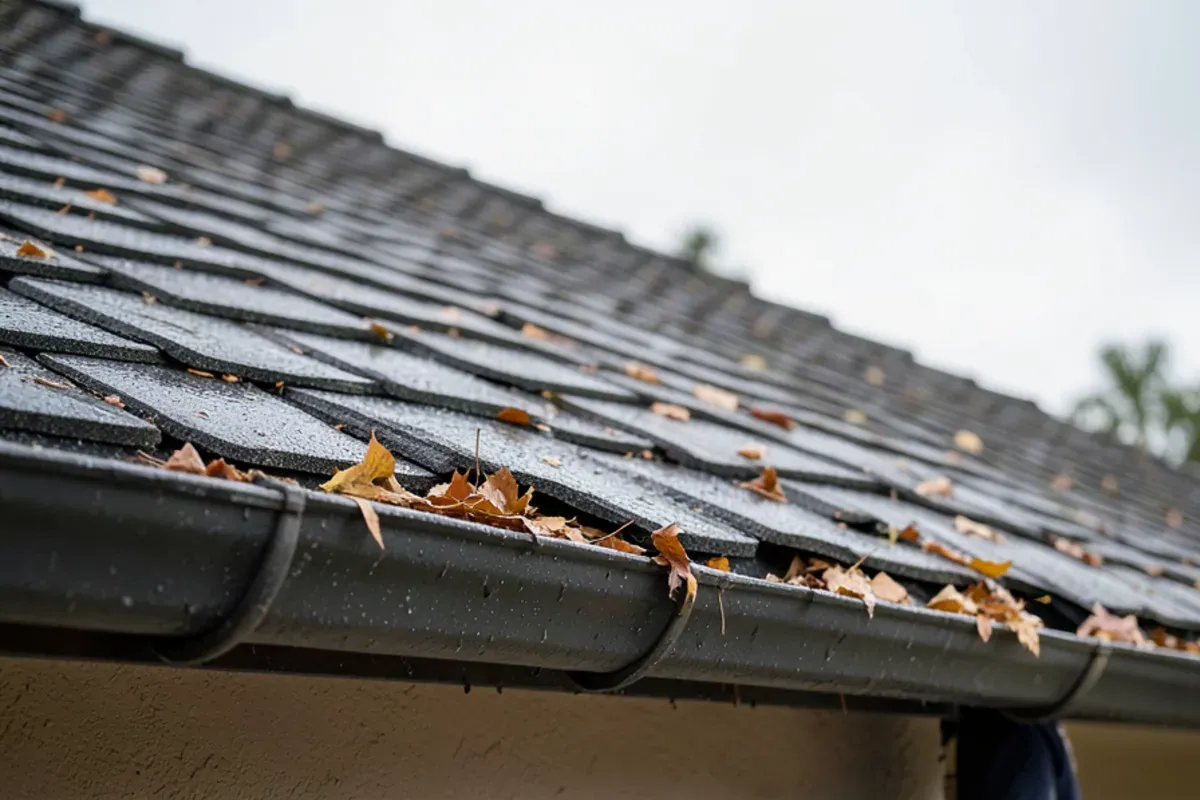
A claim for long-running seepage looks different. Staining that has built up over seasons, rusted fasteners and rotted decking tell an adjuster that the problem is old. That is not a judgment on you, only how the evidence reads.
What to look for when you read your own policy
- Declarations page. It lists coverage limits and your deductible.
- Perils and exclusions. Look for wording on wear, deterioration, rain entering through openings, and ensuing loss.
- Roof endorsements. Some policies attach a roof schedule or an actual-cash-value clause that changes how roof losses are paid.
- Claim notice conditions. Policies set expectations for prompt notice and for protecting the property from further damage.
- Dispute options. The California Department of Insurance publishes consumer guidance and takes complaints at insurance.ca.gov.

What does a roofer look for to tell a sudden leak from a slow one?
This is what we look at, described as observations, not as a coverage opinion. The insurer decides how the evidence is read under your policy.
| What we see | Often points to |
|---|---|
| Torn or creased shingles with clean, bright edges; tile broken or shifted with fresh breaks | A recent event such as wind or a falling limb |
| Rust rings on nails, dark dirt-filled cracks, brittle or curled shingles across a whole slope | Gradual aging |
| One stain with a sharp, recent edge and damp insulation | Water that entered recently |
| Layered stain rings, soft or darkened decking, a musty attic | Repeated wetting over several seasons |
| Open sealant at a vent boot or flashing joint | Aging material, sometimes made worse by wind |
Roofs often show both at once, an old weak spot that finally failed in a storm. We photograph each area and say plainly which pattern we see. We do not tell you what the policy should pay.
What a roofer can and cannot do
This is what we tell customers. We document the damage with photos, explain the cause as we see it, and can be on site for the adjuster's inspection. We do not negotiate claims, advise on coverage or act as an adjuster. In California only the policyholder or a licensed public adjuster negotiates with the insurer. You pay your deductible, and we do not waive, absorb or rebate it.
Torrance gets about 14 inches of rain a year, mostly between November and March. A first-hand record of when water showed up is useful whether or not you file anything.
What records help show when and how the water got in?
A leak claim is easier to understand when the record is simple and dated. Keep:
- Photos of the ceiling, the attic and the roof, taken before any cleanup or repair
- The date and time you first saw water, and the weather that day
- The failed part, such as a torn shingle or cracked boot, if the roofer removes it
- Receipts for a tarp, drying equipment or other steps to limit damage
- A written scope from a roofer, with the cause described in plain terms
- Every email and letter to and from the insurer, with dates
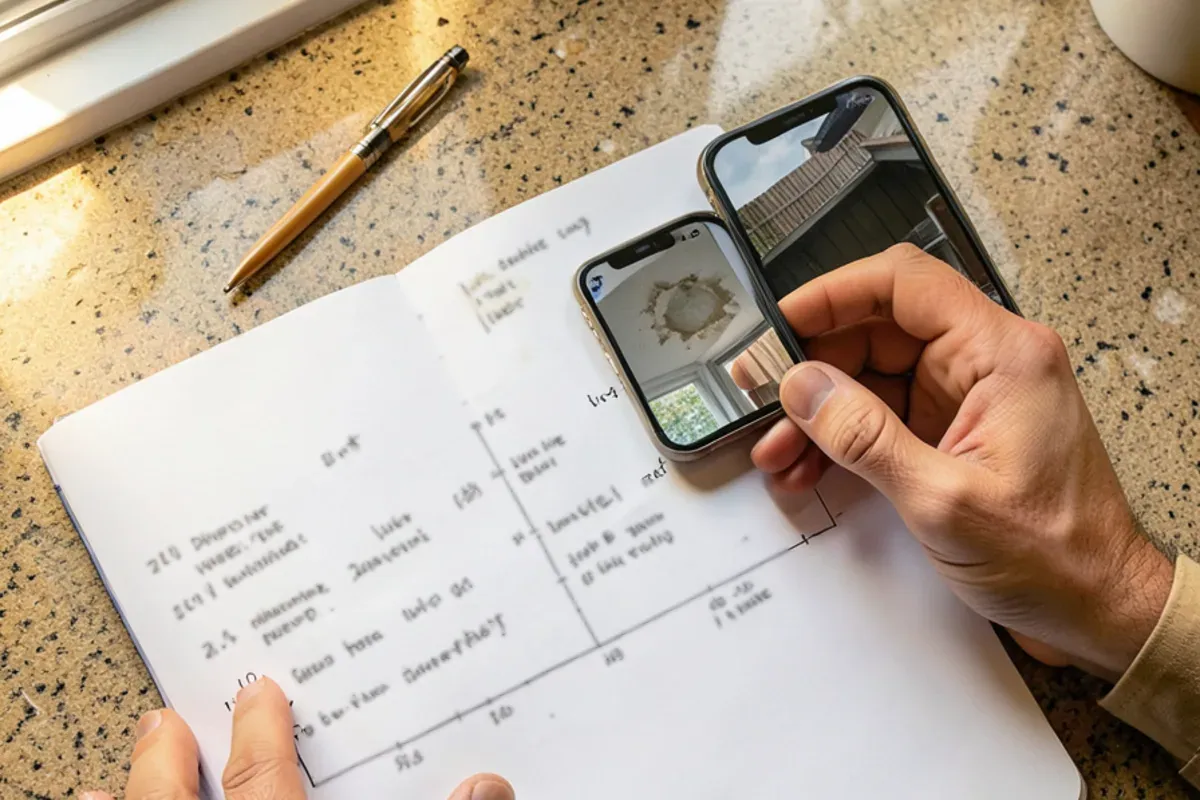
Torrance averages about 14 inches of rain a year, with February the wettest month at roughly 3.5 inches, so a note about which storm brought the water in is easy to make and hard to reconstruct later. None of this decides the outcome. It makes the facts easy to read.
Questions to ask your insurer in writing
Written questions leave a record, and they keep the conversation about your policy rather than about what you remember hearing. These are good starting points:
- Which section of my policy applies to water entering through the roof?
- Does the policy pay for interior damage if the roof repair itself is excluded?
- Is my roof paid on a replacement cost or an actual cash value basis?
- What is my deductible for this type of loss?
- What documents or inspections do you need from me?
Keep the replies with your photos. If an answer is unclear, ask for the policy wording it relies on. The California Department of Insurance takes questions and complaints if you feel a claim is not being handled properly.
Next steps
Keep the damage photos, protect the home from further harm, and read your policy. If you want the cause of a leak documented, our roofing contractor in Torrance team offers free estimates and free roof inspections. We show you photos of what we find and explain repair options in plain terms.