
By the Crown Trim Roofers team · Published · Updated
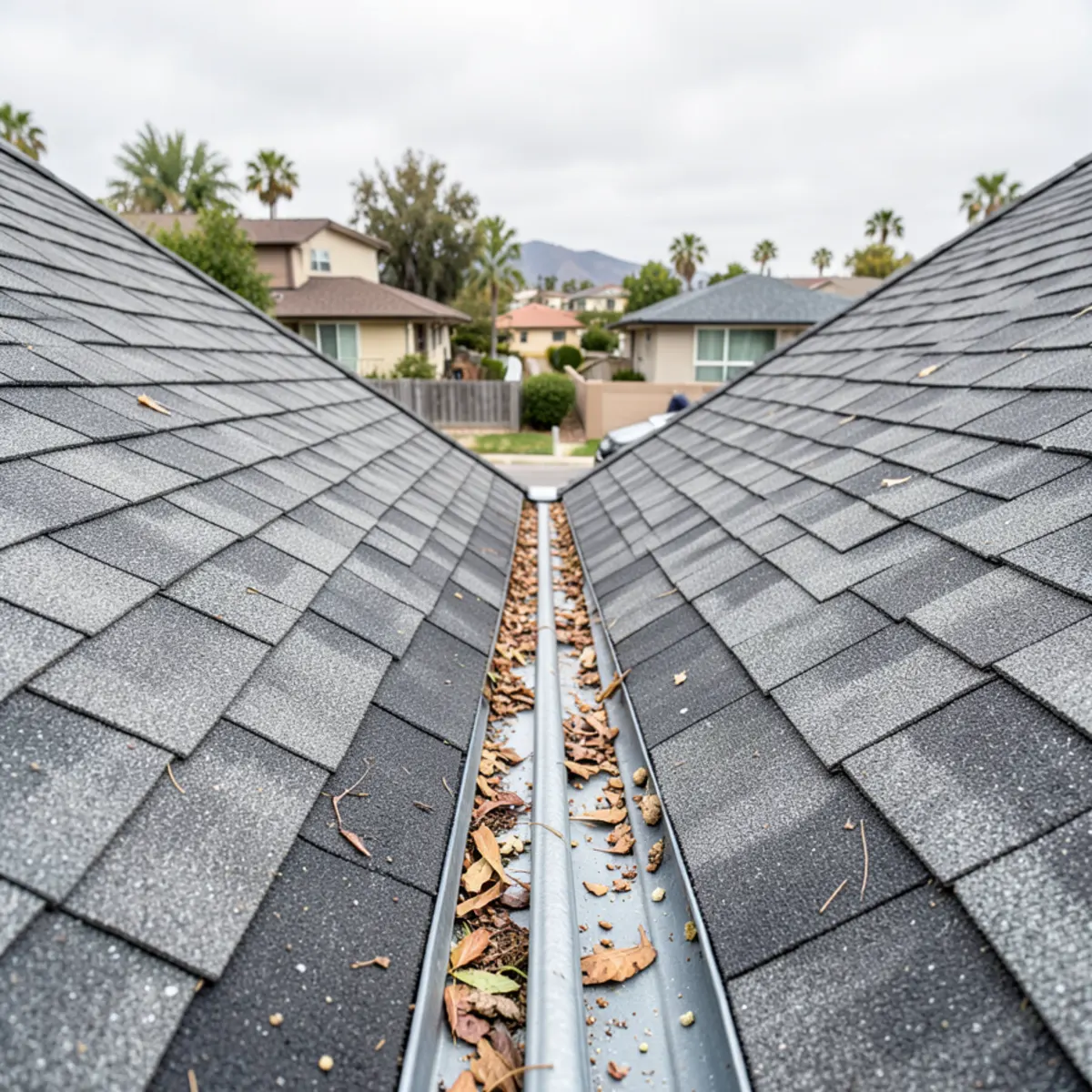
A roof valley is the V-shaped fold where two slopes meet. Everything that lands on both slopes ends up running down it. That makes the valley the hardest working line on the roof, and it is why the first drip after a storm often traces back there. This post sits under our roof repair guides, and the repair itself is described on our roof valley repair page.
Why do valleys leak before the rest of the roof?
Think of a valley as a gutter built into the roof. It collects runoff from two planes, then moves it quickly to the eave. Three things stress it.
- Volume. A valley carries far more water per foot than a flat slope.
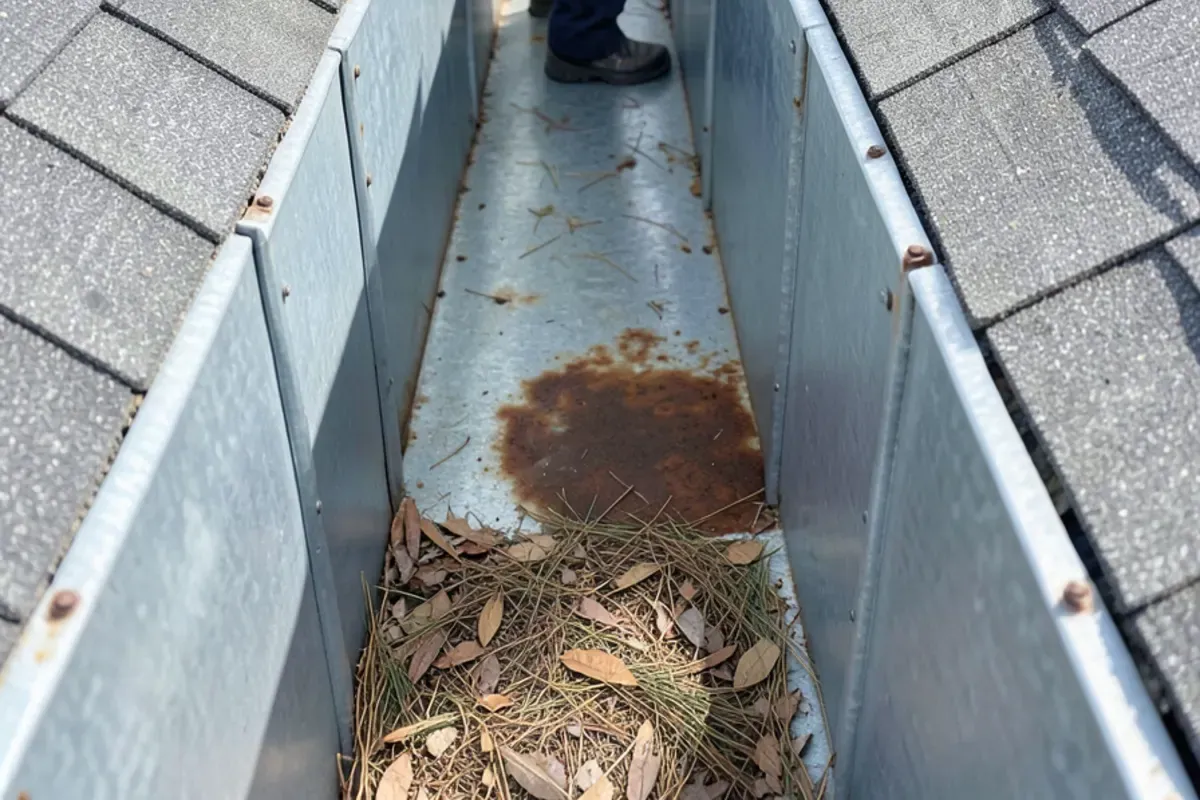
- Debris. Leaves, pine needles and shingle grit settle in the channel and slow the flow, so water backs up under the edges.
- Age. The metal liner rusts at the seams, nail heads and cuts, and the underlayment beneath dries out.
A roof with sound slopes can still have a failing valley. That is the reason many valley leaks are repair jobs, not replacement jobs.
Open valley or closed valley: what is the difference?
How the valley was built changes how it fails.
| Type | How it is built | Common failure |
|---|---|---|
| Open valley | Metal channel exposed, shingles trimmed back on each side | Rust at seams, debris, trimmed edges lifting |
| Closed, woven valley | Shingles from both slopes laid over each other | Hidden wear in the overlap, granules washing away |
| Closed, cut valley | One slope runs through, the other is cut over it | Cut edges channel water under the overlap |
The key part is what lies under the shingles. A closed valley still has underlayment or a metal liner beneath. When that layer ages, the shingles on top look fine and the roof still leaks.
Which valleys on a house leak most often?
Valleys are not equal. The same shingles and the same metal behave differently depending on where the fold sits and what the water does when it leaves it.
| Where the valley sits | Why it is a weak spot |
|---|---|
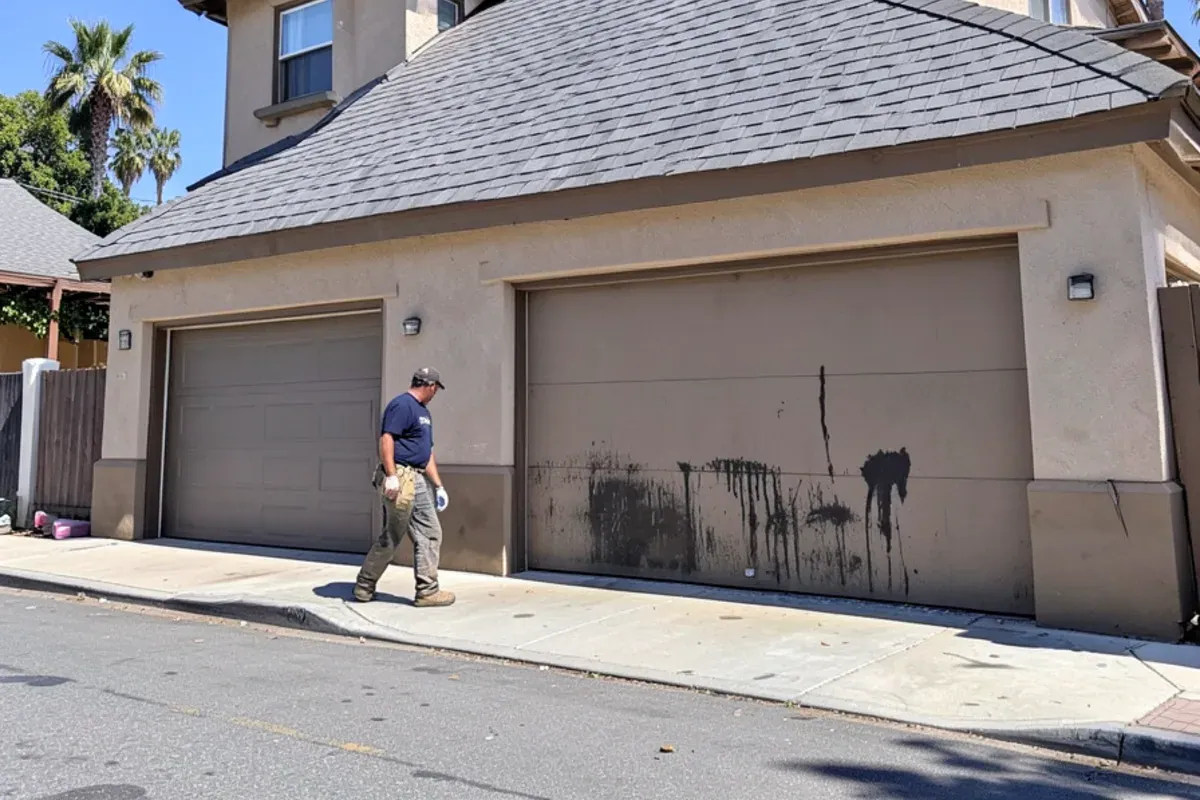
| Ends above a lower roof or garage | Fast water shoots across the lower shingles and can run under them |
| Joins an addition or converted room | Old and new roofing meet at different ages and pitches |
| Sits under a tree | Leaves and needles pile up and hold water against the edges |
| Runs between low-pitch planes | Water leaves slowly, so it has longer to find a gap |
| Meets a wall or dormer | Wall flashing and valley metal must overlap correctly |
Torrance has a lot of 1950s and 1960s single-story homes where a later addition or garage conversion was tied into the original roof. Those junctions often show up as a valley or a roof-to-wall line with its own leak history. If your house has one, start your check there.
Why does wind-driven rain get under a valley?
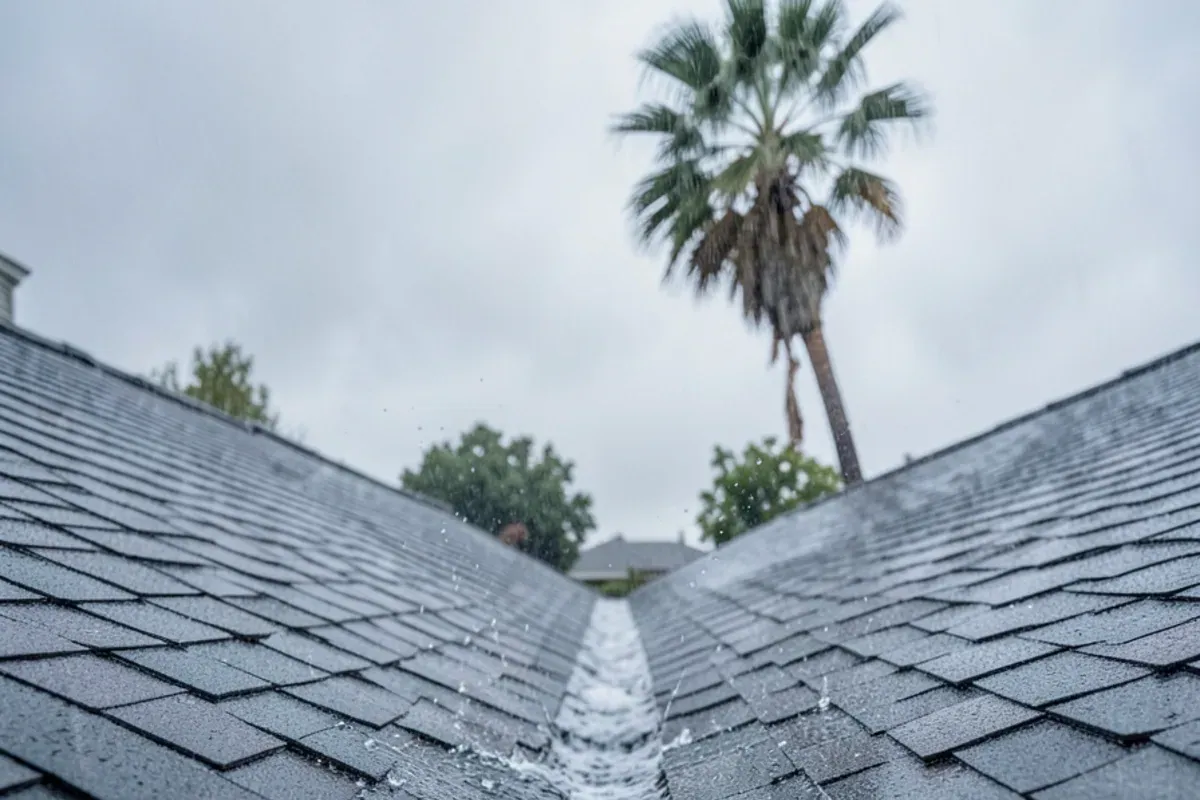
Rain in the South Bay does not often fall straight down. Pacific winter storms often arrive with strong gusts that push water sideways across the slopes, mostly between November and March. In a valley, that moving water meets the trimmed shingle edge and gets shoved up and under it. A leak that only shows during certain storms points to this.
One Google reviewer described strong wind-driven rain pushing water under their shingles and causing roof and ceiling damage. Another described a leak that was tricky because it only appeared when wind and rain hit from a certain direction. Both are classic valley and edge patterns: the roof is fine on a calm day and drips in a blow.
Look for these signs:
- A stain on the ceiling that follows a line, not a round spot.
- A stain that shows only after storms from one direction.
- Granules piled at the foot of the valley, which means the shingles beside it are shedding.
Does a leaking valley mean a new roof?
Not on its own. The decision turns on the roof around the valley. A roof in good shape with one failed valley is a repair. A roof with brittle, curling shingles everywhere and a failed valley is a different conversation, because lifting shingles to work on the valley can damage the old ones nearby.
One Google reviewer, dealing with an insurance claim, said the roofer gave an honest estimate and explained that the main issue was in the roof valley, not the whole roof system. That kind of clarity matters when you are weighing a repair against a bigger bill. Published 2026 cost guides put roof repairs at roughly $300 to $1,500, while the average Torrance roof replacement runs about $7,202 to $8,183 (Homeyou, 2026 listing). Those are market figures, not a quote.
How can you check a valley on a dry day?
You can learn a lot without leaving the ground or the attic floor. Work in this order:
- From the yard, look along the valley for a rust-streaked channel, lifted or cracked shingle edges, or a shadow line where the edge has curled.
- Note any plants, leaves or needles collected along the channel and which tree they came from.
- Check below the valley mouth. A dark streak or washed-out granules on the shingles beneath mean a lot of water is arriving there.
- In the attic, use a flashlight on the decking under the valley line. Dark staining, daylight at a nail hole or damp insulation marks the spot.
- Photograph what you see with a note of the room below, and compare it to the stain on the ceiling.
If anything on that list shows up, a roofer can confirm it. Skip the climb. A wet or dusty valley is slick, and the metal is easy to bend by stepping on it.
Do valley repairs involve permits or code rules?
A small valley repair is usually maintenance. A full re-roof that rebuilds valleys is different. The International Residential Code sets minimum requirements for valley linings, and each city adopts its own edition with local changes, so what applies to your address comes from your building department. In Torrance, Building & Safety answers permit questions at (310) 618-5910. Ask before work starts, and ask whether a partial repair triggers any inspection. For a nearby problem on the same roof, our shingle roof repair page covers the other common failures.
What roofers check on a valley call
Here is what we look at and what we pass on:
- Walk the whole run. The leak may be at the top of the valley, in the middle or where it meets another roof line.
- Check the metal, not only the shingles. Rust, pinholes and old nail heads are where a valley starts to fail.
- Read the shingles beside it. If they are lifting or cracked, we say so and show you photos.
- Offer a repair first. A repair comes first when a repair will do, and we explain repair and replacement options in plain terms.
Getting a leaking valley looked at
Clear any debris you can reach safely from a ladder at the eave, but stay off the roof. A free roof inspection from a local roofing contractor in Torrance can examine the valley, show you what is failing and tell you whether the repair can stay local to the valley. If a storm is coming, cover the stained area inside and photograph it first.