
Roof Valley Repair in Torrance, CA
- 4.8★ from 73 Google reviews
- Free estimates
- Same day or next day service
- Photos of what we find
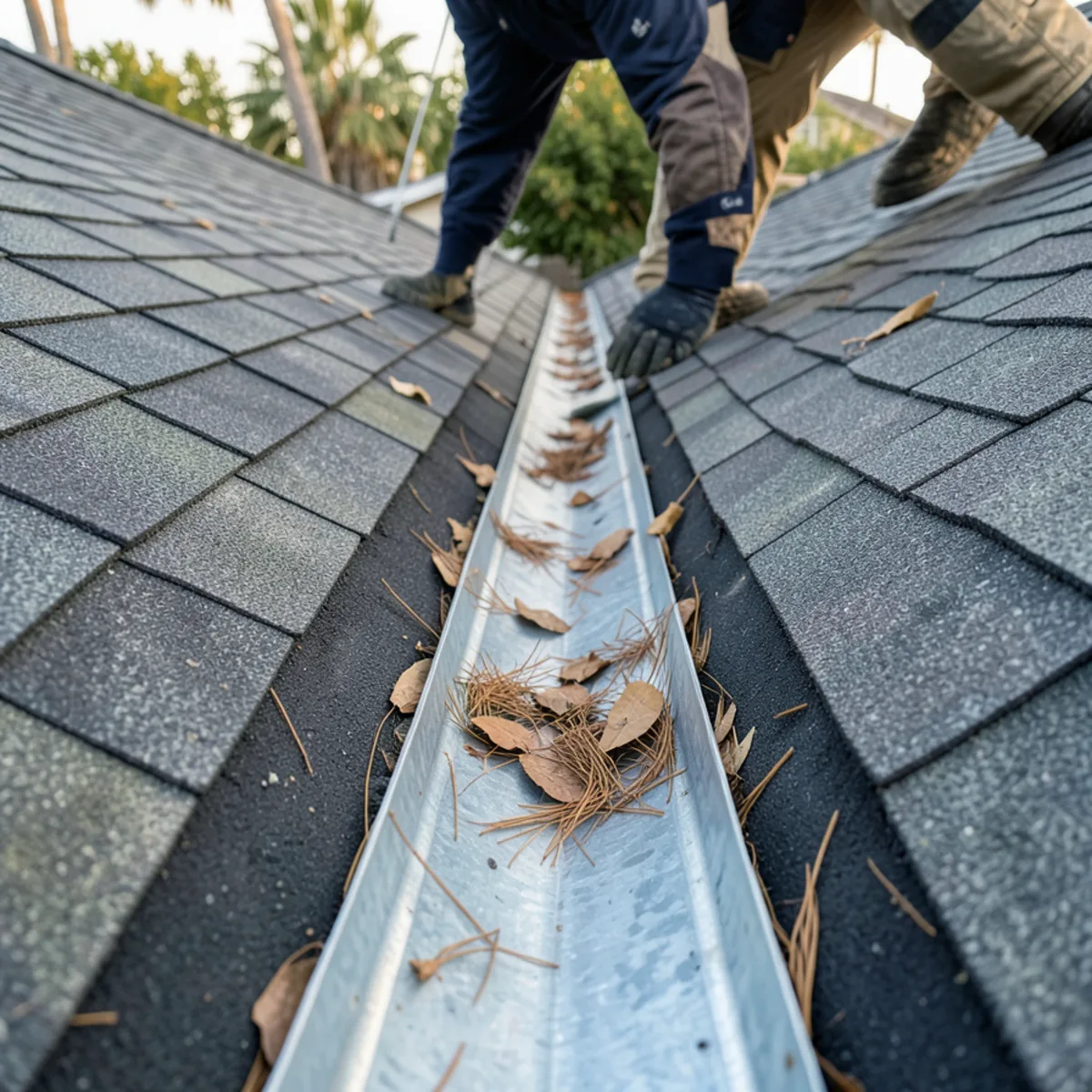
Look at your roof from the street and find the creases where one slope runs into another. Those are valleys. They carry water from two planes of roof into a single narrow channel, and everything the wind brings with it. That is why valleys leak more than their size suggests, and why a valley can be fixed on its own. This page covers roof valley repair in Torrance and the South Bay, and it fits with our wider roof repair work. For a shorter read, see our post on roof valley leaks.
What makes a roof valley leak?
Four things account for most valley leaks:
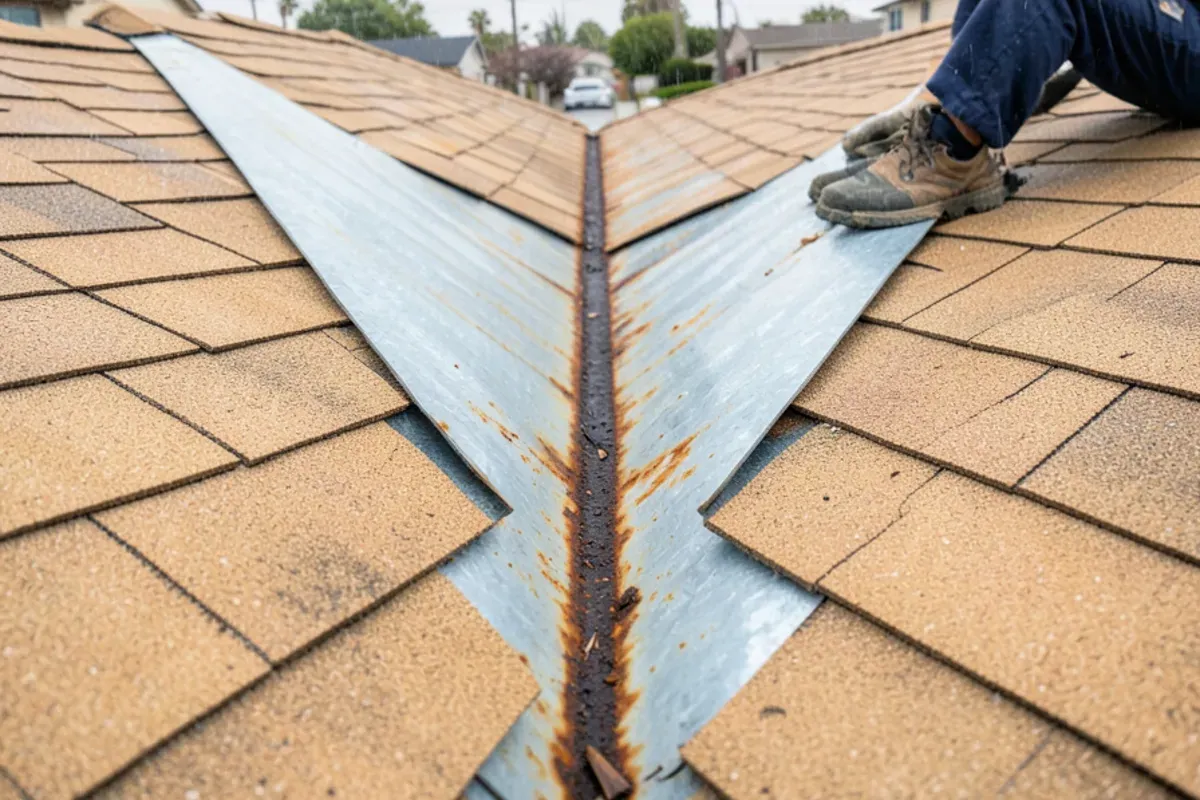
- Worn or rusted metal. Galvanized steel valleys can rust through at the center line, where the water flows hardest. Coastal air speeds it up.
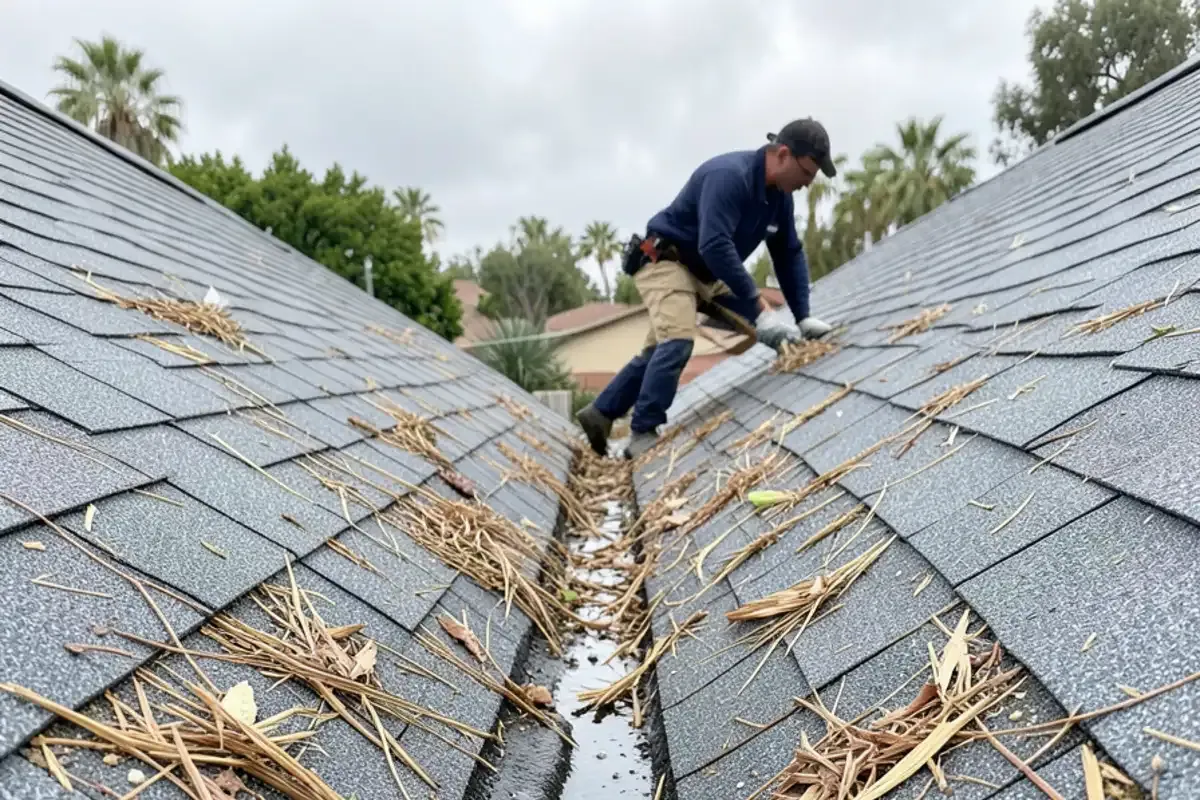
- Debris dams. Leaves, palm fronds, pine needles and grit pile up and push water sideways under the shingle edge.
- Poor cuts or nails. A nail driven through the valley center or a shingle cut too close to the center line lets water in from day one.
- Age. Roofing ages first where the water flows most. Granules wash off the shingles beside the valley and expose the mat.
A homeowner can see rust, debris and bare patches from the ground with binoculars. Leaks at a valley often show up on the ceiling as a stain running along the line where two roof planes meet inside the house.
Why do roof valleys leak in wind-driven rain?
Straight-down rain stays in the channel. Wind-driven rain does not. Pacific storms commonly arrive from the south or west, and that angle shoves water up the side of the valley and over the edge of the metal. One Google reviewer described roof and ceiling damage after "strong wind-driven rain pushed water under the shingles" and needing a solid fix fast. Valleys are one of the first places we look for that kind of leak.
Speed matters too. Where two large slopes drain into one channel, the water moves fast. It overshoots the edge of the metal during a heavy downpour and slips under the shingles at the sides. A taller metal rib along each edge, called a diverter or rib, helps. Older valleys often lack one.
Open metal valley or closed valley: which suits your roof?
There are three common ways to build a valley:
| Type | How it looks | Strength | Weakness |
|---|---|---|---|
| Open metal | A strip of metal shows down the center, shingles trimmed back on both sides | Sheds water and debris fast, easy to inspect | Shows from the street, can rust |
| Closed-cut | Shingles from one side run over the valley and the other side is cut on a line | Clean look, no exposed metal | Hides problems, cut edge can wick water |
| Woven | Shingles from both slopes interweave across the valley | No cut edge to wear | Water pools on thick weave, hard to repair |
Wind and debris matter more than looks. If trees overhang the roof, an open valley tolerates leaves better. If appearance drives the decision, a closed-cut valley can be done well with a membrane under it. We explain the trade-off and let you choose.
Valley flashing replacement and tile valleys
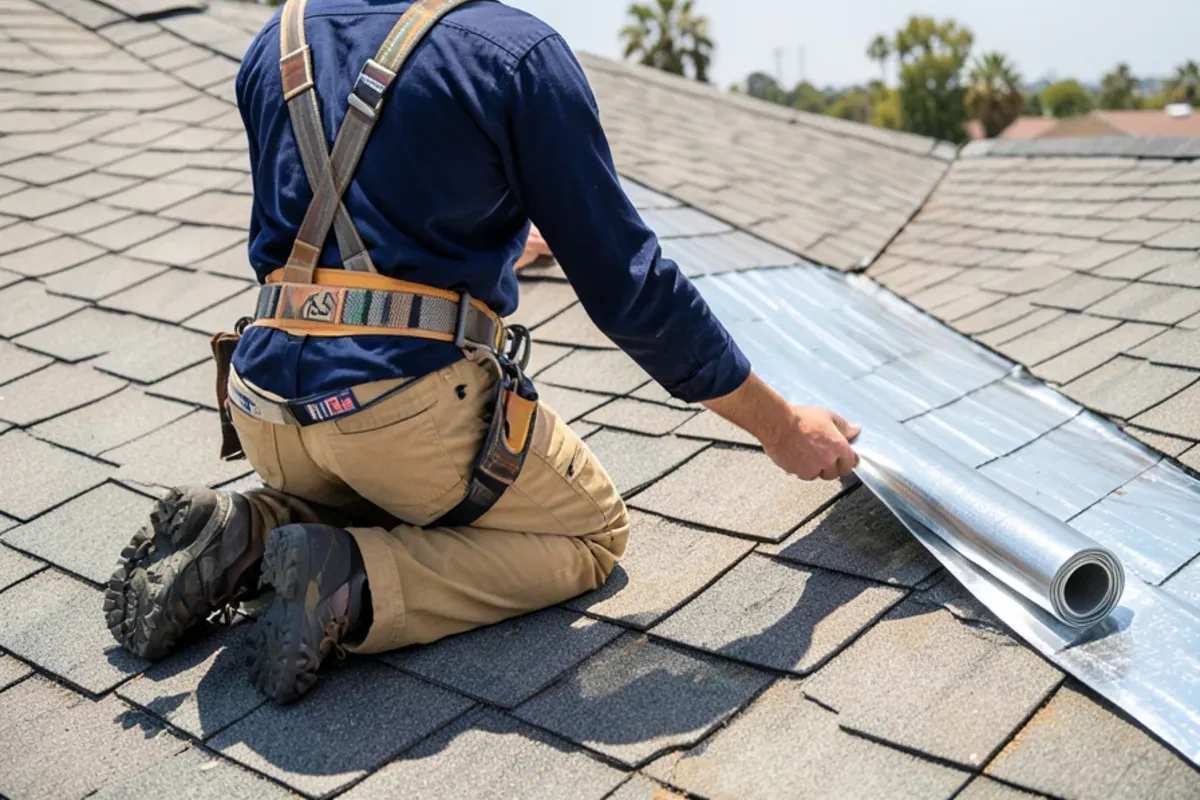
When the metal is the problem, valley flashing replacement means lifting the roofing along both sides, pulling the old metal, checking the underlayment and deck beneath, laying a new metal channel and relaying the roofing over it. A strip of roofing on each side is disturbed. For a short valley that is a modest job. For a long one on a two-story roof it is real work.
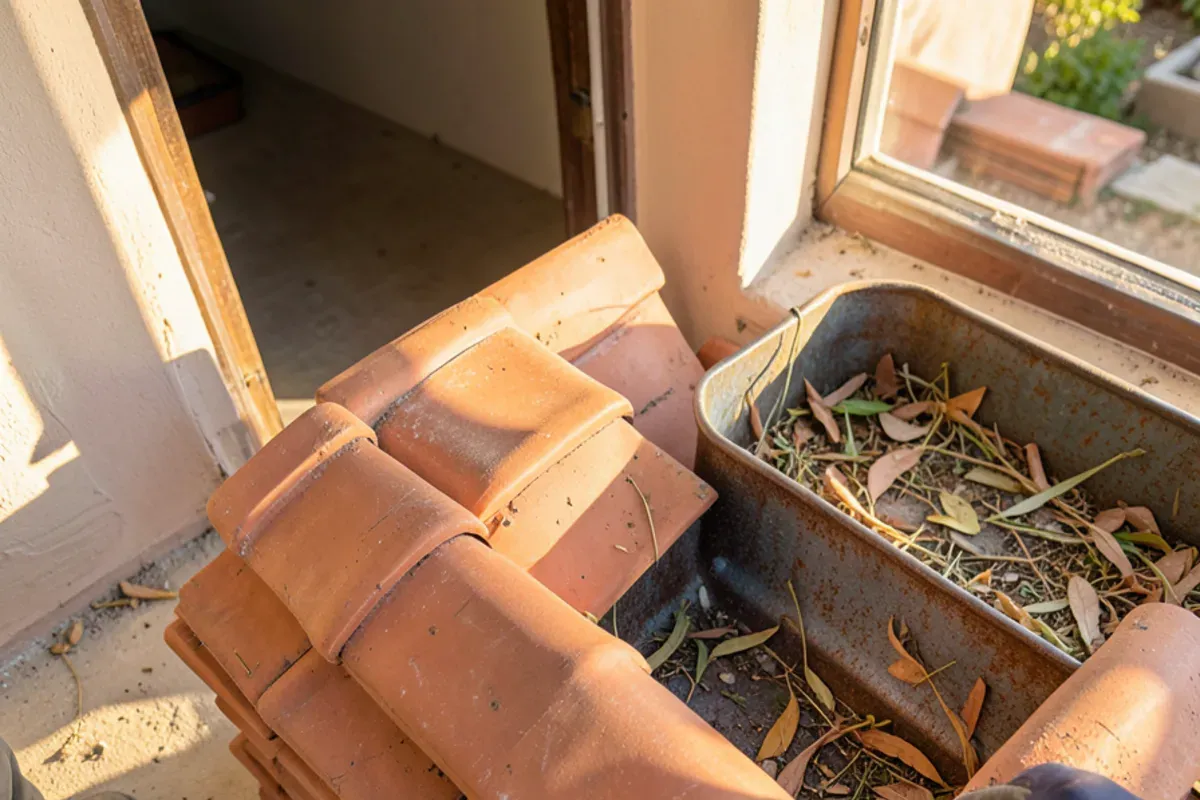
On tile roofs, valleys use metal pans with tile cut and set along the edges. Cut tiles chip, mortar cracks, and the pan below can rust or fill with debris. A tile roof valley repair means lifting the tile, clearing and inspecting the pan, replacing metal or underlayment as needed, and resetting tile in the original layout. We match existing tile as closely as we can, but a replacement tile will not weather identically to a 40-year-old one.
Slate is rare on South Bay homes, but the same logic applies to slate valley repair. The metal underneath fails long before the stone does. If you have slate, we inspect first and tell you plainly what the work involves before we touch a piece.
What does a roof valley repair include?
A valley repair covers the channel and the roofing that borders it, not the whole slope. We trace the leak from the attic stain to the valley, walk its full length and mark where the metal or underlayment has failed. You see the photos, then the repair is sized to that stretch.
- Attic and ceiling check to confirm the valley is the source
- Roofing lifted along both sides, with debris cleared out
- New valley metal or membrane, with a diverter rib where it helps
- Underlayment and deck inspected, and bad wood replaced
- Shingles or tile relaid over the new channel and matched as closely as we can
- Cleanup, with landscaping and driveways protected
How does a valley repair visit work?
- Ask where it leaks. Location of the stain, when it shows and whether wind or direction matters.
- Check the attic. Water trails, dark rafters and damp insulation under the valley, photographed.
- Walk the valley. Metal condition, debris, nail heads, shingle wear and cut edges.
- Show you the evidence. Photos of the failure and your repair options in plain terms.
- Open and repair. Roofing lifted, old metal and underlayment removed, new metal laid, roofing relaid and sealed at the edges.
- Clean up. Debris cleared, landscaping and driveways protected.
A valley repair can often be done in one visit. Wet weather may delay sealing.
What decides the price of a valley repair?
Estimates are free and we do not post prices. Market context only: 2026 published cost guides put most roof repairs between $300 and $1,500. That figure is published data, not our quote, and a long valley with rot can cost more. Price moves with:
- Valley length and how many valleys are involved
- Roof pitch, height and access
- Metal type, open versus closed construction and whether a diverter rib is added
- Underlayment or deck rot found once the old metal comes off
- Tile versus shingle, since cut tile takes longer to reset
A short valley on a one-story roof is a modest repair. A long valley on a two-story roof, a tile valley with a rusted pan or a valley that leaked long enough to rot the deck is a bigger one, and the attic photos show which you have.
What do the codes say about valley work in Torrance?
The model residential code calls for an open valley lined with corrosion-resistant metal at least 24 inches wide, installed before the shingles. Local amendments and your roofing material change the details, so confirm with City of Torrance Building & Safety, (310) 618-5910. Unincorporated areas use LA County Public Works, the City of Los Angeles uses LADBS and unincorporated Orange County uses OC Public Works. Small repairs may not need a permit, while larger sections can. California requires a contractor license for most roofing work, so look up any roofer on the CSLB site.
Why Crown Trim for valley leaks?
- Same day or next day service when water is coming in.
- You get photos of the valley, the attic and any rot, so you can see what we see.
- Free estimates and free roof inspections.
- A repair first when a repair will do. If the valley is the issue, we fix the valley.
- We explain repair and replacement options in plain terms and match existing shingles and tile as closely as we can.
- For storm damage, we document with photos and can be on site for the insurance adjuster's inspection.
- Reviewers rate us 4.8 stars across 73 Google reviews.
Keeping the valley clear
Clear debris from valleys before the rainy season, roughly November through March. Trim overhanging branches. Use a soft broom or hand, never a pressure washer, which strips granules. Check the valleys again after a Santa Ana wind event, since gusts drop palm fronds and leaves exactly where they dam water. Our ridge cap repair page covers the other high-wind trouble spot, and roof deck repair applies if a long leak has softened the wood beneath.
We repair valleys across the South Bay, including Carson, Redondo Beach and Rancho Palos Verdes. Hillside homes on the Peninsula catch more wind, so valleys there get extra attention.
Where we do roof valley repair around Torrance
Each place brings its own version of this job.
- Downey: Downey: large post-war ranch homes under mature tree canopies, where leaves and seed pods dam roof valleys before the first rain.
- Lakewood: Lakewood: early-1950s ranch homes of a similar design reach re-roof age together, and their valleys carry decades-old metal and underlayment.
- Cerritos: Cerritos: 1960s-70s master-planned tile roofs where metal valley pans under the tile rust or fill with debris long before the tile itself fails.
- Signal Hill: Signal Hill: hilltop condos and townhomes on the old oil hill catch wind that lower Long Beach streets miss, pushing rain over valley edges.
- View Park-Windsor Hills: View Park-Windsor Hills: hillside custom homes with low-pitched roofs and mature trees, where debris and slow runoff make valleys back up.
- Ladera Heights: Ladera Heights: wide low-slope ranch roofs from the 1950s-60s drain slowly, so debris sits against the valley metal longer.
- Seal Beach: Seal Beach: Old Town cottages face direct salt air that rusts galvanized valley metal along its center line.
- Bellflower: Bellflower: small ranch homes and courtyard apartments with additions, where extra valleys were often flashed years apart.
- Rossmoor: Rossmoor: walled 1950s ranch homes in unincorporated Orange County, re-roofed house by house under OC Public Works permits, with valleys on a second or third roof.
- Monrovia: Craftsman homes in Old Town Monrovia have cut-up rooflines with several valleys where leaves collect and flashing wears.
What customers say about this work
Crown Trim Roofers holds 4.8 stars from 73 Google reviews. Read all reviews
“Insurance was difficult to deal with, but Miles from Crown Trim Roofers made the process much easier by giving an honest estimate and explaining that the main issue was in the roof valley, not the whole roof system.”
“First issue: They fixed a leak around my metal chimney cap.”
“He also shared helpful advice about regular roof maintenance, flashing checks, and keeping the roof system in good shape to help prevent future leaks.”
Roof Valley Repair: common questions
Why do roof valleys leak in wind-driven rain?
A valley collects the runoff of two slopes, then wind adds force. Rain pushed sideways can climb over the edge of the metal, force water under the shingle cut on either side or blow leaves into the channel. Once the channel dams, water backs up under the roofing. Valleys facing south and west, where Pacific storms push rain, show this first.
Can you repair just the valley rather than the whole roof?
Yes, when the rest of the roof is sound. One Google reviewer said we gave an honest estimate and explained that the main issue was in the roof valley, not the whole roof system. We replace the valley metal and the shingles or tiles beside it, then show you photos. If the field is brittle everywhere, we say so.
Is an open metal valley better than a closed shingle valley in Torrance?
Neither wins on every roof. An open metal valley sheds water and debris quickly and is easy to inspect, but exposed metal can rust and it shows. A closed valley looks cleaner, but it hides the metal and can trap grit. For Torrance, where heavy rain is rare but wind-driven when it comes, a properly lapped open valley is a sound choice.
How can I tell if my valley is the leak source?
Look for a stain on a ceiling under the line where two roof planes meet, or for a dark streak down the valley itself. Check the attic for water trails along the rafters beneath it. Granules piled at the bottom of the valley, rust spots in the metal and bright patches where shingles have worn also point to it. We confirm with the attic and the roof.
Do I need a permit for roof valley repair?
Small repairs often do not need one, but it depends on the scope and the city. Replacing large sections can. We handle permit details on re-roofs, and for repairs we tell you what we find. You can confirm requirements with the City of Torrance Building & Safety at (310) 618-5910, or the building department for your address.
Will the new valley match the rest of my roof?
We match existing tile and shingles as closely as we can. Shingle samples are available so you can compare. Metal in an open valley is usually bare or painted metal, which you will see in the finished look. We explain the options and color at the estimate, so there are no surprises on the slope.
Related services and guides
Ridge Cap Repair
Roof Deck & Structural Repair
Roof Valley Leaks: Why You May Not Need a New Roof
Ceiling Stain After Rain: Emergency or Wait and Watch?
Roof Repair Cost in the South Bay: Small Fix or Big Job?
Where we work: Carson, Redondo Beach, Rancho Palos Verdes, Gardena and the rest of our service areas.
Leak along a roof crease? Get the valley inspected.
Call first. A roofer picks it up from there.