
Warehouse & Industrial Roofing in Torrance, CA
- 4.8★ from 73 Google reviews
- Free estimates
- Same day or next day service
- Photos of what we find
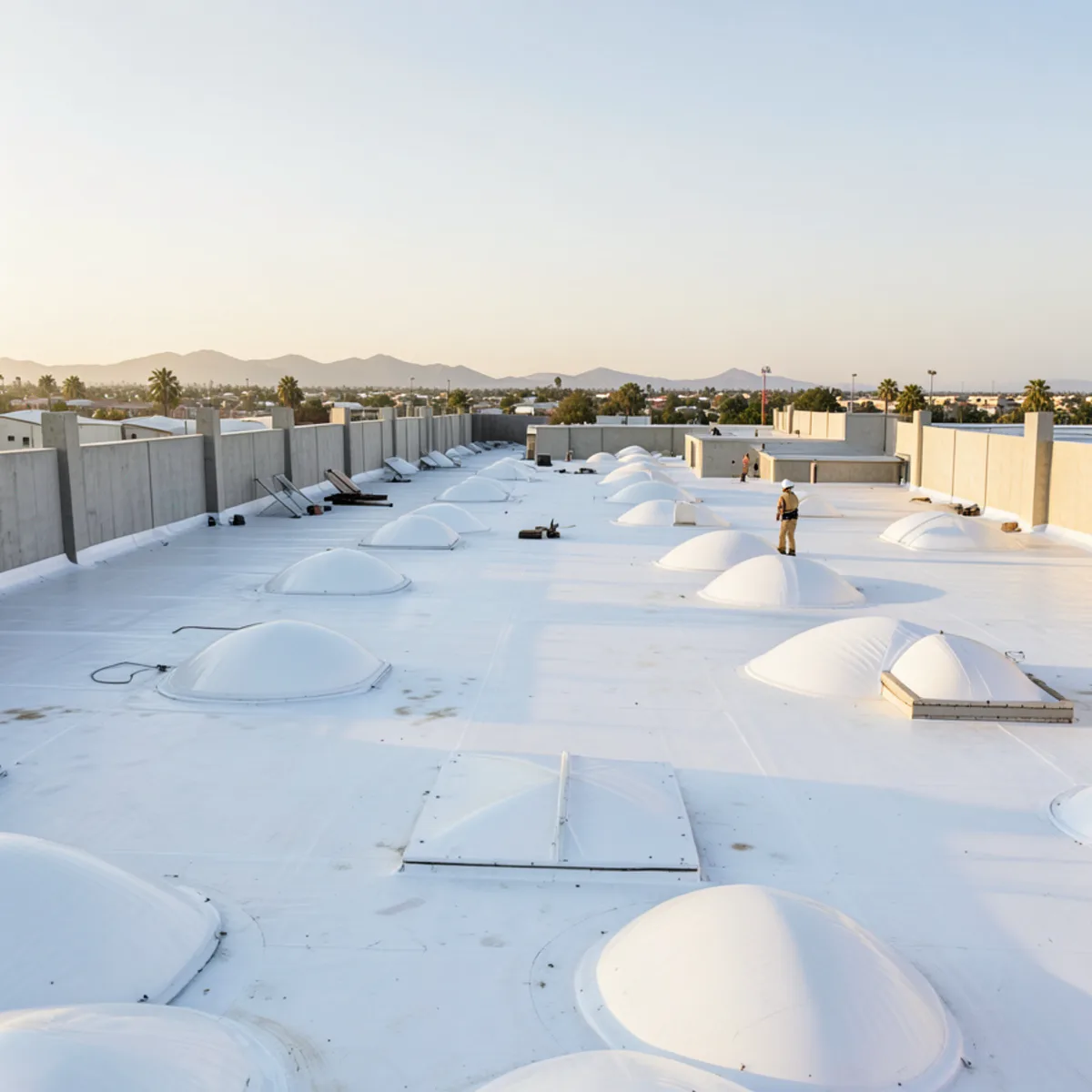
Industrial roofing in Torrance, CA is a different job than a house or a shop roof. The spans are large, the walls are often concrete tilt-up panels, and a leak does not stay a roof problem for long. It reaches racking, product or machinery. This page covers what goes wrong on big flat roofs in the South Bay industrial districts, and how we handle repair, replacement and upkeep. For the overview, see commercial roofing.
Signs your warehouse roof needs repair in Torrance: where leaks start
Warehouses have fewer penetrations per square foot than office buildings, but each one matters. We see leaks start most often at:
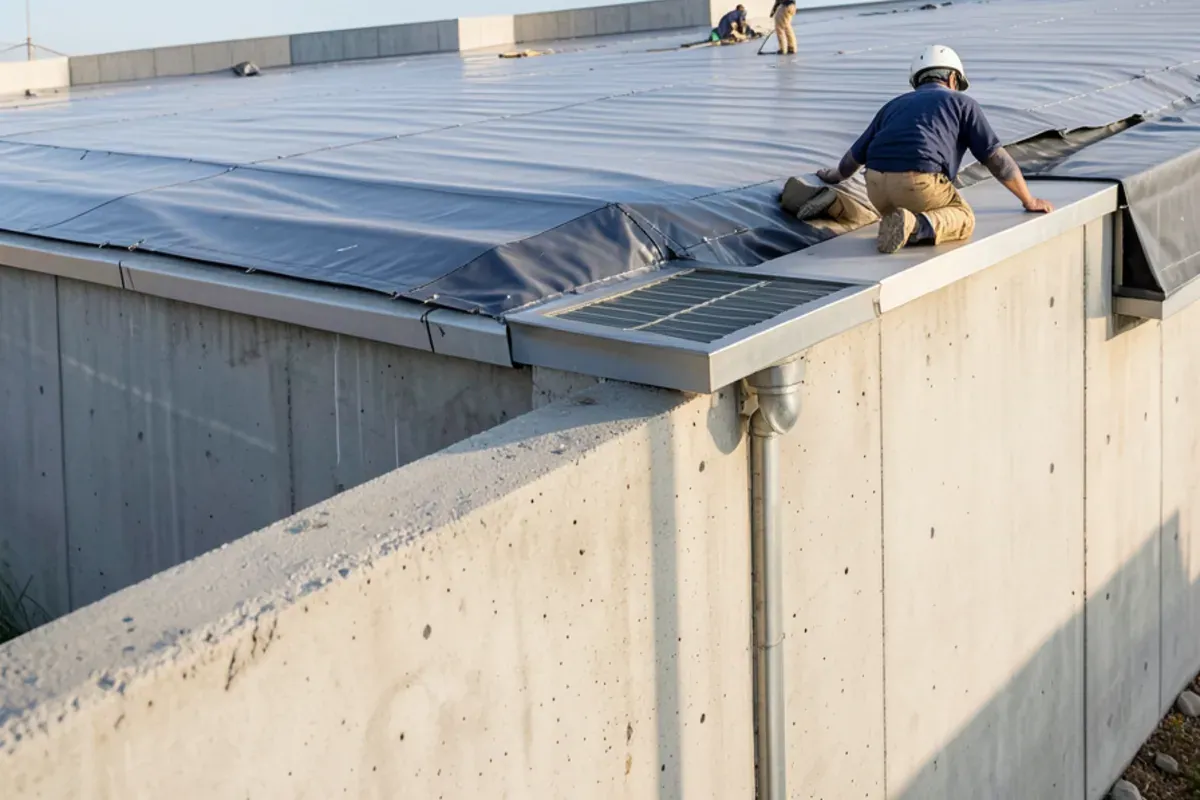
- Parapet and wall joints. Where the membrane turns up a tilt-up panel and ends under a coping or termination bar.
- Skylight and smoke vent curbs. Domes and curbs have their own seams and sealant.
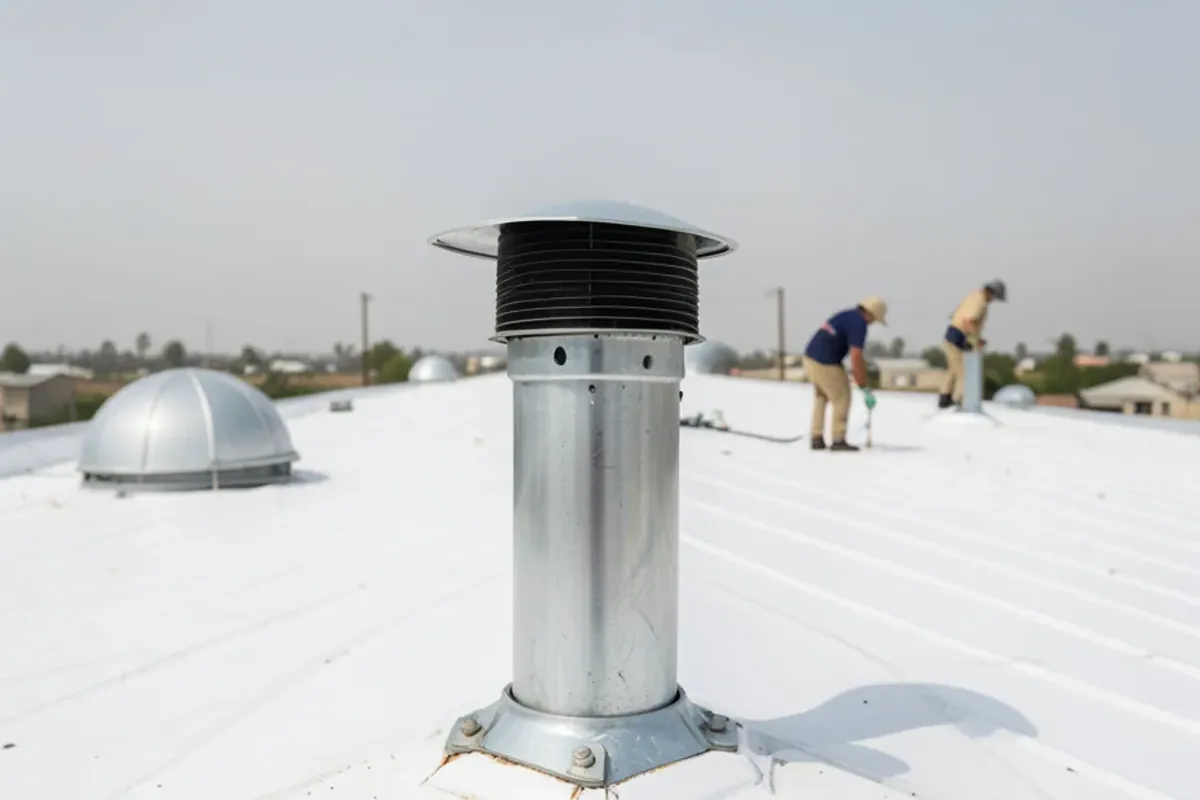
- Roof fans and exhaust stacks. Moving parts and hot exhaust stress flashing.
- Scuppers and drains. Overflow scuppers on a parapet roof clog with debris and push water into laps.
- Old patches. Layers of mastic and fabric that hide the original failure.
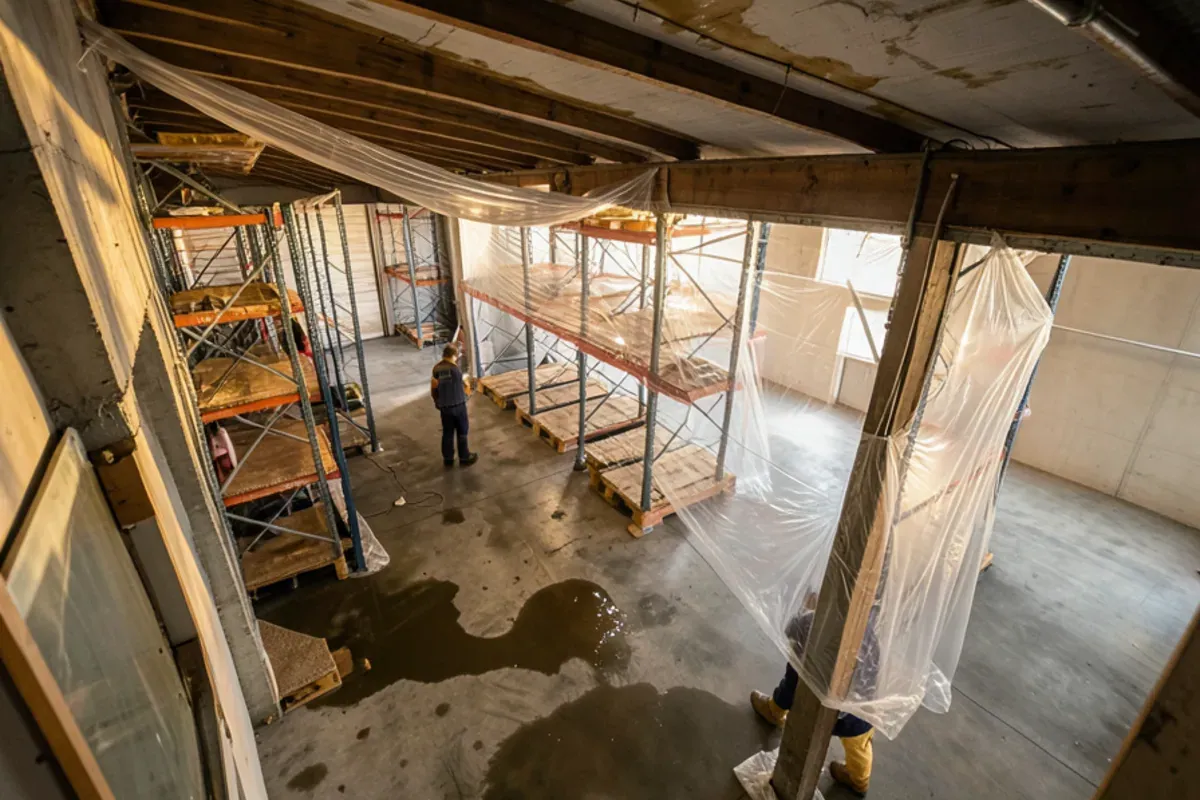
The signs inside the building are just as telling: drips over racking, rust streaks on wall panels or columns, stained deck flutes, and puddle marks on the slab that return after every storm. In Torrance, with most rain falling in a few storms between November and March, a roof that looked fine in summer can show every weak detail within a single week.
Water often finds a path along the deck and drops far from where it entered. Inside the building, we look at the underside of the deck and the interior of the wall panels where we can reach them.
What does an industrial roofing visit include?
On a large roof the scope has to be spelled out, because the same words can mean a half-day of repairs or a three-week project. A typical industrial scope includes:
- A full-roof survey with photos by bay, so findings can be tied to a place on the building.
- Interior look at the deck underside and wall panels near the suspected entry points, where we can reach them.
- Repair of the failed details: parapet terminations, curbs, fan and stack flashing, scuppers and seams.
- Skylight dome and curb work when they are the source.
- A written options summary covering repair, coating, recover and tear-off, with the reasoning for each.
- A sequence plan for hoisting, staging and sections, built around your shifts and dock traffic.
The result is a document your facilities team can act on, not a verbal estimate.
How do tilt-up roofs differ from other industrial buildings?
Tilt-up construction stands concrete wall panels upright and lays a lightweight roof deck across them. The roof usually spans wide bays with steel or wood girders, and it drains toward interior drains or perimeter scuppers. That layout has consequences:
- The roof is joined to the wall by a long seam that expands and contracts daily.
- The deck can deflect between supports, creating shallow ponding bays.
- Drains are few, so one clogged drain can load a large area with water.
- The parapet turns the roof into a shallow tray when drains fail.
If you are weighing a repair against a commercial roof replacement, ponding patterns and deck condition are often the deciding factor.
Large low-slope roof options
| Option | When it fits | Watch for |
|---|---|---|
| Spot repair | Leaks tied to a few details | Repeated repairs in new spots |
| Coating over sound roof | Dry, sound substrate with weathered surface | Trapped moisture, see roof coatings |
| Recover with new membrane | Dry insulation, sound deck | Added weight, code rules |
| Tear-off and replace | Wet insulation, damaged deck | Phasing, disposal, permit |
Systems used on big roofs include TPO, PVC, modified bitumen and built-up roofing. Our pages on TPO and PVC roofing and hot mop and built-up roofing explain how they differ.
Can skylight leaks in a warehouse be fixed with the roof?
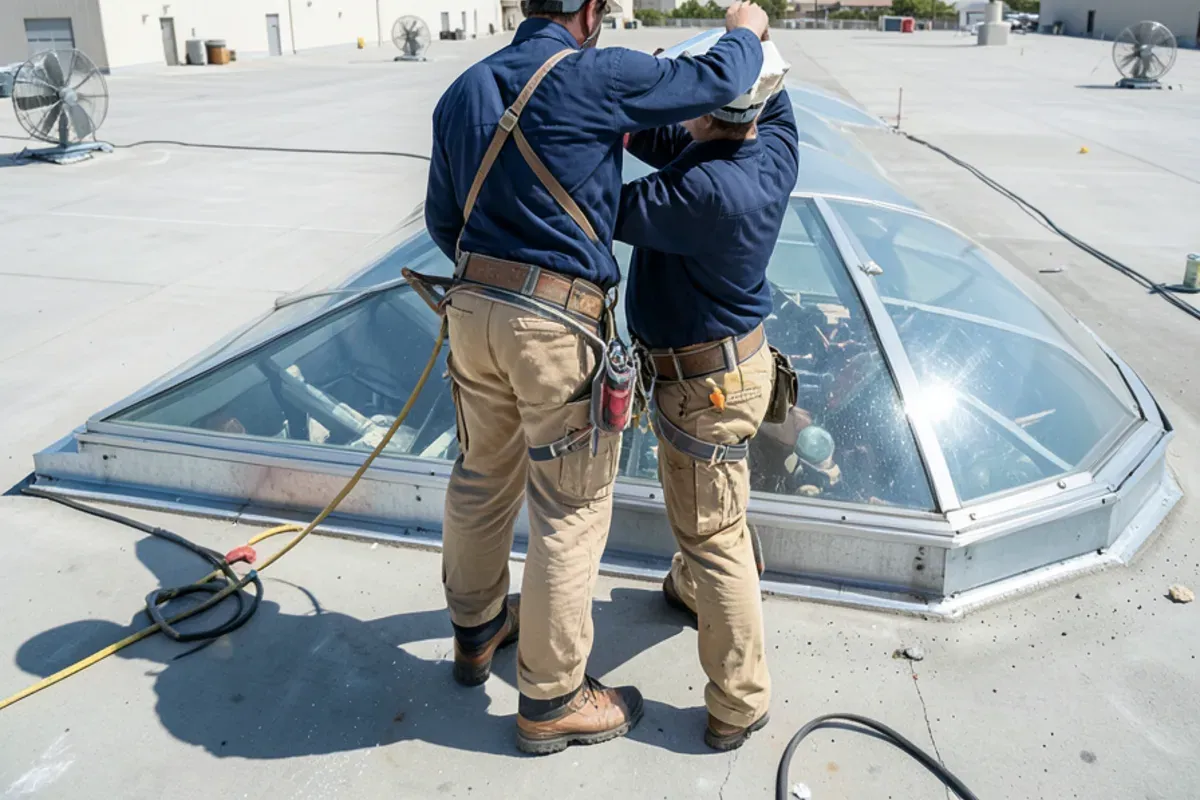
Usually, yes. Skylights are a common leak point on industrial buildings because the plastic domes crack and cloud in sun and the curbs rely on old sealant. When we are already on the roof, checking each curb and dome costs little. Cracked or yellowed domes can be replaced, and curb flashing can be rebuilt. Our skylight repair page describes the process. The roof and skylights are repaired together so the new work ties in cleanly.
What does a warehouse roof job look like in steps?
- Walk-through. We meet your facilities contact, mark sensitive areas and review access.
- Roof survey. Photos of seams, curbs, drains, walls and penetrations.
- Findings and options. Plain-language explanation of repair and replacement paths.
- Staging plan. Hoist, debris chute and parking agreed with you.
- Work in sections. Each area dried in before the next is opened.
- Production protection. Work over sensitive areas is timed with your facilities contact, and loading docks are kept clear.
- Cleanup and photos. The roof is swept, and you receive photos of the finished work.
What affects pricing on industrial roofs?
We do not publish numbers. Free estimates cover your specific roof. In general, cost moves with roof area, the system, the number of curbs and penetrations, deck and insulation condition, access and hoisting, and phasing around operations. Larger roofs tend to cost less per square foot, but wet insulation or deck repair can reverse that quickly. Ask about financing at your estimate.
Several variables are specific to industrial buildings:
- Skylight count. Each dome and curb adds a line item.
- Rooftop process equipment. Exhaust stacks and fans may need to be shut down, lifted or flashed around, and that takes coordination with your maintenance staff.
- Operating hours. Work around a three-shift operation differs from work on a single-shift site.
- Dock and truck access. Hoisting areas that block a loading dock raise the price of the schedule.
Permits, safety rules and licensing for industrial roofs
Inside Torrance, Building & Safety at (310) 618-5910 issues roofing permits, and a re-roof is inspected. Other cities and unincorporated areas have their own offices, such as LA County Public Works. Title 24, Part 6, set by the California Energy Commission, applies to many low-slope nonresidential roofs, with requirements that depend on climate zone, slope and how much roof is replaced. Cal/OSHA sets fall protection rules for work near roof edges and skylights, and owners are expected to keep access safe. Confirm requirements for your address, and check any roofer's license on the CSLB website before signing.
Why Crown Trim for industrial roofing?
- We explain repair and replacement options in plain terms and show you photos of the roof.
- A repair first when a repair will do.
- Free estimates and free roof inspections, with same day or next day service available.
- Thorough cleanup around loading areas and landscaping.
- 4.8 stars from 73 Google reviews.
Industrial districts we serve around Torrance
Industrial roofs fill much of the South Bay. We serve warehouse and industrial buildings in Torrance and nearby cities such as Carson, where large distribution and manufacturing buildings are common, and Redondo Beach and Rancho Palos Verdes for the smaller commercial buildings. Each city issues its own roofing permits. For storage facilities and corrugated roofs, see metal building roofing, and for multi-building residential properties, apartment and HOA roofing.
Where we do warehouse & industrial roofing around Torrance
Each place brings its own version of this job.
- Vernon: Food-processing, cold-storage and warehouse buildings fill the city, and a leak over temperature-controlled product makes fast access and clean staging critical.
- Commerce: Rail-yard distribution buildings with very large low-slope roofs make section-by-section phasing and drain loading the central planning questions.
- Santa Fe Springs: An oil-era industrial base means warehouse and manufacturing roofs outnumber homes, with rooftop process equipment that needs coordinated shutdowns.
- Industry: Almost entirely distribution warehouses, with very long roof runs where a few clogged drains can load huge areas with standing water.
- South El Monte: Light-manufacturing roofs beside Whittier Narrows combine skylights, fans and older patched membranes that need an honest condition survey.
- Irwindale: A quarry and industrial city where warehouse and manufacturing roofs outnumber homes, so large low-slope roofs are inspected and photographed.
- West Rancho Dominguez: Warehouses near Rosecrans and the 110 fall under county permits, which changes the permit office and inspection routine compared with Torrance.
- Paramount: Light industry along Rosecrans and Alondra sits tight against dense housing, so staging, noise hours and debris control need extra planning.
- El Segundo: Aerospace and refinery-adjacent buildings east of Sepulveda carry heavy rooftop equipment and strict site access that shape roof work.
- Pico Rivera: Large former assembly-plant and industrial parcels along the San Gabriel River mean long roof spans and wide-bay tilt-up construction.
What customers say about this work
Crown Trim Roofers holds 4.8 stars from 73 Google reviews. Read all reviews
“The first time, we needed help with a rental property in Torrance where water was leaking onto the first-floor ceiling of our two-story house.”
“From the first estimate to the final cleanup, the crew handled every step on time and with real professionalism.”
“They kept the work area incredibly clean, tidying up the yard and deck before leaving each day.”
Warehouse & Industrial Roofing: common questions
What roof problems are most common on Torrance tilt-up buildings?
The usual ones are opened seams along parapet walls, cracked flashing at wall-to-roof joints, ponding where the deck has deflected, failed sealant around penetrations and leaks at skylight and fan curbs. Long roof spans also expand and contract with temperature, which stresses laps and edge terminations. Most start in details, not in the open field.
Can you repair warehouse skylights at the same time as the roof?
Yes, we can address skylight domes and curbs during roof work. Skylight leaks are often a flashing or curb problem, not a roof membrane problem, so doing both at once avoids paying for access twice. We tell you if a dome is cracked or yellowed enough to replace. See skylight repair for the repair approach.
How do you keep work crews away from production areas?
We agree on staging, roof access and walking routes with your facilities contact before the first day. Hoisting and debris chutes go on the least busy side of the building, and we keep equipment away from loading docks, doors and air intakes. Interior spots under active work can be marked off. Tell us which areas are most sensitive.
Can you work on one section of a big warehouse roof at a time?
Yes. Large roofs are usually divided into sections, and each one is dried in before we move on. That keeps the building protected if weather arrives. The sequence is set with your facilities manager, often starting where leaks are worst.
Do you work on factories and manufacturing buildings?
We work on commercial buildings, which includes warehouses and manufacturing facilities. Rooftop process equipment, exhaust stacks and fan curbs add detail to the roof, and we plan around them. Bring any known roof drawings or equipment lists to the estimate.
Related services and guides
Metal Building & Storage Facility Roofing
Apartment & HOA Roofing
Warehouse Roof Leaks in Torrance: Finding the Source
Commercial Roof Maintenance Plans for Property Managers
HOA Roof Replacement: A Board Member's Guide
Where we work: Carson, Redondo Beach, Rancho Palos Verdes, Gardena and the rest of our service areas.
Leak over inventory? Get the roof checked this week.
Call first. A roofer picks it up from there.