
Animal Damage Roof Repair in Torrance, CA
- 4.8★ from 73 Google reviews
- Free estimates
- Same day or next day service
- Photos of what we find
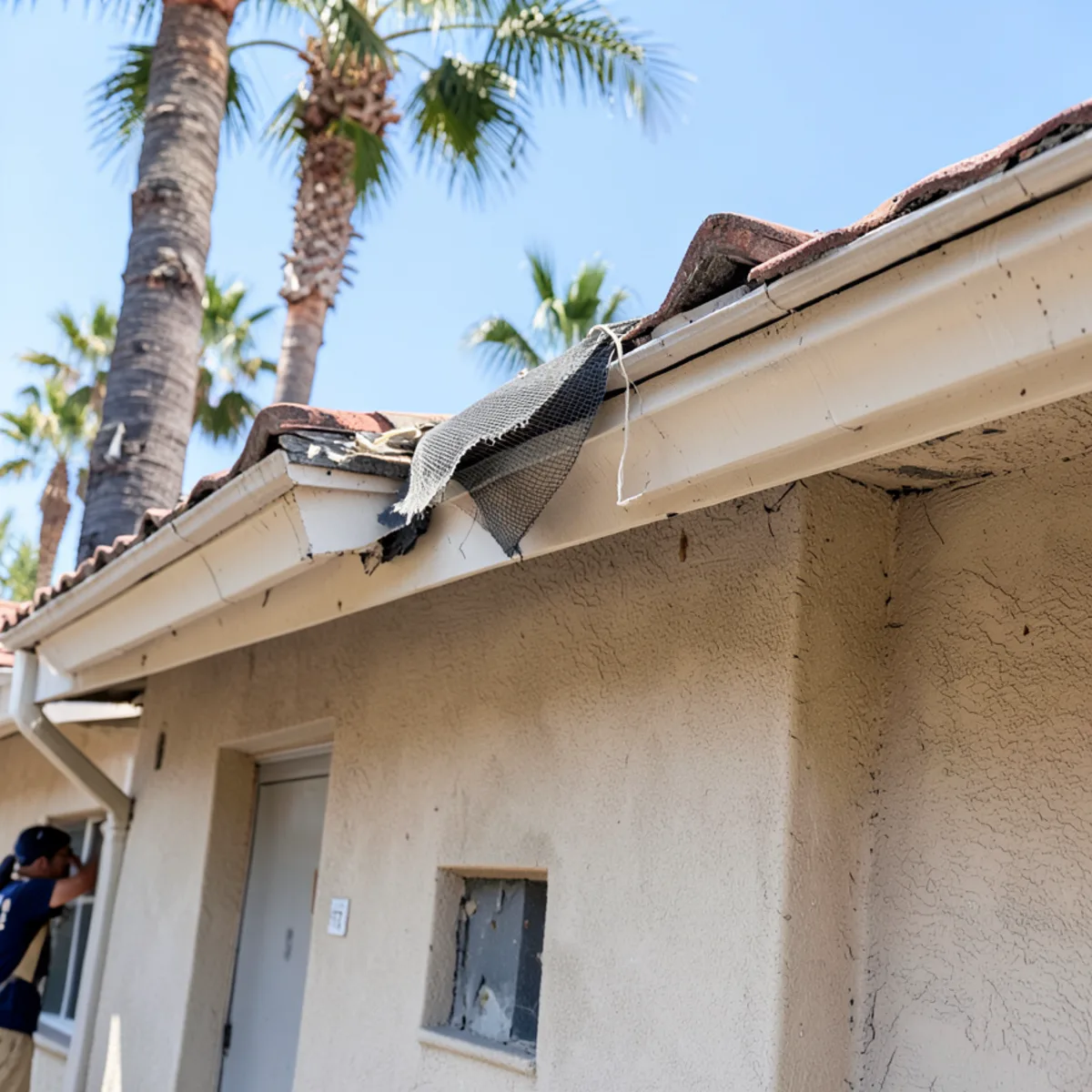
Roofs fail from the weather, and sometimes from the neighbors in the trees. Rats, raccoons, squirrels and birds all treat the roofline as a doorway. They find a soft board, a bent vent screen or a lifted tile, and they widen it. This page covers animal damage roof repair in Torrance: where animals get in, what they do to a roof, and what the repair involves. It sits within our broader roof repair work, and a roof leak can be the first sign, as our roof leak repair page explains.
What are the signs rats and raccoons are getting through a South Bay roof?
Most people hear it first: scratching or running along the ceiling at dusk and before dawn. Then come the physical signs, such as droppings near vents, grease smudges on fascia, torn insulation, a stale smell in the attic or daylight where a vent cover used to sit. The cause is nearly always the weakest spot on the roofline. For roof rats, that means any gap around half an inch wide, which is smaller than most people expect. They reach the roofline by climbing palms, ficus and other trees, fences, wires and wall corners. Raccoons are heavier and stronger. They tear loose vent covers, lift ridge pieces and force fascia boards.
Common entry points:
- Eave and gable vents with bent or torn screens
- Where the roof meets a wall or chimney with a gap behind trim
- Fascia and soffit boards that are soft or already rotted
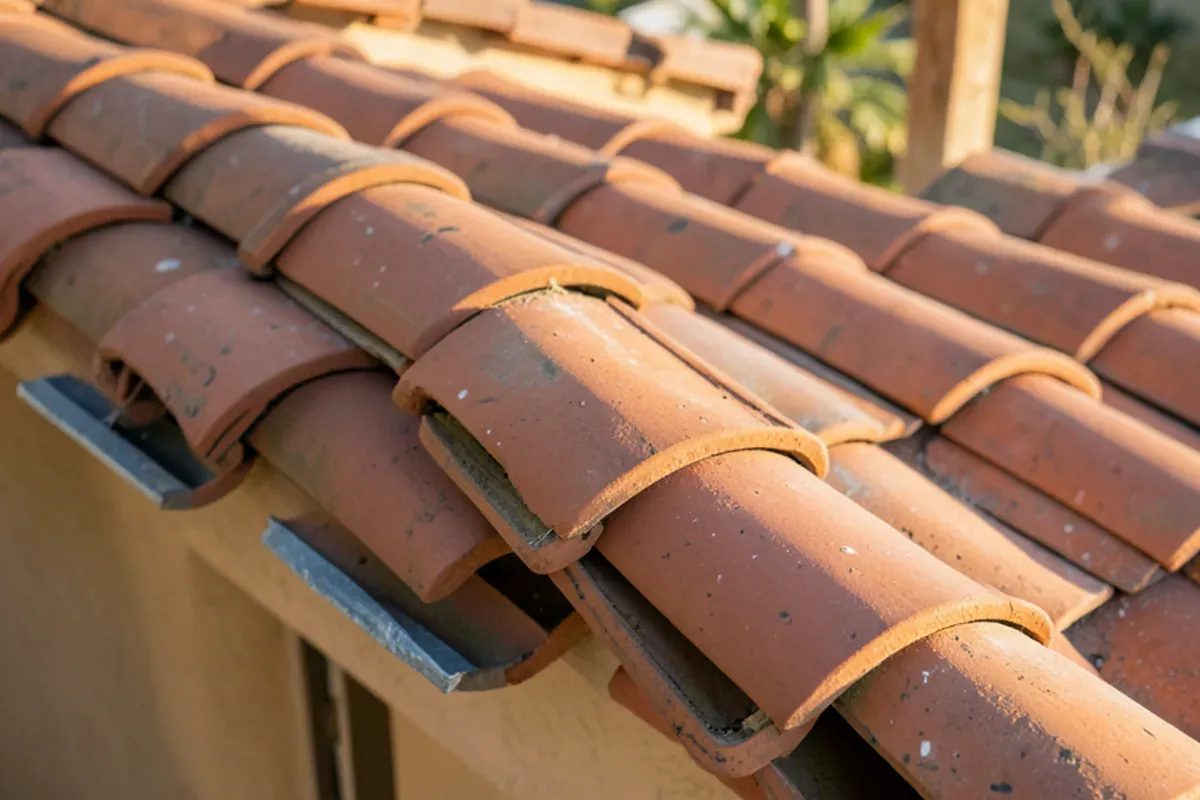
- Broken or slipped tiles, especially at the eaves
- Ridge caps and ridge vents that have been lifted
- Plumbing and fan penetrations where flashing has pulled away
Our vent boot repair page covers a similar family of openings, and a rat can use a cracked boot as easily as water can.
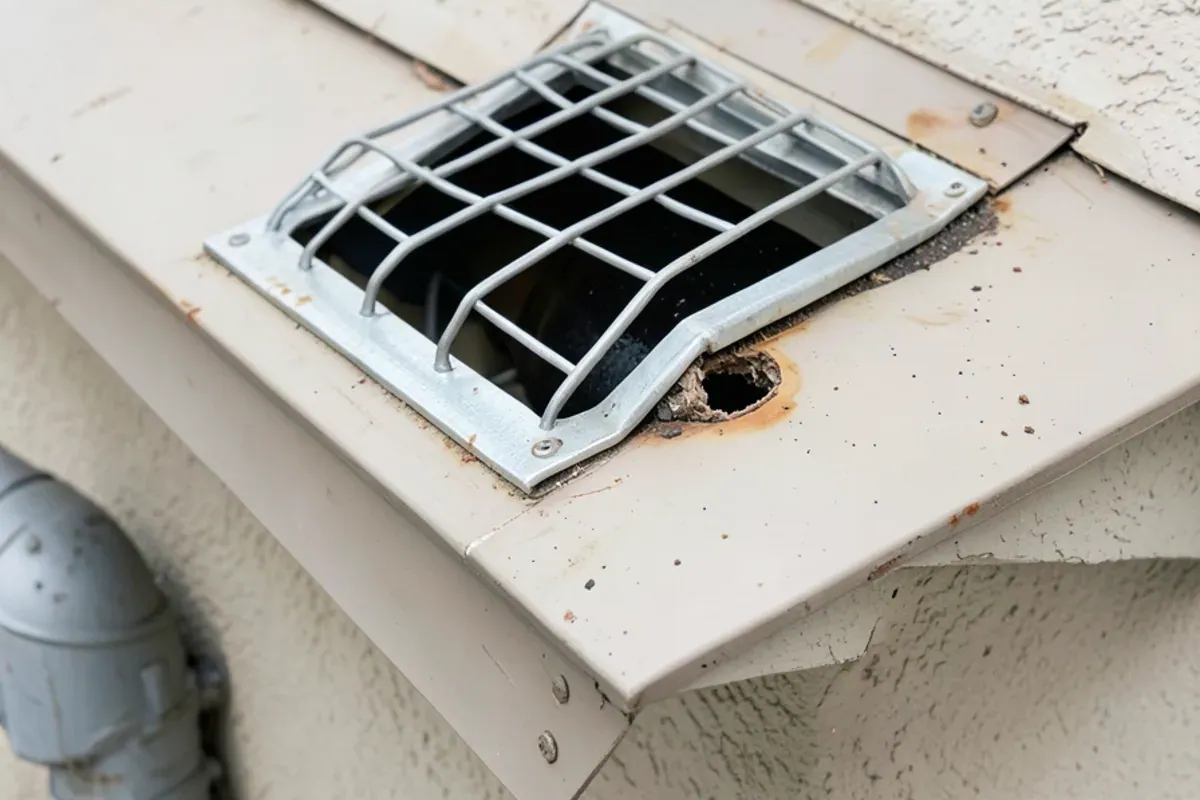
Rodent and raccoon roof damage repair
Rodents chew constantly, because their teeth never stop growing. They gnaw wood, vinyl, wire sheathing and the corners of vent covers. A hole the size of a coin becomes a doorway in weeks. Rat entry through a roof vent is the most common story. They push past a thin screen, and the screen never gets replaced.
Repair means more than plugging the hole. We cut out chewed or rotted trim and fascia, replace it with sound material, close the opening with metal flashing or mesh and seal the edges. If they have also torn flashing or roofing, those get fixed so water does not follow.
Raccoons are rarely subtle. They peel back vent covers, rip through soft soffits and bend ridge pieces to reach warm, dry attic space. The damage looks like a torn edge or a lifted flange, not a small gnaw mark. A raccoon-damaged vent or a lifted ridge cap leaves a gap big enough for weather and for more animals. We rebuild or replace the damaged part, and fasten it so it resists being pried again.
Raccoons are also a reason to sequence the work: removal first, repair second.
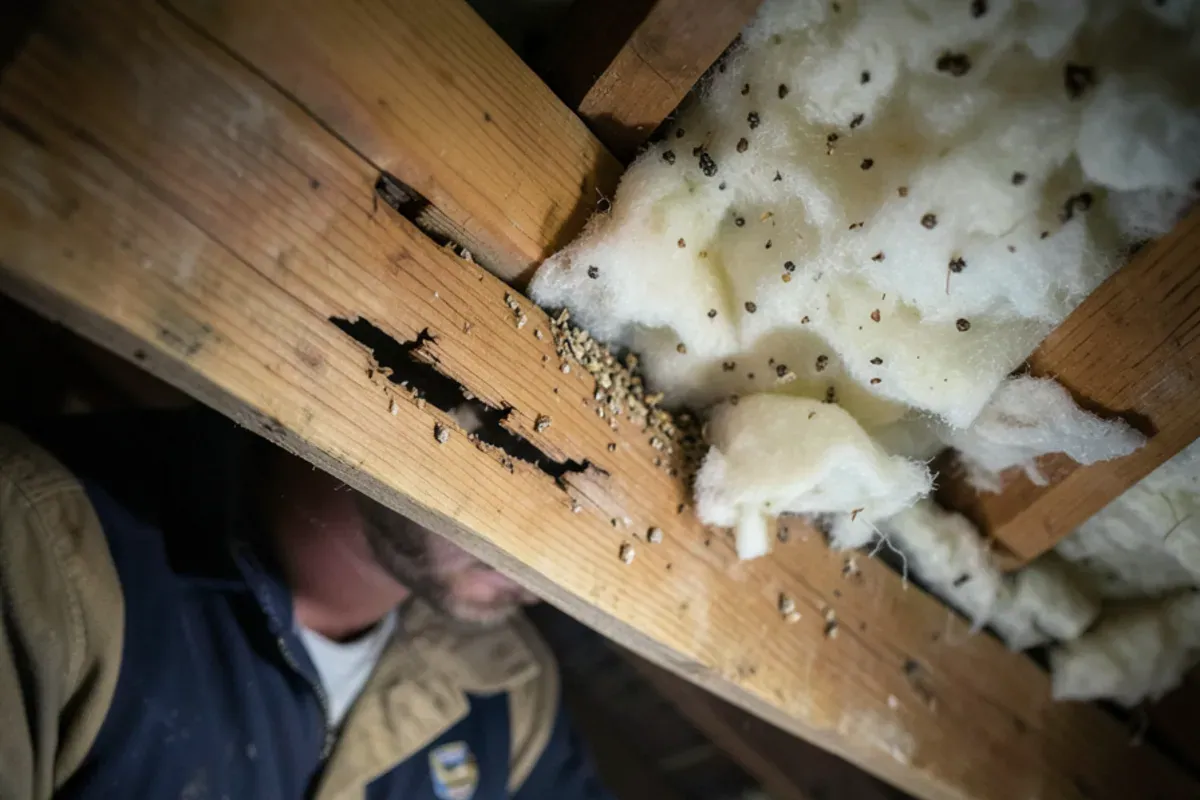
Squirrel chewed fascia, bird damage and nesting
Squirrels chew fascia corners and the gaps beside gutters to get under the eaves. Birds nest in the open ends of barrel tiles and under loose flashing. Their nesting material can block gutters and vents, and droppings can stain and eat into finishes.
Fixes for those:
- Replace gnawed fascia sections and prime and paint the new wood
- Install bird stops or eave closures at the open ends of tile
- Seal gaps along gutters, trim and flashing
- Clear nest debris from vents and valleys
For fascia damage that goes beyond animals, such as rot from water, we reference our fascia, soffit and roof trim service.
Vent screen replacement: the small part that does the job
Attic vents are meant to let air through and keep animals out. The standard fine-mesh screen does the first job and fails at the second. A screen that can be pushed in with a finger will not hold a rat.
A better vent screen:
- Uses heavy gauge welded wire mesh, galvanized, with openings small enough to stop rodents.
- Is fastened with screws and washers, not staples.
- Is installed with a sealed edge, so there is no gap along the frame.
- Leaves enough open area for airflow, so the attic still breathes.
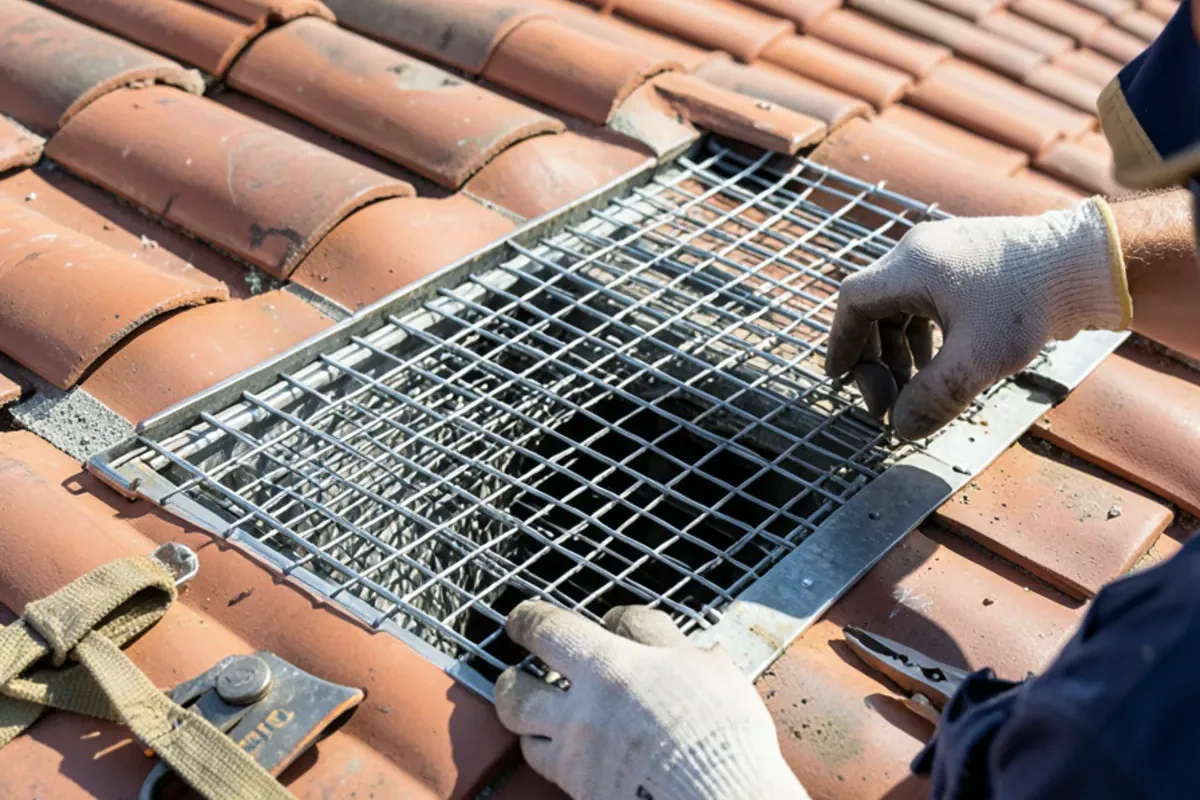
Our post on poor attic ventilation signs explains why airflow matters.
Should wildlife be removed before roof repair?
Yes, in almost every case. If an animal is inside and the entry is sealed, it will try to chew a new way out, or it will die in the walls. In spring, mothers may have young inside. A wildlife control company handles trapping and one-way exclusion devices, which fall under rules we leave to them. After the animals are gone, we close the entry points and rebuild the damage. We can coordinate scheduling with that company when you ask.
What does animal damage roof repair include?
The goal is a roofline nothing can get through and a roof that sheds water again. We trace each entry from the attic and the roof, photograph every chewed or torn spot and list what has to be rebuilt. Trapping, removal and attic cleanup belong to other trades, and we say where our part ends.
- Entry-point survey of vents, eaves, fascia, tile ends, ridge and penetrations
- Chewed fascia, soffit and trim replaced with sound material
- Heavy gauge mesh or metal closures over vents and gaps
- Bird stops or eave closures at open tile ends
- Torn flashing, lifted caps or roofing repaired where water follows the entry
- Attic photos so you can plan insulation cleanup
How do we repair animal damage, step by step?
- Listen first. What have you heard, where, and when? Have you had pest control out?
- Inspect the roofline. Vents, fascia, eaves, tile ends, ridge and flashing, from the roof and the ground.
- Check the attic. Gnaw marks, nesting, trails, torn insulation and any water stains, photographed.
- Show you. Photos of each entry point and a plain explanation of repair options.
- Coordinate timing. If animals may still be inside, repair waits for removal.
- Repair and seal. Rebuild trim, replace vents or screens, close tile ends, fix flashing.
- Clean up. Debris cleared, landscaping and driveways protected.
What decides the price of animal damage repair?
Estimates are free and we do not post prices. As market context, 2026 published cost guides put most roof repairs between $300 and $1,500. That is published data, not our quote. Cost moves with:
- The number of entry points
- Whether wood trim is chewed through or still solid
- Tile, shingle or flat roofing around the opening
- Whether water damage or nesting has reached the deck
- Height and access to the damaged areas
A single torn vent screen is a small fix. Gnawed fascia that has rotted behind the paint, lifted ridge pieces or tile ends that need closures add carpentry and height work. Wet insulation and droppings are not part of our work, because that cleanup goes to a remediation specialist.
What do California rules say about wildlife and your roof?
The state, not the roofer, regulates what happens to the animal. The California Department of Fish and Wildlife restricts trapping and generally does not allow relocating nuisance wildlife, so a wildlife control company handles removal. Active bird nests are protected under the federal Migratory Bird Treaty Act and California Fish and Game Code section 3503, which can mean waiting until a nest is empty before closing an opening. The roof repair itself follows the building department: City of Torrance Building & Safety, (310) 618-5910, or LA County Public Works for unincorporated areas. Check any roofer's license on the CSLB site.
Why Crown Trim for animal damage repair?
- Same day or next day service when something is getting into your attic.
- You see photos of each entry point, not just a list.
- Free estimates and free roof inspections.
- A repair first when a repair will do, replacing only the parts the animals ruined.
- Thorough cleanup, with landscaping and driveways protected.
- Reviewers rate us 4.8 stars across 73 Google reviews.
Keeping them out for good
Trim branches at least a few feet from the roof edge. Keep fruit and nuts picked up and pet food indoors. Check vents and eaves each season. When a shingle roof repair is underway, ask us to check the eaves at the same time.
We repair animal damage across the South Bay, including Carson, Redondo Beach and Rancho Palos Verdes. Homes near canyons and tree-lined streets see more climbers, so their rooflines get extra attention.
Where we do animal damage roof repair around Torrance
Each place brings its own version of this job.
- Rolling Hills Estates: Rolling Hills Estates: horse-property lots with mature trees and open hillside nearby bring climbers to rooflines and eave vents.
- Glendale: Glendale: Verdugo foothill neighborhoods border open hillside, so raccoons and squirrels reach tile ends, eave vents and fascia from the brush.
- Pasadena: Pasadena: Bungalow Heaven and Rose Bowl-area estates sit under mature trees that give rats and squirrels a bridge to wood eaves and rafter tails.
- Whittier: Whittier: hillside neighborhoods above Whittier Boulevard and Uptown's early 1900s homes have wood trim and old eaves that animals widen.
- Monterey Park: Monterey Park: hillside subdivisions around Garvey Ranch Park sit against slopes and mature landscaping that bring wildlife to the roofline.
- La Habra: La Habra: homes below the Puente Hills sit beside open ground, so tile ends and eave vents are the usual entry points.
- Burbank: Burbank: Rancho equestrian lots and Magnolia Park bungalows have mature trees and older wood eaves that invite rat and squirrel entry.
- Orange: Orange: Old Towne's Craftsman and Victorian homes have wood eaves and fascia that squirrels and rats gnaw, near mature street trees.
- San Dimas: Horse-property tracts at the foothill edge have outbuildings and tree cover that draw rodents toward eaves and attic vents.
- East Whittier: Ranch homes at the foot of the Puente Hills sit near open slopes, so eaves, vents and attic gaps are the entry points we check.
What customers say about this work
Crown Trim Roofers holds 4.8 stars from 73 Google reviews. Read all reviews
“I recently noticed a small stain on my newly painted ceiling, so I figured I might have a roof leak.”
“The crew showed real skill with roofing, flashing, shingles, and cleanup, and they made sure everything was done the right way for long-term protection in the Torrance weather.”
“the office communication at the beginning was clear and very helpful, and we received accurate estimates that stayed on budget.”
Animal Damage Roof Repair: common questions
How do rats and raccoons get through a South Bay roof?
Roof rats climb trees, palms, fences and wires to reach the roofline, then squeeze through gaps about half an inch wide at eave vents, roof-to-wall joints and broken tiles. Raccoons are stronger. They pry up vent covers, ridge pieces and loose fascia. Both use whatever weak spot is easiest. We find those spots, then close them with metal and fasteners, not foam.
Should wildlife be removed before you repair the roof?
Yes. Sealing an opening with animals still inside traps them, and in nesting season it can strand young animals. A wildlife control or pest company removes the animals first, then we close the entry points and repair damage. We coordinate timing with them when you ask, and we do not handle the trapping ourselves.
Can vent screens keep rodents out of my attic?
Good ones can. Thin aluminum insect screen tears easily and rats chew through it. Heavy gauge welded wire mesh, fastened with screws and washers instead of staples, holds up. The mesh must still let air through, so attic ventilation is not blocked. We inspect each vent and replace the weak ones.
Do you clean up droppings and insulation?
No. We repair the roof and the entry points. Contaminated insulation, droppings and odor removal are cleanup work for a specialist in attic remediation. We photograph what we see in the attic and tell you if it looks like it needs that, so you can plan next steps.
What are signs that animals are on my roof?
Scratching or running at dusk and dawn, gnawed edges on fascia or vents, torn screens, rub marks along a roof edge, slipped or broken tiles near the eaves, and droppings or nesting material near openings. A smell in the attic or a stain on the ceiling can also be a clue. Call before the damage widens.
Will animal damage show up as a roof leak?
It can. Chewed vent covers, torn flashing and lifted ridge caps all let rain in. A raccoon-torn vent can leak the next time it rains. We repair the entry and any water damage we find around it.
Related services and guides
Roof Leak Repair
Shingle Roof Repair
Ceiling Stain After Rain: Emergency or Wait and Watch?
Roof Repair Cost in the South Bay: Small Fix or Big Job?
Why Rubber Vent Boots Fail in Southern California Sun
Where we work: Carson, Redondo Beach, Rancho Palos Verdes, Gardena and the rest of our service areas.
Scratching in the attic? Find the entry point first.
Call first. A roofer picks it up from there.