
Vent Boot & Pipe Collar Repair in Torrance, CA
- 4.8★ from 73 Google reviews
- Free estimates
- Same day or next day service
- Photos of what we find
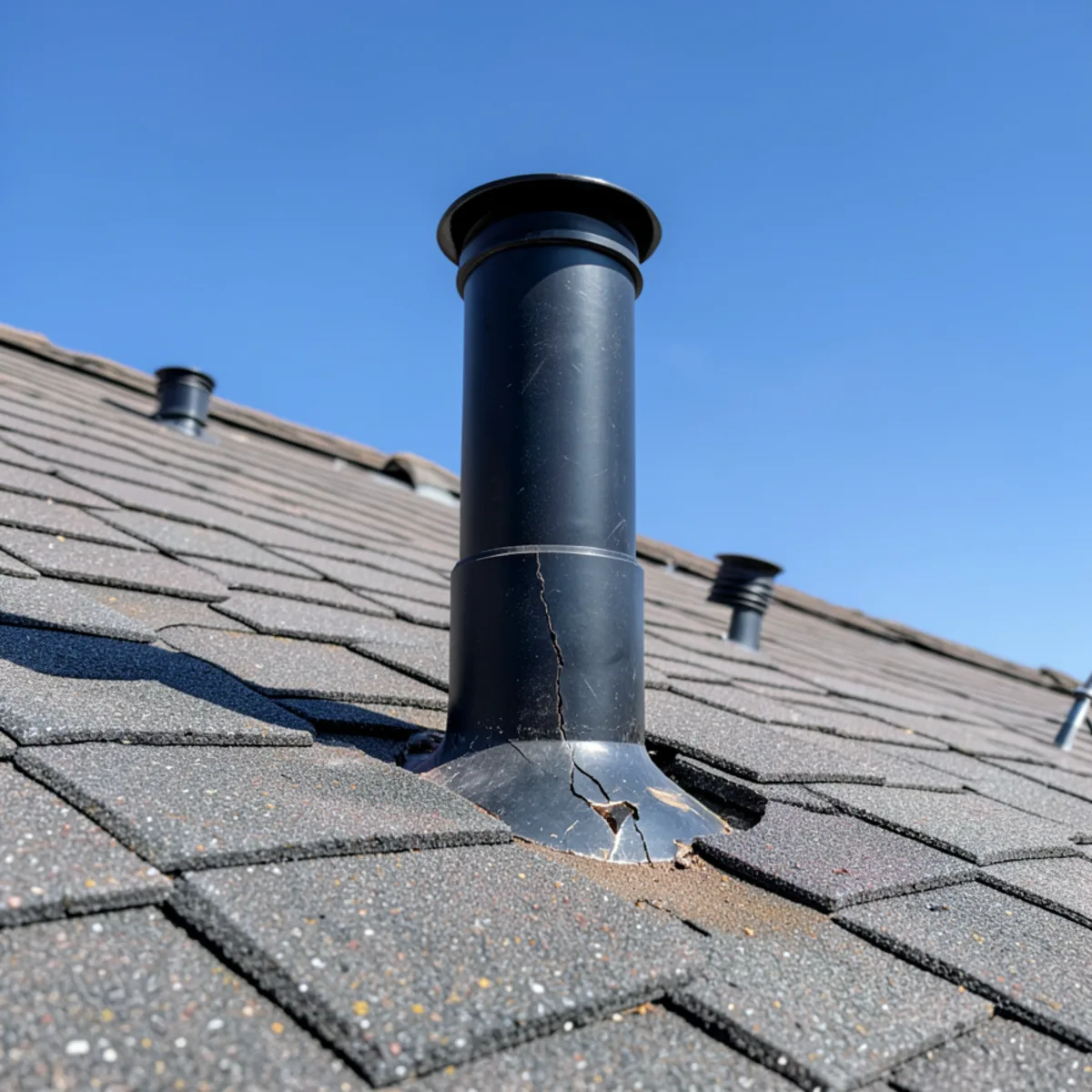
Every pipe that pokes through your roof is a hole with a ring around it. On most South Bay homes that ring is a rubber boot, and it is also the first thing on the roof to wear out. This page explains how vent boot repair works in Torrance, why the failures look the way they do, and what a proper replacement involves. It is one of the smaller jobs in our roof repair work, and our post on why rubber vent boots fail in the sun goes into the material.
How does a pipe boot repair stop a roof vent pipe leak?
A boot is a flat metal or plastic flange that sits under the shingles, with a rubber collar that grips the pipe. Water running down the shingles goes over the flange. Water running down the pipe is stopped by the collar. When the collar cracks, rain follows the pipe through the roof deck and into the attic, where it drips onto insulation, a ceiling or the wall cavity beside the pipe.
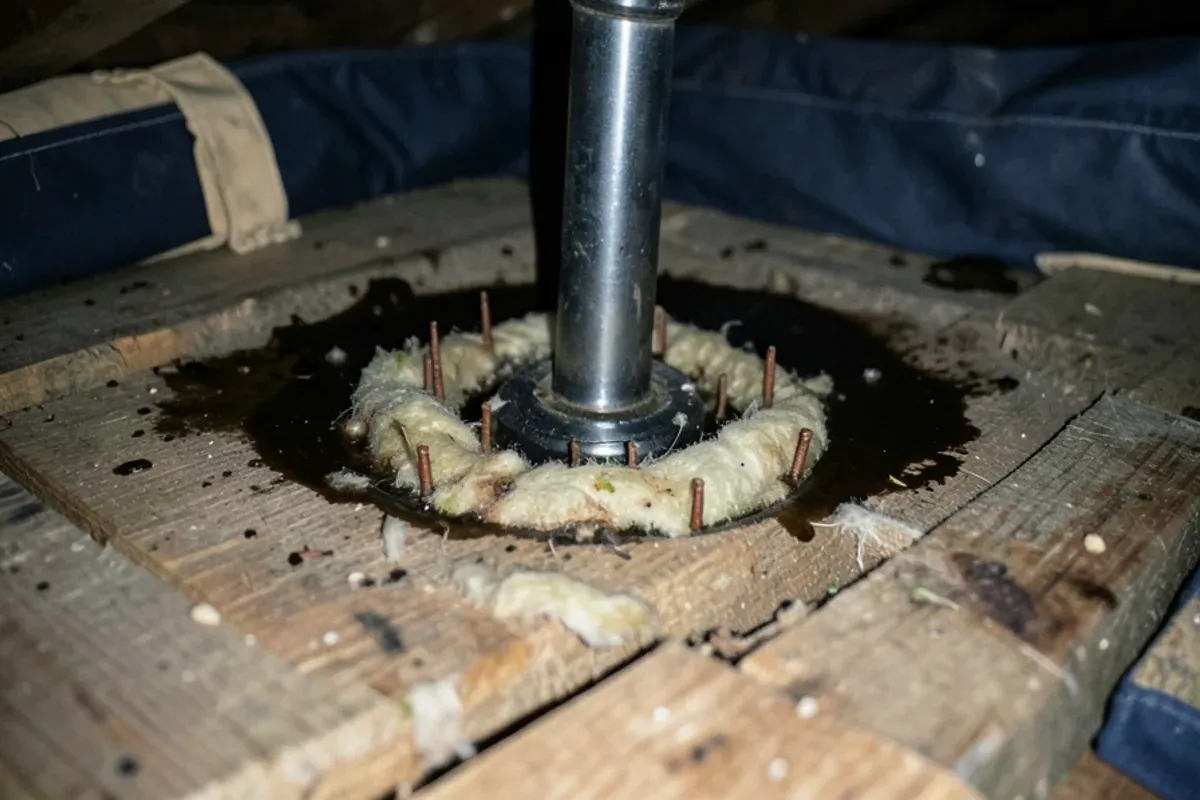
A roof vent pipe leak has a recognizable look. You see a stain right under a pipe, or a trail on the attic side of the pipe, or insulation that is damp around the base. One Google reviewer wrote that they noticed "another leak near one of my vent pipes" after a first leak on the same roof had been dealt with.
What are the signs you need a new pipe boot?
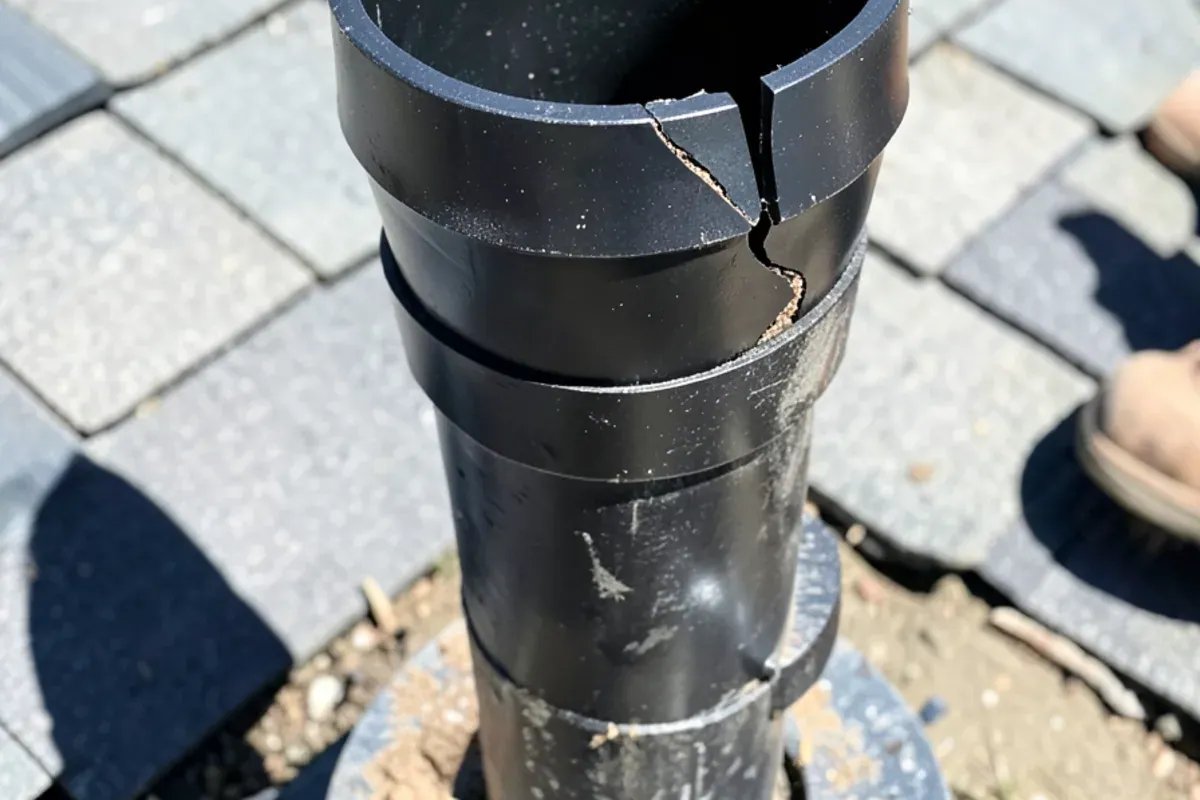
A failing collar gives warning before the ceiling does. Look for these signs from a ladder at the eave or on a photo we send you:
- Fine radial cracks in the rubber, like dried mud
- A gap between the rubber ring and the pipe, big enough to see daylight
- The ring shrinking and lifting so the pipe stands in a loose hole
- Crumbling edges that leave black dust on the shingles
- A flange that has rusted, bent or lifted from nail pops
Rubber on a Southern California roof gets no shade. Ultraviolet light and heat strip the oils out of it, and it loses its grip on the pipe. Boots on 1960s Torrance roofs have often outlived one or two re-roofs, and the first winter storm after a dry summer is when a cracked collar shows itself. The flange beneath can be fine, so some repairs reuse it and others do not.
Replacing the vent collar: three repair options
| Option | How it works | Trade-off |
|---|---|---|
| Replace the whole boot | Lift the shingles, slide out the old flange, set a new boot under the upper shingles and over the lower | Best seal, but shingles around it must be lifted without cracking |
| Slip-over collar | A new rubber or metal-and-rubber collar fits over the old boot and pipe | Faster and cheaper, but only works when the flange is sound |
| Metal boot or lead-type sleeve | A flashing with a longer-lived sleeve around the pipe | Costs more up front, and lasts longer in sun |
Brittle shingles can break when lifted, so on a roof with several boots a slip-over collar may be the safer move.
Plumbing vent flashing, flues and painted roof vents
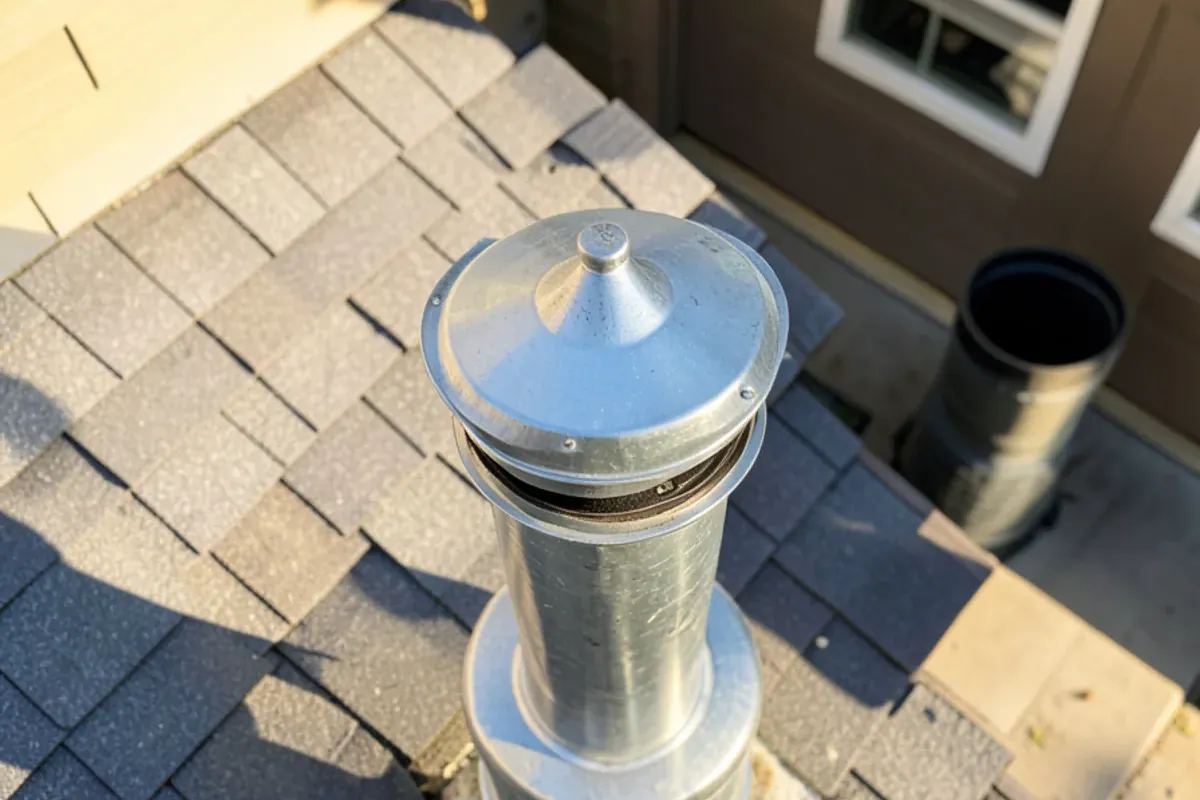
Not every pipe is the same. A plumbing stack is a 2- or 3-inch pipe rising from your drains, and it takes a boot. A water heater or furnace flue is a metal pipe with a conical storm collar and a rain cap on top. A bathroom fan can exit through a roof jack with a hood. Each needs the right flashing, and none should be sealed shut.
We identify each penetration before touching it. If you have a gas appliance vent, we will not alter the pipe itself and we tell you if its collar is rusted so you can have the appliance company look at the flue.
Roof vents and pipe flashings are usually bare galvanized or black. On a new roof they can stand out. One Google reviewer noticed the roofers "painting the roof vents and pipes to match the new shingles" and said it made everything look great. We can do the same on a re-roof or repair, in dry weather.
Paint is cosmetic. It never replaces a cracked boot.
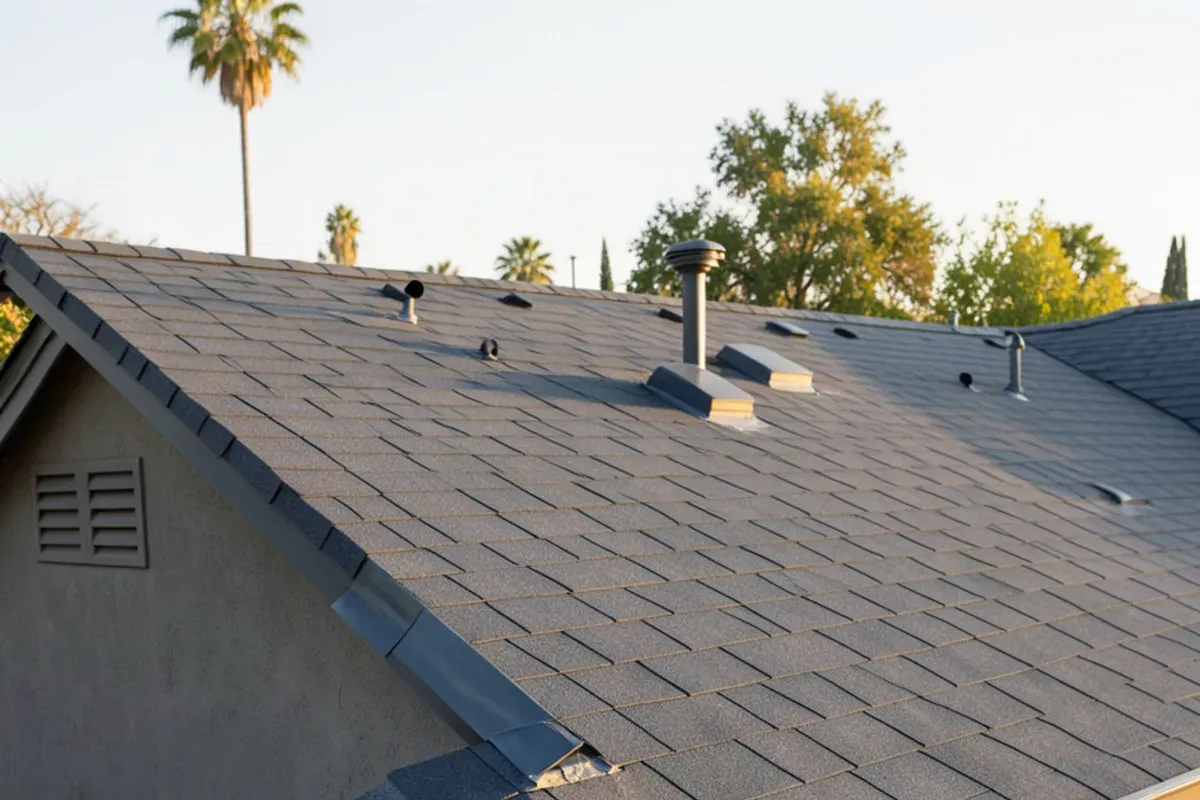
Ridge vent sealant and where it matters
Ridge vents are long, slotted caps along the peak that let attic air out. Their leaks come from a different set of problems: nails driven too far, loose end caps, lifted caps in wind, and cracked sealant where the vent meets the shingles. If you see staining near the ridge or on the attic side of the peak, we check the ridge vent as well. Repairs may be fresh sealant at the end caps, new fasteners, or replacing a damaged cap section. Our ridge cap repair page covers the roof peak itself.
What does a vent boot repair include?
A boot repair is small, but it is not a dab of sealant. We start in the attic under the pipe, because a ceiling stain is often several feet from the pipe that leaks. Then we check every pipe, flue and vent on the roof, since boots share the same sun and age.
- Attic check under the suspect pipe for stains, wet insulation and rusted nail tips
- Inspection of every plumbing vent, flue collar and fan hood
- New boot, slip-over collar or metal sleeve, matched to the pipe and the shingle condition
- Replacement of wet or soft decking right at the pipe
- Painting of vents and pipe flashings to match the shingles, on request
- Cleanup, with landscaping and driveways protected
How do we replace a vent boot, step by step?
- Confirm the leak source. We check the attic under the pipe for stains, wet insulation and rusted nails, then take photos.
- Inspect every penetration. All boots, flues and vents on the roof are checked, not just the suspect one.
- Show you the findings. You get photos of the cracked rubber, and the choice between a one-boot fix and a full set.
- Lift and remove. Shingles are loosened, old fasteners pulled and the old boot is taken out.
- Install and seal. The new flange goes under the shingles upslope and over those below, fasteners are covered, and the collar is fitted tight to the pipe.
- Clean and verify. Debris is cleaned up, landscaping and driveways are protected, and the stain is rechecked after the next rain.
Most boot replacements are a same-visit fix once the leak is located.
What affects the cost of vent boot repair?
We offer free estimates and do not post prices. As market context only, 2026 published cost guides place most roof repairs between $300 and $1,500, and a single boot is at the small end of that kind of work. That is published data, not our quote. The number moves with:
- How many boots or flues need replacing
- Shingle age and whether they lift cleanly
- Roof pitch and height
- Whether the deck around the pipe is wet or soft
- Extra items such as paint, new storm collars or a damaged ridge vent
Access and condition drive the cost more than the part does. A steep two-story roof, brittle shingles or a wet deck under the pipe can turn a quick swap into a longer job.
Who sets the rules for pipe and vent work in Torrance?
A boot swap is routine repair work, but permit rules depend on the scope and the city. Ask City of Torrance Building & Safety, (310) 618-5910, or the department for your address: LA County Public Works for unincorporated areas such as West Carson, LADBS in the City of Los Angeles. Gas appliance flues and water heater vents fall under the plumbing and mechanical codes, so the appliance installer or a qualified contractor should handle any change to the pipe itself. California requires a contractor license for most roofing work, so look up any roofer on the CSLB site and get the estimate in writing.
Why Crown Trim for vent boot leaks?
- Same day or next day service when water is coming in.
- We check the attic as well as the roof and show you photos of the pipe and the stain.
- Estimates and inspections are free.
- If one boot is the cause, one boot is what we fix. We do not push a full replacement.
- Thorough cleanup, with landscaping and driveways protected.
- Reviewers rate us 4.8 stars across 73 Google reviews.
Staying ahead of the next split
Check the boots when you check the gutters. Rubber turns from flexible black to chalky gray before it fails. If your roof is more than a decade old, a free inspection is a quick way to see where you stand.
We handle vent and pipe leaks across the South Bay, including Carson, Redondo Beach and Rancho Palos Verdes. If the stain is near a roof junction rather than a pipe, we will check the roof valley too, since a leak can travel along the framing.
Where we do vent boot & pipe collar repair around Torrance
Each place brings its own version of this job.
- Hawthorne: Hawthorne: 1950s homes and small apartment buildings carry several plumbing stacks and roof jacks each, so aged boots from older re-roofs are common.
- Gardena: Gardena: post-war homes on their second or third roof, where original-era pipe collars were often left in place under newer shingles.
- Lawndale: Lawndale: small-lot homes and duplexes with several stacks per roof, plus additions that added vent pipes with their own boots.
- Hermosa Beach: Hermosa Beach: tight beach lots with roof decks and shared walls, where sun and salt air age rubber collars and a leak wets framing fast.
- Del Aire: Del Aire: 1950s homes at the 105/405 interchange now on second or third roofs, with pipe boots that predate the latest shingles.
- Alondra Park: Alondra Park: mid-century unincorporated homes where roofing permits go through LA County and original rubber boots have had decades of sun.
- El Segundo: El Segundo: a small-town grid of early and mid-century homes where remodels over the decades added vent pipes and mismatched boots.
- Long Beach: Long Beach: Belmont Shore salt exposure and Bixby Knolls period homes mean rubber collars and old metal sleeves both get checked.
- Inglewood: Inglewood: 1920s-50s homes and apartment blocks with multiple plumbing stacks per building, where one failed boot is often joined by others.
- Valinda: Mid-century tract roofs beside West Covina carry plumbing vents whose rubber boots crack with age, a common source of small leaks.
What customers say about this work
Crown Trim Roofers holds 4.8 stars from 73 Google reviews. Read all reviews
“Second issue: Later, I noticed another leak near one of my vent pipes.”
“After dealing with a leaky roof at my home in Torrance, I reached out to several local roofing companies and got three very different estimates—some even said I needed a whole new roof!”
“Jack and the team paid close attention to every detail, including the roof panels, flashing, and finish work, and it really shows in the final result.”
Vent Boot & Pipe Collar Repair: common questions
How long do rubber pipe boots last in Southern California sun?
Usually a shorter time than the shingles around them. The rubber ring is the weakest part of the roof: ultraviolet light dries and cracks it while the metal base stays fine. On a south or west slope the collar often splits well before the roof is due for replacement. We do not quote a lifespan, but we will show you the cracks in photos.
Can you paint roof vents and pipes to match new shingles?
Yes. We paint vents, pipe flashings and similar metal parts to match the shingle color, which makes the slope look cleaner from the street. One Google reviewer pointed out that the roofers painted the roof vents and pipes to match the new shingles. Paint is cosmetic only. It does not replace a cracked boot or a missing seal.
Should I replace every vent boot at once or just the leaking one?
Look at all of them. Boots on one roof share the same age and sun, so when one has split, its neighbors are often close behind. If the others are sound, we replace only the leaking one. If several are cracked, replacing them in one visit saves repeat trips. You see the photos and choose.
How do I know the leak is a vent pipe and not something else?
Look for a stain on the ceiling or wall directly under or beside a pipe, rust on the pipe in the attic, or wet insulation around it. A boot leak often shows only in rain. A bathroom fan duct or condensation line can mimic it. The attic inspection settles the question, and we photograph what we see.
Will a sealant dab on the old boot work?
As a one-night stopgap, sometimes. As a repair, no. Sealant over a cracked rubber ring sticks to a surface that keeps moving and aging, and it cracks again. A new boot or a slip-over collar gives the pipe a fresh seal. If a temporary patch is all that fits the weather, we tell you it is temporary.
Do all roof pipes use rubber boots?
No. Plumbing vents often use rubber or neoprene collars, but gas appliance flues and water heater vents are metal pipes with a metal storm collar and a rain cap above it. Those need metal flashing, not a rubber boot, and they must be left alone for safety. We identify each penetration before choosing a repair.
Related services and guides
Roof Valley Repair
Ridge Cap Repair
Why Rubber Vent Boots Fail in Southern California Sun
Ceiling Stain After Rain: Emergency or Wait and Watch?
Roof Repair Cost in the South Bay: Small Fix or Big Job?
Where we work: Carson, Redondo Beach, Rancho Palos Verdes, Gardena and the rest of our service areas.
Cracked rubber on a roof pipe? Fix it before rain.
Call first. A roofer picks it up from there.