
Tile Roof Underlayment Replacement in Torrance, CA
- 4.8★ from 73 Google reviews
- Free estimates
- Same day or next day service
- Photos of what we find
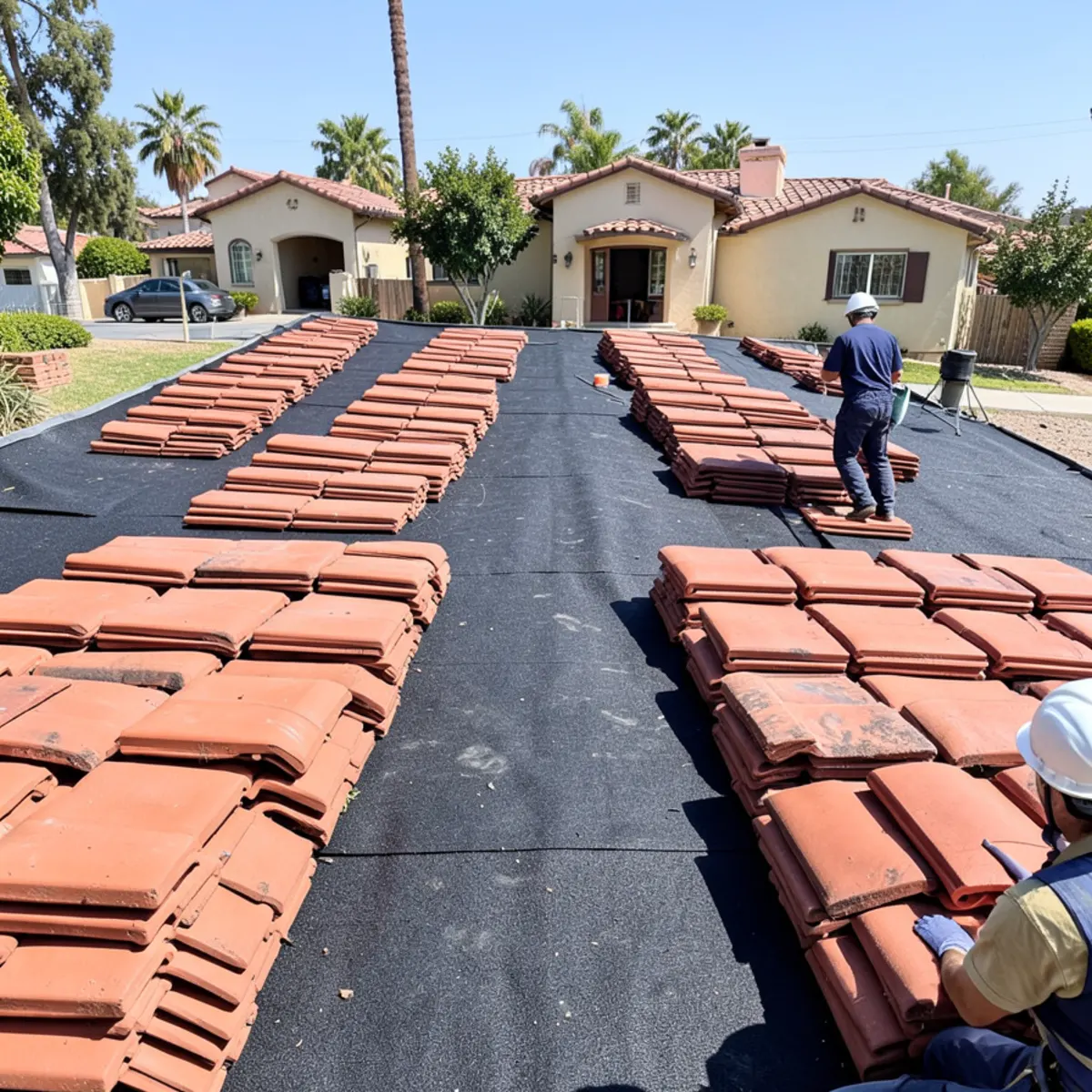
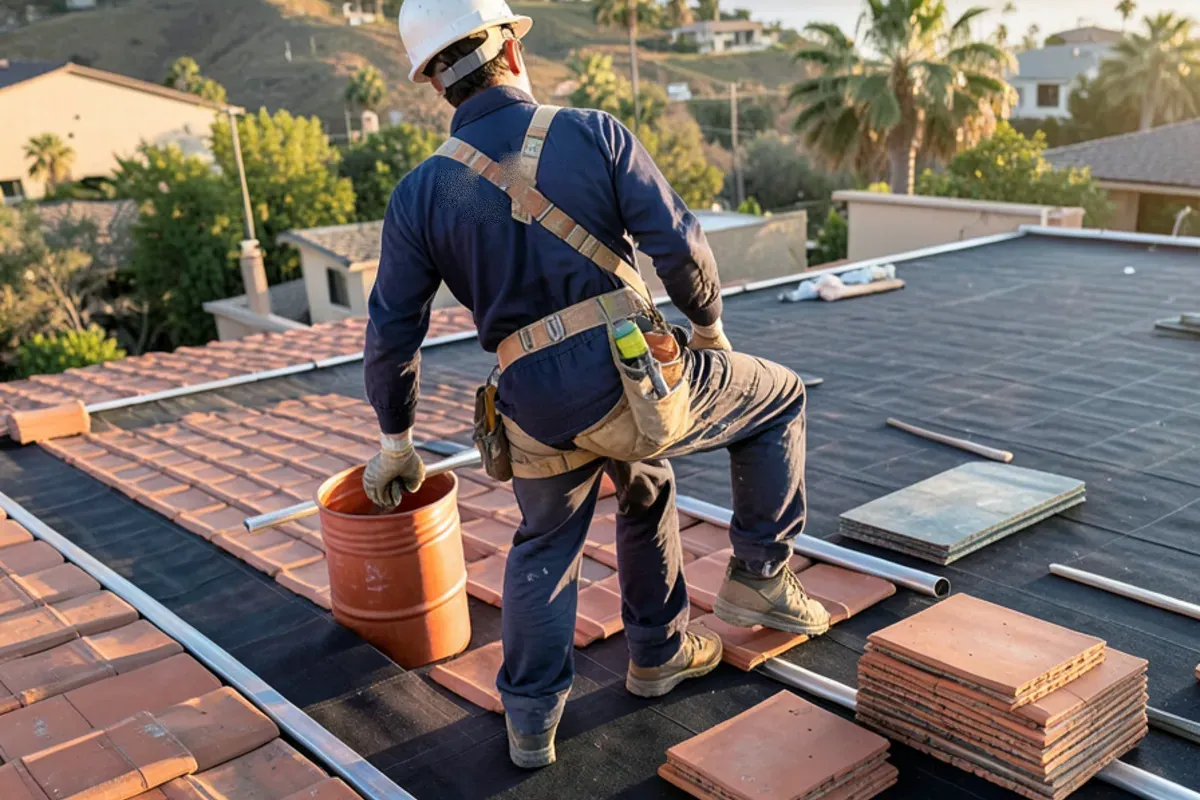
Tile gets the credit for a roof's good looks. The underlayment does the work of keeping water out. Rain that slips under a tile is supposed to run down the underlayment and off the eave, and when that sheet is brittle, the roof leaks even though the tile looks perfect. This page explains the fix: lifting and relaying the tile over new underlayment. It is one of several options under roof replacement.
Tile roof underlayment replacement in Torrance, step by step
- Inspect. We check the tile, the eaves, the valleys and the attic, and take photos.
- Test tile. We lift a few tiles to see how brittle they are and what the underlayment looks like.
- Plan the staging. Tile is heavy, so we decide where to stack it on the roof without overloading the framing.
- Lift. Tile comes up in sections, working from the ridge down, and gets stacked on the roof or at the ground.
- Strip. Old underlayment, loose battens and failed flashing come off. The deck is inspected.
- Repair. Soft or damaged deck boards are replaced. Photos go to you first.
- Re-felt. New underlayment goes down, along with new valley metal, wall flashing and vent flashings.
- Relay. Good tiles go back in their original pattern. Broken ones are replaced with the closest match we can find.
- Clean up. Landscaping and driveways are protected, and stray tile pieces are cleared.
What does a tile lift and relay include, and when is it the right call?
A lift and relay (also called a tile reset or re-felt) takes up the tile, replaces what is underneath, and puts the tile back. It suits a roof where the tile is still good, but leaks keep coming back after tile repairs. It is also the standard approach when old felt has become so brittle that walking on the roof tears it.
A tile lift and relay includes:
- A roof and attic inspection with photos, and test-lifted tiles from several areas
- Careful lifting of tile in sections, with spare pieces set aside for matching
- Removal of old felt, loose battens and failed flashing
- Deck repair where boards are soft, split or stained
- New underlayment across the whole roof, with new valley metal, wall flashing and vent flashings
- Relaying of sound tile in the original pattern, and replacement of broken pieces with the closest match
- Cleanup of stray tile and debris, with landscaping and driveways protected
It is a poor fit when the tile itself is failing, when a large share is cracked or spalling, or when the deck is soft across most of the roof. In those cases we talk through a full replacement. Our tile roof repair page covers lighter fixes, such as replacing a few slipped pieces.
Why does felt fail under tile in a Torrance climate?
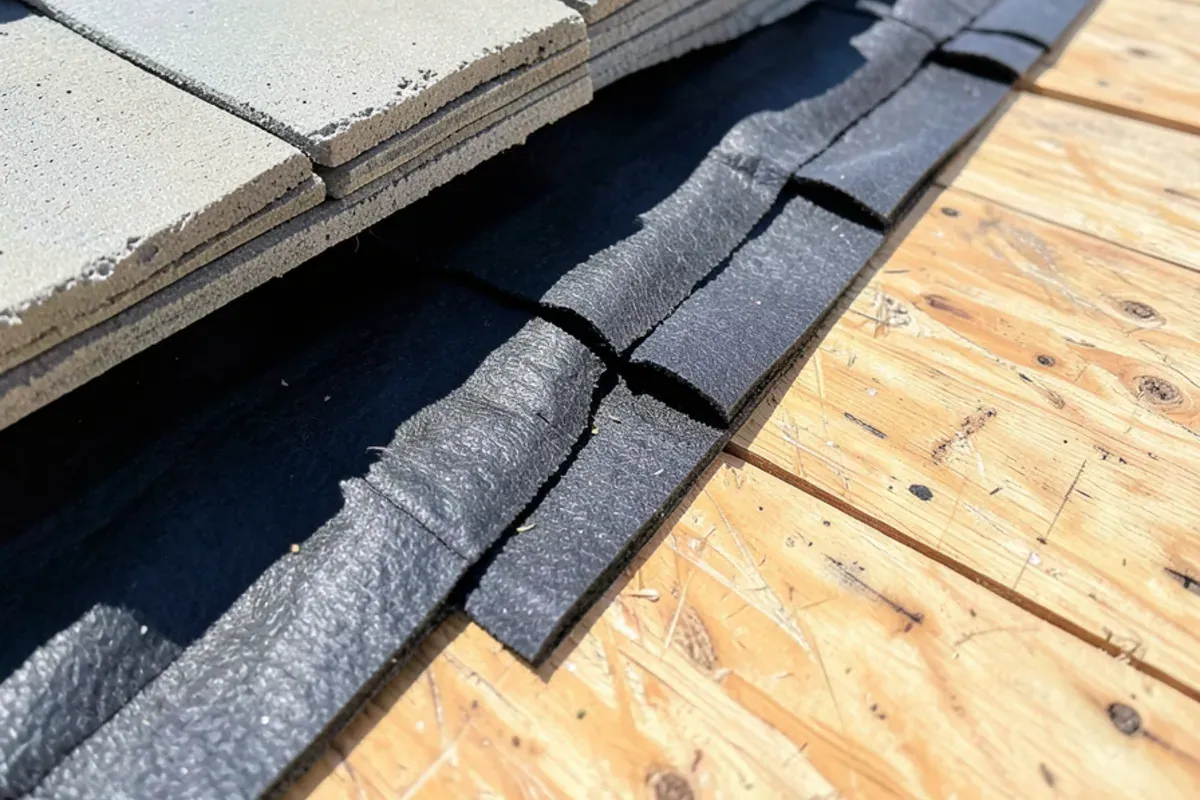
Tile roofs shed most water, but not all. Wind pushes rain up under tile laps and into the headlap. The underlayment is the second line of defence. Over decades it takes heat from the sun on the tile above, little air movement and the swing between cool nights and warm days. The felt dries, shrinks, cracks at nail holes and curls at the edges.
The signs show up at eaves, valleys, and wall edges first. Stains that come back after a tile repair, brittle felt you can see where the tile ends, and damp spots in the attic after rain all point the same way. One Google reviewer first called us about "a few roof tiles slipping out of place," and the inspection found flashing trouble at the chimney as well. Visible tile problems often come with hidden ones.
Signs the felt under your tile has reached its limit:
- A ceiling stain that returns after tile repairs, or one that only shows after a long soaking rain
- Wet insulation or dark staining on the underside of the deck in the attic
- Brittle, curled or crumbling felt visible at the eaves, rake edges and where tile is missing
- Rust at nail heads or corroded valley metal, common closer to the beach
- Tile that slips repeatedly because the battens or nails underneath have loosened
On Torrance's older tile homes the underlayment is often the original, which puts it well past fifty years old on a 1960s house. Hot summer attics and a wet February both work on it from opposite sides.
Reusing roof tiles: what we can save, and what we replace
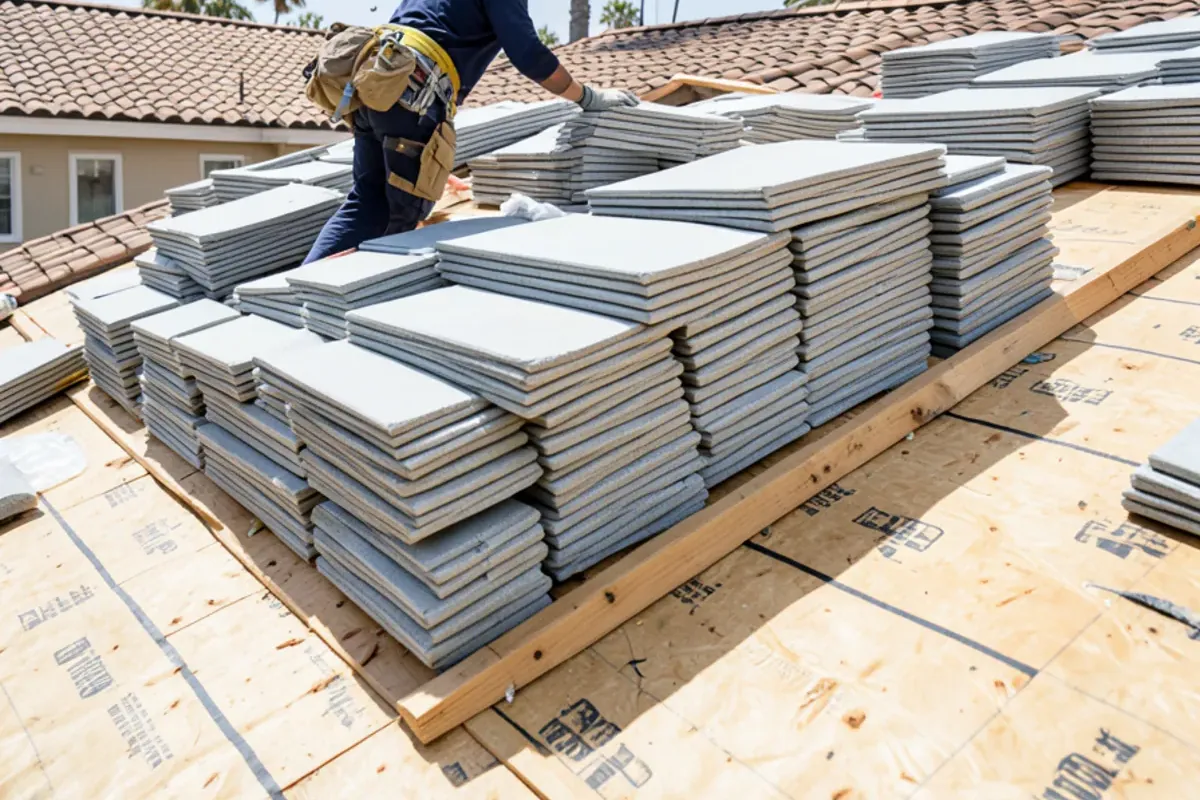
Reusing your own tile keeps the roof's look and avoids buying a full set of new tile. Before work starts we check:
- Condition. We test-lift tiles from several areas for cracks and chips.
- Profile and color. S-tile, barrel tile and flat profiles come in many sizes, and manufacturers drop lines.
- Weathering. Old tile has faded. New pieces look different next to it, and we place them away from the street side where possible.
- Matching stock. We look for matching tile, salvage and near matches, and show you samples.
We match existing tile as closely as we can. One Google reviewer noted that the crew "replaced several damaged S tiles" and made sure the roof was sealed up well for the warm Torrance weather. Expect some breakage and a small amount of replacement tile on an older roof, and we plan for it.
Permits and rules for lifting and relaying tile
Work that takes up and relays a roof covering generally needs a permit from the City of Torrance Building & Safety Division, which also sets the inspection steps. We handle permit details on re-roofs, but confirm requirements for your address with Building & Safety at (310) 618-5910. Whether energy rules under Title 24, administered by the California Energy Commission, apply depends on the scope, slope, climate zone and building type, so ask rather than assume.
Tile is heavy, and the building department may want to know how it will be staged on the framing. Homes in unincorporated areas follow LA County Public Works, and cities like Palos Verdes Estates add their own architectural review for visible exterior changes. If your roof carries solar, the panels have to be detached before the work and reset afterward.
What drives the cost of tile roof underlayment replacement?
We give free estimates and do not post prices. For a sense of scale, our tile roof underlayment cost article lays out what shapes the bill. The main variables are:
- Roof area and pitch. Tile work is slow on steep roofs.
- Tile type and weight. Concrete and clay differ in how they handle lifting.
- Underlayment choice. Felt, synthetic and self-adhering products vary in price and heat tolerance.
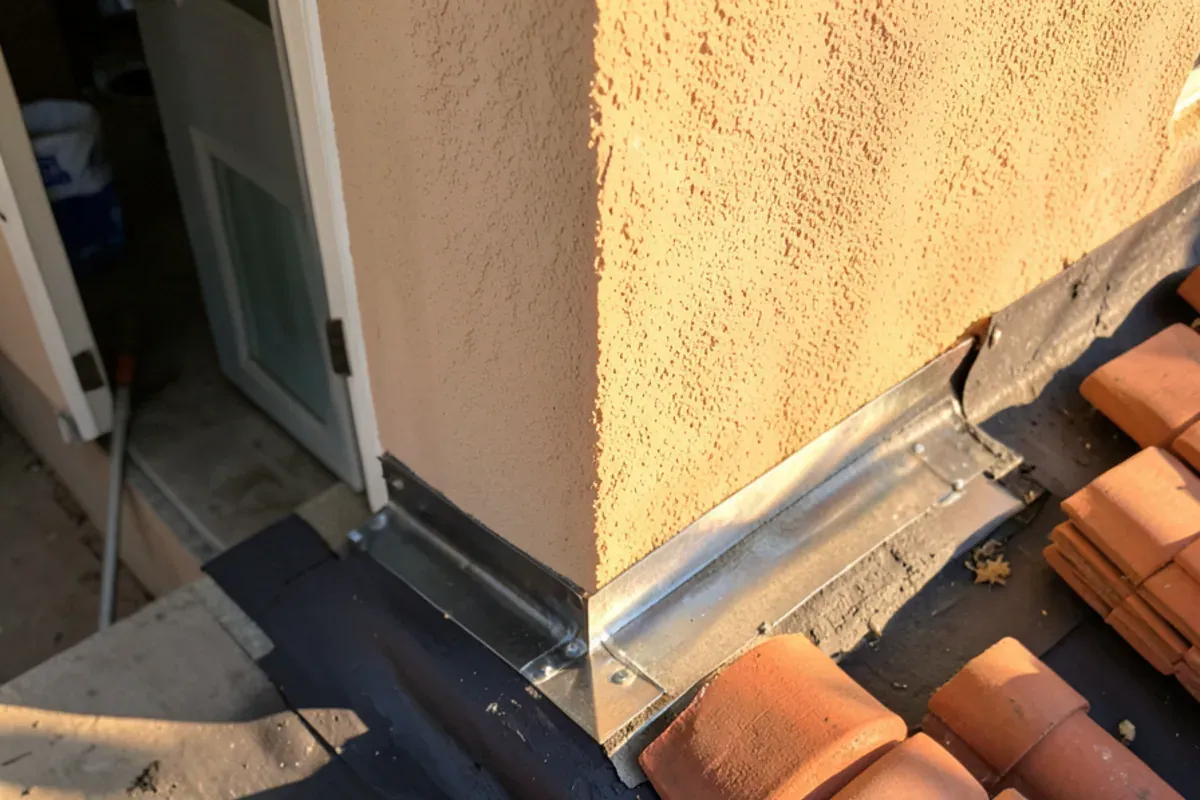
- Flashing replacement. Valleys, walls and chimneys usually need new metal.
- Deck condition. Rotted boards add repair.
- Broken tile count. More replacements add material cost.
- Staging and access. Tight sites mean more handling.
A lift and relay typically costs less than a new tile roof, but it is still a major job. Much of the labor is in handling the tile twice, once up and once back down, which is why the roof size and tile weight matter more than the underlayment itself. For context, Homeyou's 2026 listing shows average Torrance roof replacements of about $7,202 to $8,183 across 7,210 projects; that is published market data for all materials, not our quote and not a tile figure. Ask about financing at your estimate.
Why Crown Trim for a tile re-felt?
- Free estimates and free roof inspections, with same day or next day service.
- You see photos of the brittle felt, the flashing and the deck before you decide.
- We match existing tile as closely as we can, and tell you when a mismatch will show.
- We explain repair and replacement options in plain terms, and a repair comes first when a repair will do.
- We coordinate solar panel removal and reinstallation timing with your solar company.
- Reviewers rate us 4.8 stars across 73 Google reviews.
Older tile homes that need deck work too should look at older home roof replacement. Our post on making a tile roof last in Southern California covers care after the work.
Where we lift and relay tile
We work on tile roofs across the South Bay, including Carson, Redondo Beach and Rancho Palos Verdes. Hillside sites on the Peninsula mean tighter access for staging heavy tile, and our post on clay tile roofs in Palos Verdes Estates explains why keeping the look matters there.
Where we do tile roof underlayment replacement around Torrance
Each place brings its own version of this job.
- Palos Verdes Estates: Red clay tile roofs under Palos Verdes Homes Association Art Jury review make relaying the original tile the way to keep the look.
- Rancho Palos Verdes: Hillside RPV tile roofs have tight staging for heavy tile, and ocean wind is hard on loosened pieces during the work.
- Chino Hills: Tile HOA tracts from the 1980s-2000s beside Chino Hills State Park rest on underlayment that ages out of sight beneath the tile.
- Rolling Hills: Rolling Hills ranch homes with long tile runs and acre lots need staging plans for a lot of tile on large roofs.
- Rolling Hills Estates: Peninsula tile roofs here face wind off the hills, which tests ridge tile and loosened battens after the felt dries out.
- Las Flores: The 1990s homes with HOA tile roofs beside Rancho Santa Margarita are reaching the age when underlayment, not tile, is the weak layer.
- Lomita: Lomita's post-war stucco bungalows with older tile roofs often sit on original felt more than fifty years old.
- Diamond Bar: Hillside tile-roof homes from the 1970s-90s in HOA neighborhoods can have underlayment older than the tile looks, which lifting a few tiles reveals.
- Cerritos: Cerritos was master-planned in the 1960s-70s with many tile roofs, and its underlayment is now reaching replacement age.
- Long Beach: Long Beach's Spanish-style homes in Bixby Knolls and California Heights have tile roofs where matching the original look matters.
What customers say about this work
Crown Trim Roofers holds 4.8 stars from 73 Google reviews. Read all reviews
“They repaired both chimney areas, replaced several damaged S tiles, completed a full roof tune-up, and made sure everything was sealed up well for the warm Torrance weather.”
“The new roof they put on earlier was finished quickly, and my neighbor even commented on how fast and organized the crew was.”
“The crew showed real skill with roofing, flashing, shingles, and cleanup, and they made sure everything was done the right way for long-term protection in the Torrance weather.”
Tile Roof Underlayment Replacement: common questions
How long does underlayment last under a tile roof in Southern California?
It varies by product, sun exposure and ventilation, and there is no single answer. Traditional felt under tile commonly breaks down well before the tile does, often in the range of two to three decades, and hot attics speed that up. Leaks, stains and cracked felt at the eaves tell us more than an age number. We inspect and show you photos.
Can my existing tiles be reused when the underlayment is replaced?
Usually, yes, if they are sound. We lift tiles in sections, stack them, replace the underlayment, and relay the good ones in their original pattern. Cracked and chipped pieces are replaced with the closest match available, and we tell you how many to expect before work starts.
What percentage of tile usually breaks during a lift and relay?
There is no honest universal number. It depends on the tile type, its age and how brittle it is. Older clay and thin tile break more easily, and concrete tile is usually more forgiving. We test a few tiles before quoting, plan for a reasonable amount of breakage and replace anything damaged with the closest match we can find.
Do I need a whole new tile roof if the underlayment has failed?
Not necessarily. If the tile is sound, replacing only the underlayment and flashing costs less than new tile, and the roof keeps its look. A new tile roof makes sense when most tiles are cracked, the tile is badly worn, or the deck below has suffered water damage across many areas.
Can you do a lift and relay if I have solar panels?
Yes, with planning. Panels have to come off and go back, and we coordinate solar panel removal and reinstallation timing with your solar company. See solar panel detach and reset for how that schedule works.
What are the signs the underlayment under my tile is failing?
Stains on ceilings that return after tile repairs, wet spots in the attic after rain, brittle felt visible at the eaves, and leaks that appear after a few slipped tiles are replaced. Water gets under tile normally, so the underlayment is the real waterproofing layer. When it fails, every tile repair becomes a temporary fix.
Related services and guides
Older Home Roof Replacement
Solar Panel Detach & Reset
What Tile Roof Underlayment Replacement Costs and Why
Roof Replacement Cost in Torrance: What Drives the Price
Roof Financing Options for California Homeowners
Where we work: Carson, Redondo Beach, Rancho Palos Verdes, Gardena and the rest of our service areas.
Tile roof leaking? The felt underneath may be the cause.
Call first. A roofer picks it up from there.