
Tile Roof Repair in Torrance, CA
- 4.8★ from 73 Google reviews
- Free estimates
- Same day or next day service
- Photos of what we find
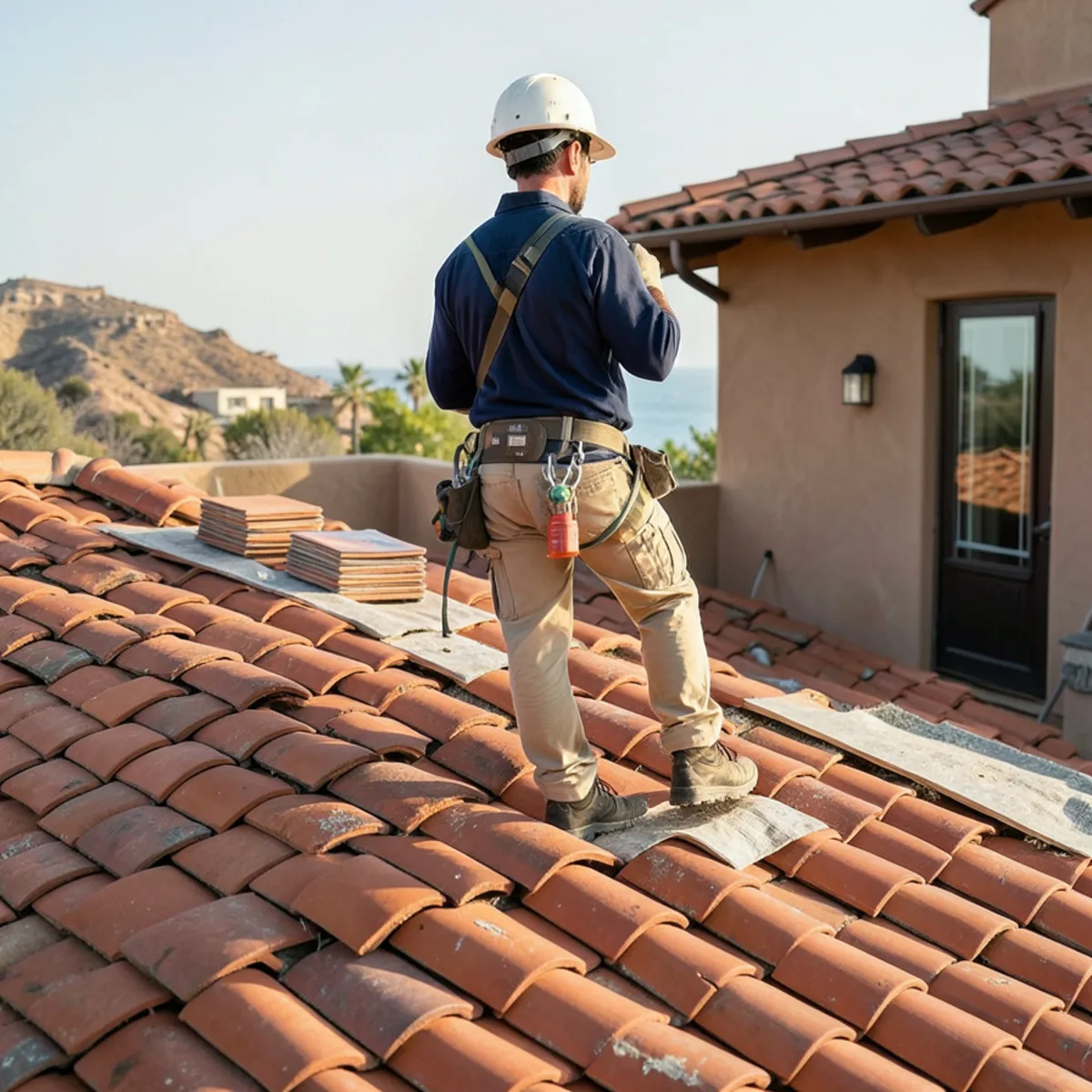
From the street, a tile roof tells on itself. A tile out of line along a hip, a gap in a row, a broken corner on the lawn. One Google reviewer said it started exactly that way: "I called Crown Trim Roofers for an estimate after noticing a few roof tiles slipping out of place." This page explains how we handle tile roof repair in Torrance, as part of our wider roof repair work, and why the real inspection happens below the tile.
Why do roof tiles slip out of place on South Bay homes?
Several things work together:
- Fasteners and mortar age. Nails rust, clips loosen and the mortar that bedded ridge and hip tiles cracks. The edge of the roof is where the first ones go.
- Foot traffic. Solar installers, satellite and antenna techs, HVAC crews and holiday-light hangers all walk where tile is not meant to be walked.
- Daily movement. A roof gets hot in the afternoon and cools overnight. Over many seasons, that movement works tiles loose.
- Wind and animals. Gusts lift tile edges. Rats, birds and squirrels shove tiles aside to get into the eaves.
- Earth movement. Southern California shakes now and then, and tiles are heavy.
Each tile that moves leaves a gap above exposed underlayment. Reset tiles early and the felt below stays protected. Leave the gap, and sun and rain finish the felt off.
Do cracked tiles cause leaks, or is the underlayment the problem?
Tile is the weather screen. The underlayment, usually felt or a modern membrane, is the waterproofing. A cracked tile will let rain onto the underlayment, and a sound underlayment carries it down to the eave. So a crack alone is not always a leak.
The leaks come when the underlayment has torn, dried out or lost its seal around fasteners and penetrations. On older roofs the tile often outlives the felt, which is why a roof can look perfect and still drip. Tile that looks great over felt that has failed is the usual story behind a tile roof leak.
That is why we lift the tiles around every break and photograph the underlayment before saying "tile swap." Where the felt is brittle across a large area, we explain the next step, which is tile roof underlayment replacement. It is a bigger job, so we only recommend it with photos behind it.
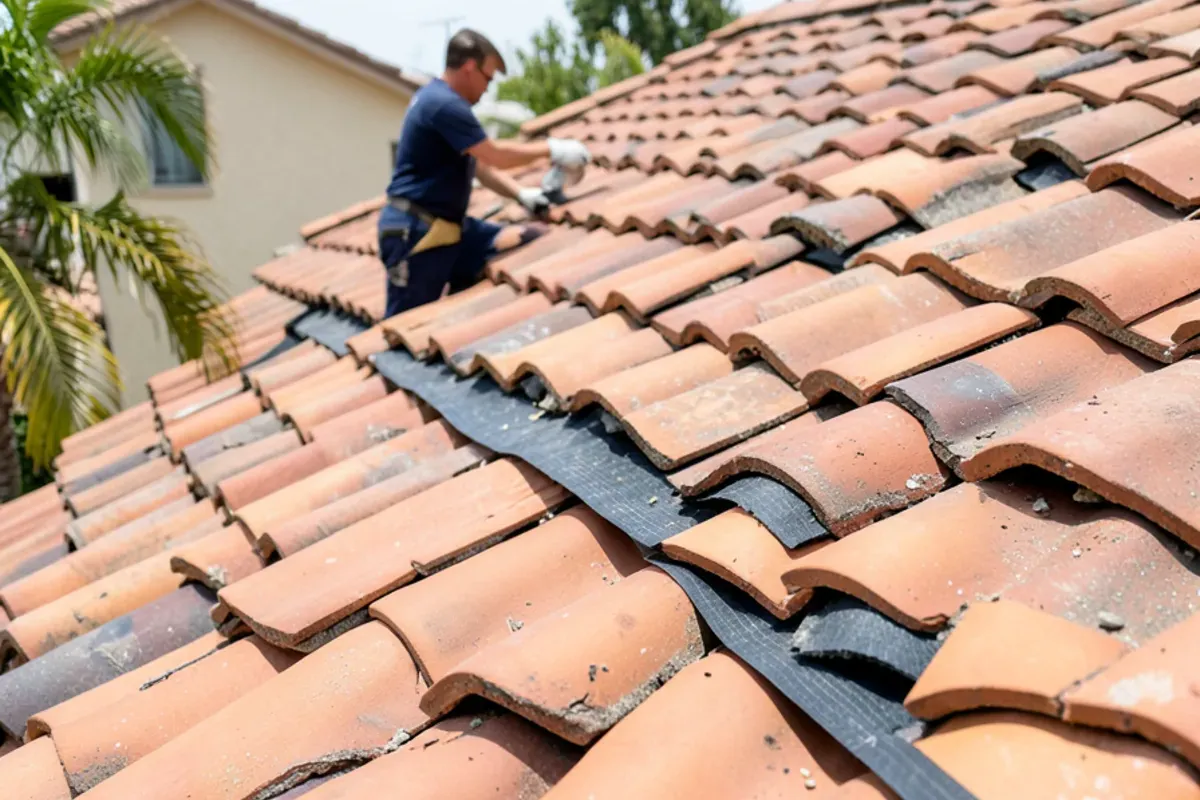
How we replace broken tiles and reset slipped ones
- Walk it carefully. We step on the lower, supported part of the tile and use pads, so we do not create new breaks.
- Mark and photograph. Every broken, slipped or missing tile is marked and photographed, with wide shots for context.
- Lift and inspect. We raise the neighboring tiles to check the underlayment, battens and flashing.
- Patch below first. Torn or brittle felt gets repaired with a compatible underlayment patch, properly lapped under the course above.
- Set the tile. Replacement tiles are fastened with nails, clips or foam adhesive depending on the roof's original method.
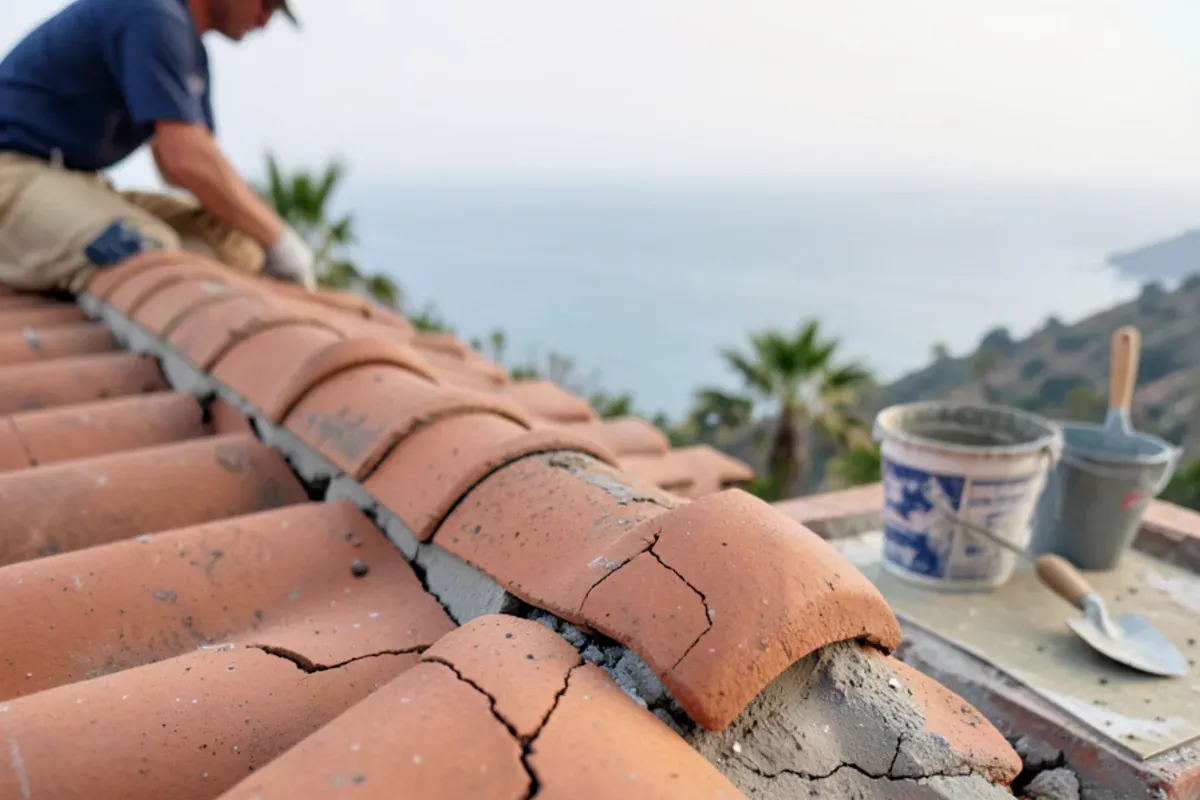
- Re-bed ridge and hip tiles. If mortar has cracked, loose caps are re-set and bedded.
- Clear and clean. Valleys and gutters are cleared, broken pieces are removed from the roof and yard, and landscaping and driveways are protected during the work.
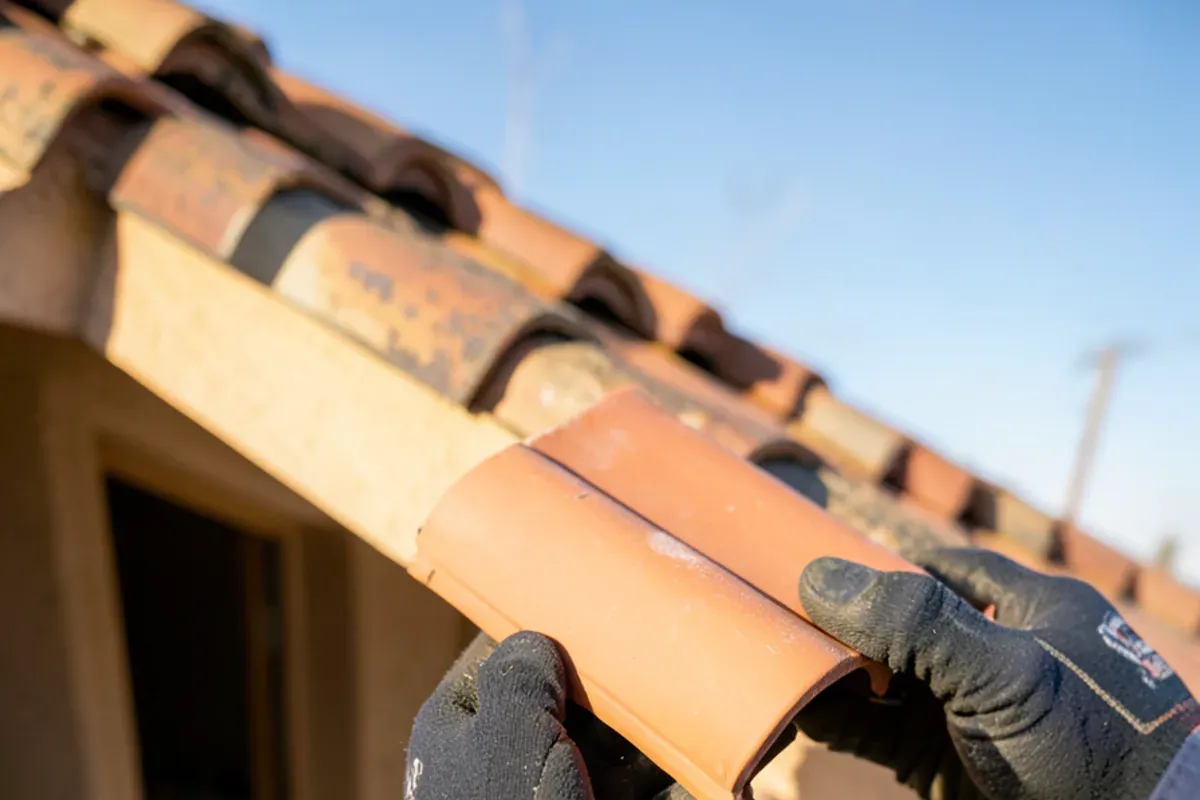
S-tile repair and tile matching: what can and cannot be matched
The Spanish S profile is common in Southern California, made in both clay and concrete, and it varies by maker and era. Colors fade, clay weathers and old lines are discontinued. We match existing tile as closely as we can, and here is how:
- Hidden-area swap. We take whole tiles from a part of the roof you cannot see from the street, and use them on the visible damage. The replacements go where they will matter least.
- Reclaimed tile. We look for salvaged tiles of the same profile and color range.
- Closest new profile. If neither works, we choose the nearest current tile and show it to you on the roof first.
One Google reviewer said the crew "replaced several damaged S tiles, completed a full roof tune-up, and made sure everything was sealed up well for the warm Torrance weather." Where tile matching matters to you or to your HOA, tell us at the estimate.
Our post on making a tile roof last and our clay tile roofing page go deeper on materials.
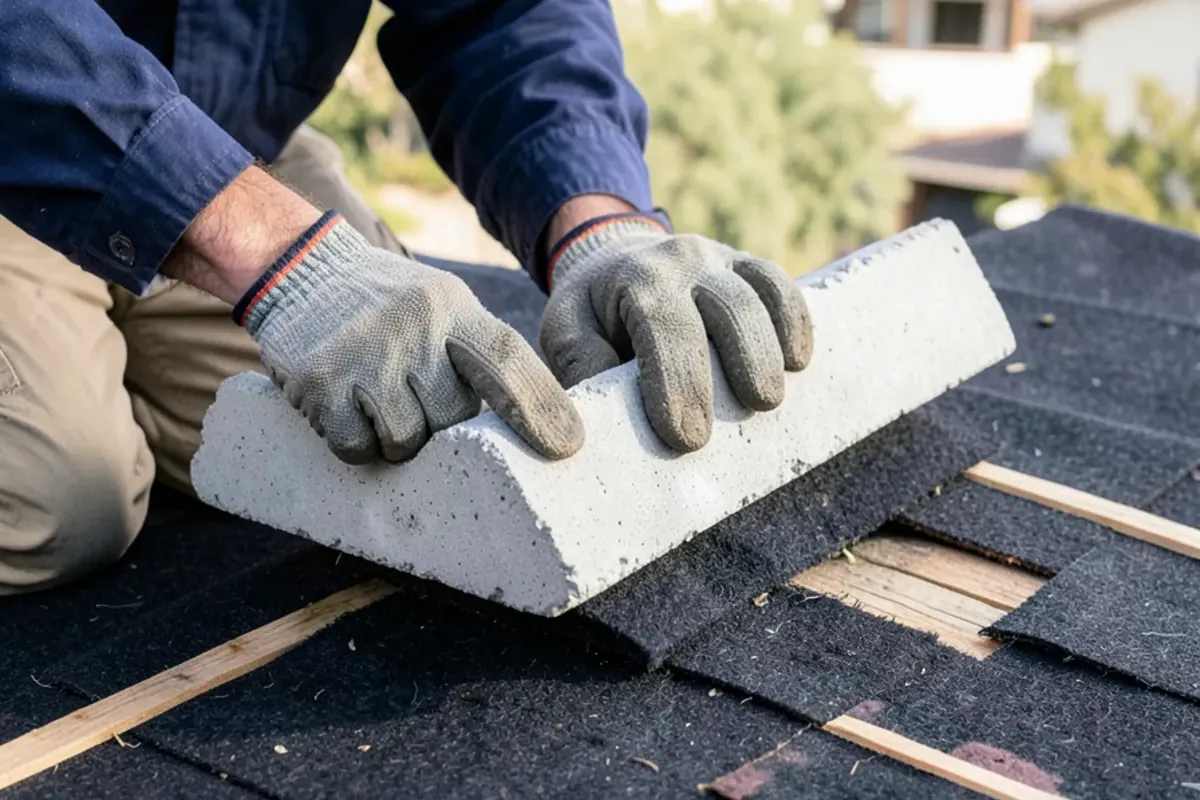
Tile roof tune-up in Torrance: when a full pass beats single repairs
If a tile roof has one problem, fix the problem. If it has several, a tune-up is often cheaper than repeat calls. A tune-up resets slipped tile, replaces cracked pieces, re-beds loose ridge and hip tile, checks flashing, clears valleys and looks for animal entry points. The roof is walked once, not four times. The roof tune-up page lists what is included and what is not.
What a tile repair includes, and which rules apply
A tile repair covers these deliverables:
- Replacing each cracked or missing tile and resetting slipped ones
- Lifting the surrounding tile to photograph and patch the underlayment
- Re-bedding loose ridge and hip tiles in fresh mortar
- Sealing or replacing flashing found open at walls, chimneys or valleys
- Clearing broken pieces from the roof, gutters and yard
Like-for-like tile repairs often need no permit, but full underlayment replacement is a re-roof and does. Torrance permits go through City of Torrance Building & Safety, (310) 618-5910. In Palos Verdes Estates, the Palos Verdes Homes Association's Art Jury reviews visible exterior changes, so ask them before changing tile style or color. Confirm each rule for your address, and verify any roofer's California license on the CSLB site, cslb.ca.gov.
What affects the price of a tile roof repair?
We give free estimates and do not post prices. Published 2026 cost guides place most roof repairs between $300 and $1,500, which is market data, not a quote, and tile repair can land anywhere in or beyond that range. The drivers:
- Number of tiles and how spread out they are
- Whether the underlayment below needs a patch or more
- Tile type and how hard it is to match
- Roof pitch, height and access, and whether the roof can be walked without breaking more
- Ridge or hip mortar work, which is labor-heavy
- Solar panels or equipment in the way
If solar is on the roof, we coordinate panel removal and reinstallation timing with your solar company.
Why Crown Trim for tile roof repair
- Lifted tiles and photos of the felt beneath, so you see the real condition.
- Free estimates and free roof inspections, including on roofs with solar that needs timing with your solar company.
- Tile swaps and resets first. Replacement is raised only when the underlayment evidence calls for it.
- Matching to your existing tile as closely as we can, with the options explained in plain terms.
- Broken pieces cleared from the roof and yard, with landscaping and driveways protected.
- A 4.8-star record across 73 Google reviews.
Tile roofs we repair around the South Bay
We repair tile in Carson, Redondo Beach and Rancho Palos Verdes and the neighborhoods between. Tile is common on Peninsula hillsides, where wind exposure and steep access shape how the work is staged. Beach-city roofs see salt air, which attacks metal flashings and fasteners more than the tile itself. Roof repairs on tile are different from shingle work, so if your roof is mixed, see also our metal roof repair and flashing repair pages.
Where we do tile roof repair around Torrance
Each place brings its own version of this job.
- Palos Verdes Estates: Red clay tile is the signature look here, and the Palos Verdes Homes Association's Art Jury reviews visible exterior changes, so tile matching comes first.
- Rancho Palos Verdes: Hillside tile roofs take marine wind that lifts tile edges and cracks ridge mortar, and steep access shapes how repairs are staged.
- Rolling Hills: Long roof runs on acre-plus ranch lots and detached barns mean many ridge and hip lines where mortar and slipped tiles show up.
- Rolling Hills Estates: Ranch homes in hill wind, where slipped tiles at the rake and ridge are common and Class A fire-hazard mapping matters for any replacement.
- Lake Forest: El Toro, Foothill Ranch and Portola Hills are mostly HOA tile tracts, where matching existing tile and checking underlayment come first.
- Cerritos: Master-planned 1960s-70s neighborhoods with many tile roofs now at the age where the felt below the tile is the real concern.
- Glendale: Spanish Revival homes in the Verdugo foothills run S-tile and flat tile, and discontinued profiles make hidden-slope swaps useful.
- Beverly Hills: Higher-end tile and slate roofs on Flats estates, where a repair has to match closely and copper or custom metalwork may be involved.
- Brea: Tile-roof tracts near the oil-field hills, where tile is common and repairs often combine slipped tile with underlayment checks.
- Aliso Viejo: 1980s-90s HOA tile roofs are reaching underlayment-replacement years, so we lift the tile and check what is under it.
What customers say about this work
Crown Trim Roofers holds 4.8 stars from 73 Google reviews. Read all reviews
“They repaired both chimney areas, replaced several damaged S tiles, completed a full roof tune-up, and made sure everything was sealed up well for the warm Torrance weather.”
“This was the second roofing company I contacted for an estimate to fix our leaky roof in Torrance, and I’m glad I did.”
“He spent close to 30 minutes inspecting the shingles, flashing, and other roof areas, then came down and showed us clear photos of the hail marks, wind damage, and a few missing shingles.”
Tile Roof Repair: common questions
Why do roof tiles slip out of place on South Bay homes?
Tiles are held by nails, clips or mortar, and all three loosen over time. Foot traffic from solar installers, satellite or HVAC techs, wind, the roof expanding and shrinking each day, and nesting animals all push tiles out of line. Ridge and hip tiles go first when their mortar cracks. We reset them and check what let go. See our slipped tiles guide.
Can you match discontinued tiles on my Torrance roof?
We match existing tile as closely as we can. Options include salvaged tiles from a hidden part of your own roof, reclaimed tiles of the same profile, or the nearest current profile and color. Weathered clay and sun-faded concrete rarely match new tile exactly. We show you the options against your roof and say plainly where a difference will show.
Do cracked tiles actually cause leaks or is the underlayment the problem?
Both can be true. A cracked tile lets water reach the underlayment, which is designed to handle it. Leaks happen when that underlayment is torn or brittle, or when flashing at a wall, chimney or valley has failed. So we lift and inspect around every cracked tile before deciding if a tile swap is enough.
Is it safe to walk on my own tile roof to check it?
It is better not to. Tile breaks under a misplaced foot, and it is slippery when damp or dusty. Look with binoculars from the ground or take zoomed photos from the street, and call us if you see slipped, missing or broken pieces. A broken tile you step on creates two problems from one.
How long does a tile roof repair take?
Replacing a handful of tiles and resetting slipped ones is often finished in a single visit. Work that involves patching underlayment over a bigger area, rebuilding mortar along a long ridge or hip, or sourcing a hard-to-match tile takes longer. We tell you at the estimate which one yours is.
What is the difference between a tile repair and a tile roof tune-up?
A repair fixes the specific broken or slipped pieces. A roof tune-up is a full pass over the roof that resets loose tiles, replaces cracked ones, re-seals small weak points, checks flashings and clears debris. If your tile roof is older and you have found one problem, a tune-up often catches the rest.
Related services and guides
Metal Roof Repair
Roof Flashing Repair
Slipped Roof Tiles: What Causes Them and What to Do
Ceiling Stain After Rain: Emergency or Wait and Watch?
Roof Repair Cost in the South Bay: Small Fix or Big Job?
Where we work: Carson, Redondo Beach, Rancho Palos Verdes, Gardena and the rest of our service areas.
Slipped or broken tiles? Get the underlayment checked too.
Call first. A roofer picks it up from there.