
By the Crown Trim Roofers team · Published · Updated
Spanish and Mediterranean homes across Torrance and the Palos Verdes Peninsula wear tile roofs, and when it is time to re-roof or repair, people wonder whether the tile in front of them is clay or concrete. Our clay tile roofing and concrete tile roofing pages describe each service. This guide helps you choose between them and sits under our wider roofing contractor in Torrance overview.
How do clay and concrete roof tile compare?
| Factor | Clay tile | Concrete tile |
|---|---|---|
| Raw material | Fired clay | Cement, sand and water, molded |
| Color | Fired in, runs through the tile | Surface coating or through-body pigment |
| Fade | Natural terracotta holds color; glazes can craze | Surface color can chalk or fade, esp. on south slopes |
| Weight | Roughly 6 to 15 lb per sq ft by profile | About 9.5 to 12 lb per sq ft standard |
| Breakage | Brittle; cracks under foot traffic | Tougher, but also cracks under foot traffic |
| Typical life | Often 75 to 100 years | Often 40 to 50+ years |
| Price | Higher | Lower |
| Best fit | Historic, high-end, Mediterranean homes | Mid-range homes, large roofs, tight budgets |
Lifespans are typical ranges from published guides, not our promises. Cost guides list tile broadly at $10 to $20 per square foot installed, with wide overlap between the two types. That is market data, not a quote.
Which tile fades, and why does it matter?
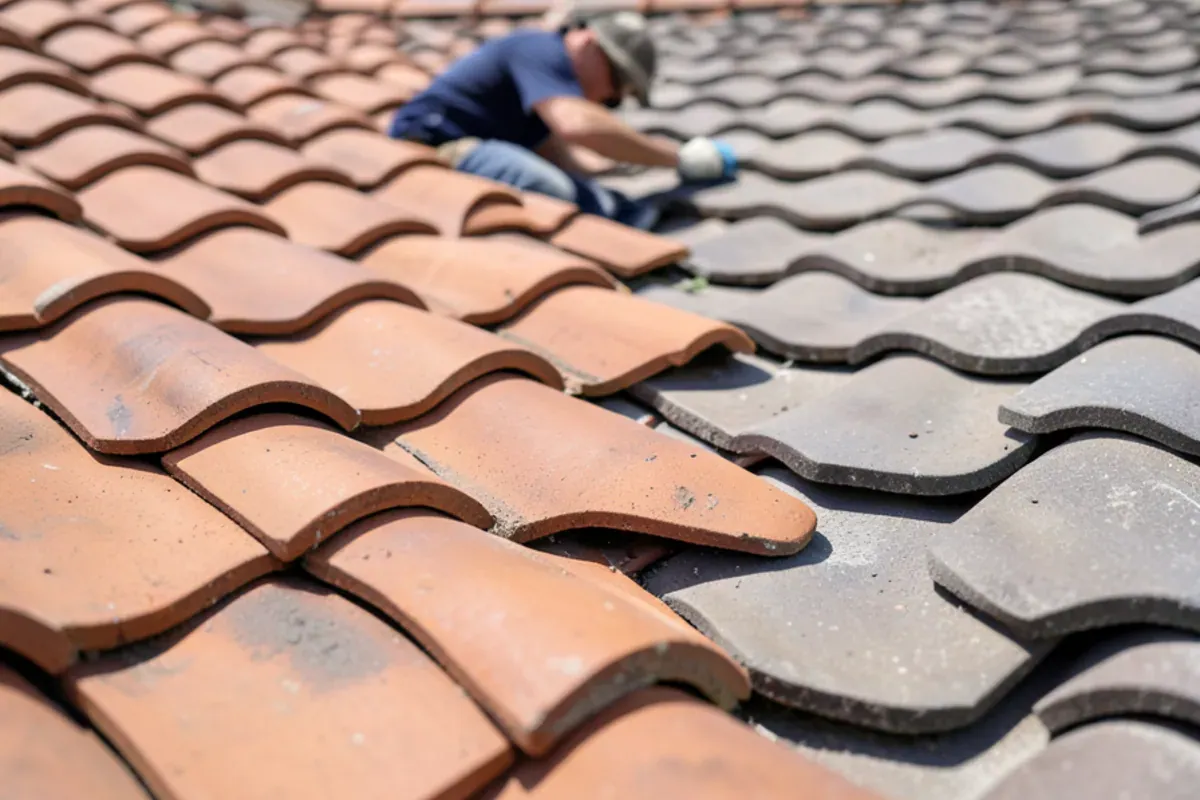
Clay gets its color from the clay and the firing, so a chip shows the same orange or red all the way through. Concrete tile is usually colored with a surface slurry or mixed-in pigment. Surface color can chalk and lighten over decades of sun, and it fades unevenly between slopes that face the sun and slopes that do not. That is why a concrete roof often looks patchy after repairs: the new tiles are brighter than the old.
For repairs, fade changes the match. A tile roof that has weathered into soft browns will look striped with fresh replacements. We match existing tile as closely as we can, often by pulling salvage from a less visible slope. One Google reviewer described a repair on a Torrance roof where several damaged S tiles were replaced and the roof was sealed for the warm weather. S tile is a common profile on 1960s and 1970s homes here, so salvage matching is realistic.
Does tile weight matter for your house?
Yes. Standard-weight concrete tile runs about 9.5 to 12 pounds per square foot, according to the Journal of Light Construction, and clay profiles vary even more. If your home already carries tile, the structure was designed for the load. If you are switching from shingle, a structural check is needed. Look at our post on how to make a tile roof last for the underlayment and fastening side, and our tile roof repair page for slipped and cracked tile fixes.
How can you tell which tile you have?
Many owners inherit a roof and never learn what it is. A few checks usually answer it.
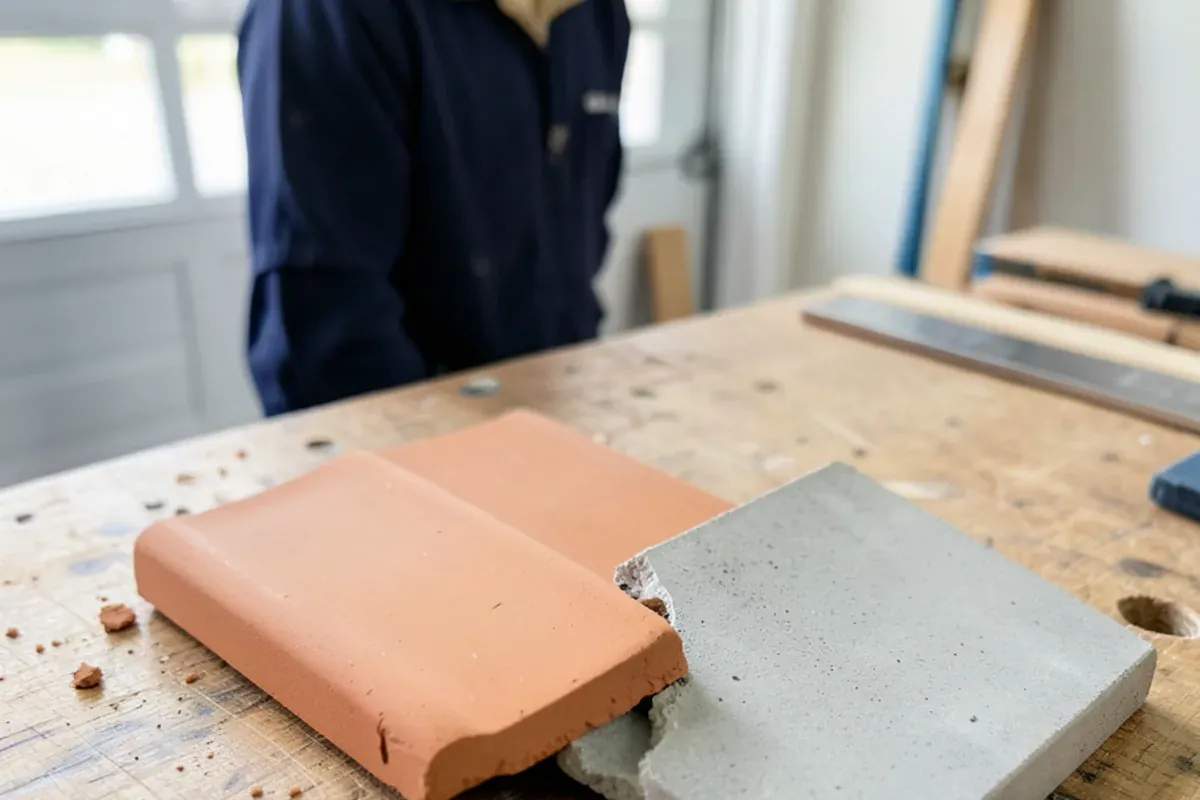
- Look at a broken or chipped edge. Uniform orange or red through the body means clay. A gray core under a colored skin means concrete.
- Check the garage or side yard. Spare tiles left by the original builder show the material and profile.
- Lift a spare tile if you have one. Concrete usually feels heavier in the hand.
- Tap it. Clay tends to ring, concrete gives a duller thud.
- Name the profile. Rounded Mission barrel tiles are usually clay. Wavy S-tile and flat shake-look profiles are often concrete, though both materials come in several shapes.
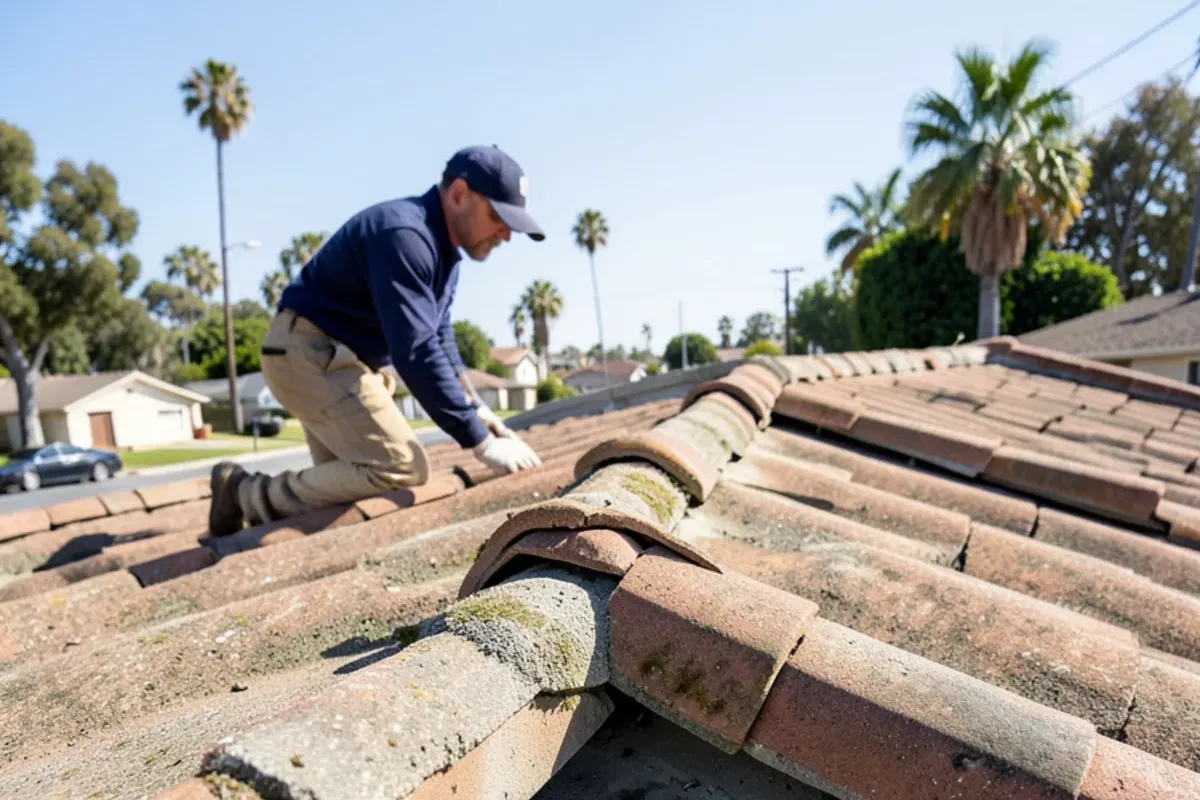
Stay off a tile roof while you do this. Use a ground photo, a spare, or a roofer's close-up photos instead, since foot traffic is a leading cause of cracked tile.
Which tile is easier to repair and match years from now?
This is where the choice shows up long after installation. Profiles get discontinued, and a replacement tile may differ in curve, thickness or color from one made decades ago. Concrete color can also vary from one production lot to the next. Clay tile in classic terracotta tends to age more gracefully beside new pieces, but glazed and specialty clay can be hard to find. Either way, spare tiles kept from the original installation are the best repair material you can have, because they match in profile and weathering. Store a few flat in a dry place.
On concrete roofs, ask whether the surface has been sealed or recoated, because that changes how replacement tiles will blend. A salvage pull from a back slope is a common fix, but it moves the mismatch to the back instead of removing it. For underlayment work that lifts and resets existing tile, see the tile roof underlayment replacement page, and for the broader family of options, tile and slate roofing.
How do clay and concrete handle water, salt and cracking?
Clay is generally less absorbent than concrete, which matters in the rainy season and along the coast. Concrete tile takes in more water over time and can gain weight and surface growth, especially on shaded slopes. Both materials resist salt air better than unprotected metal does. Cracking is the common weakness of both. A tile that sounds hollow or has a hairline crack can let water reach the underlayment long before a stain shows on the ceiling.
What changes on the Palos Verdes Peninsula?
Two things. Design review, and fire rules. Palos Verdes Estates was laid out around Mediterranean architecture, and exterior changes there typically go through the city's review process, so confirm requirements with the city before choosing a tile profile or color. Also check whether your address sits in a Cal Fire fire hazard severity zone, which affects the fire rating your roof needs. Our Palos Verdes Estates service area page and the clay tile roofs in Palos Verdes Estates post cover the local detail.
What goes wrong with tile roofs, and does the type matter?
Both types fail in similar ways. Foot traffic cracks tiles. Wind and old fasteners let tiles slip. Underlayment dries out and tears long before the tile wears out, and flashing at chimneys and walls leaks. Clay is a little more brittle underfoot, while concrete can absorb more water and gain weight as it ages. Neither type is maintenance free. Moss and debris in valleys should be cleared before the rainy season, which runs roughly November through March here.
Which tile fits which situation?
- Historic or architect-designed Mediterranean home: clay, matched to the original profile.
- Mid-range budget, large roof, existing concrete tile: concrete, for like-for-like replacement.
- Existing clay roof with failed underlayment: reuse the tile, replace the underlayment, and replace only what breaks.
- Hillside or fire-zone lot: confirm Class A fire rating with your city and Cal Fire map first.
Expert insight from our roofers: the underlayment, not the tile, decides when the roof is done. The trade-off to weigh is that clay costs more up front and some clay profiles weigh as much as concrete, while concrete is easier on the budget but may fade and look uneven after repairs. We walk tile roofs carefully, photograph cracked and slipped pieces, and show you what is salvageable before anyone talks replacement. If you are comparing the two for a new roof, a free estimate on your own house will say more than any general chart.