
By the Crown Trim Roofers team · Published · Updated
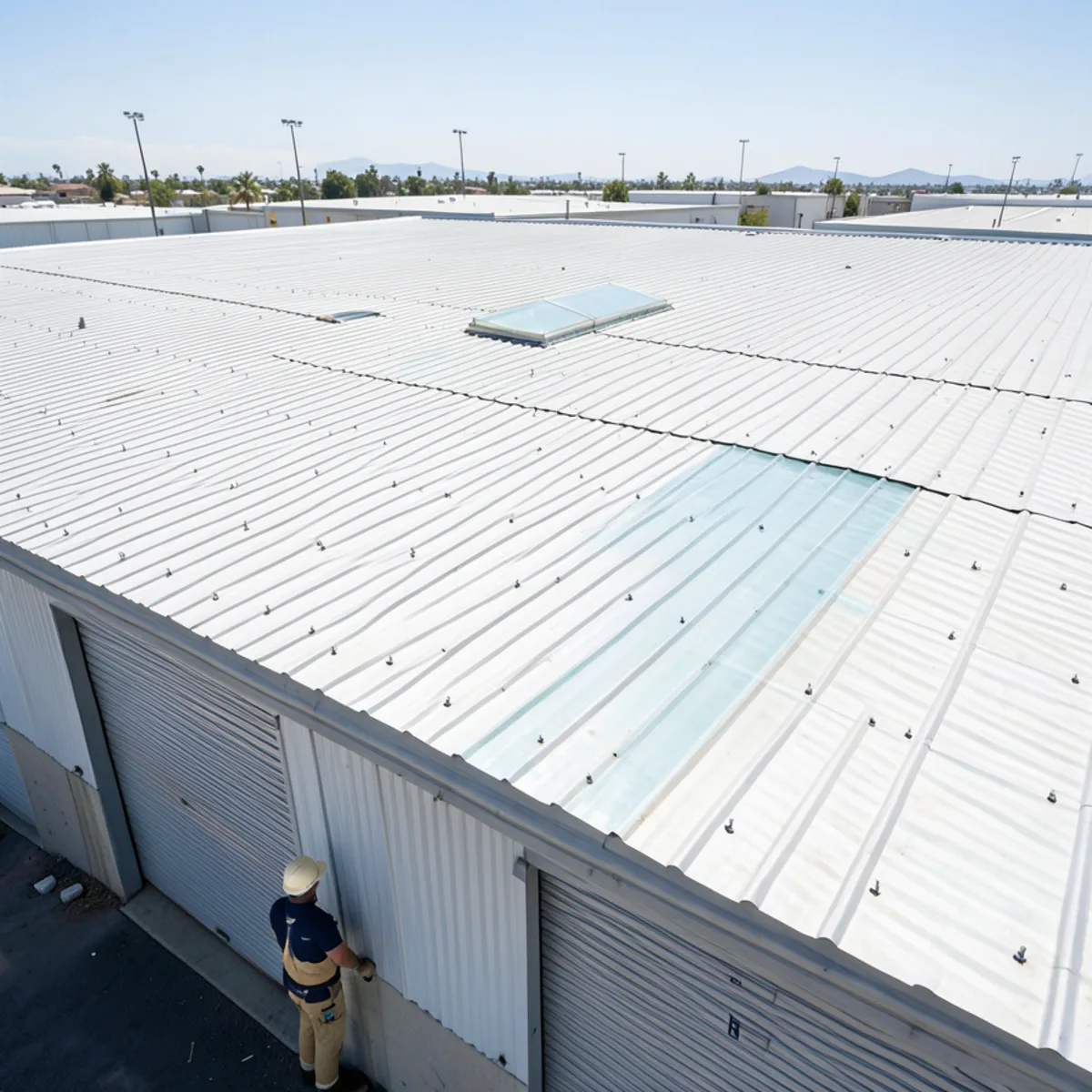
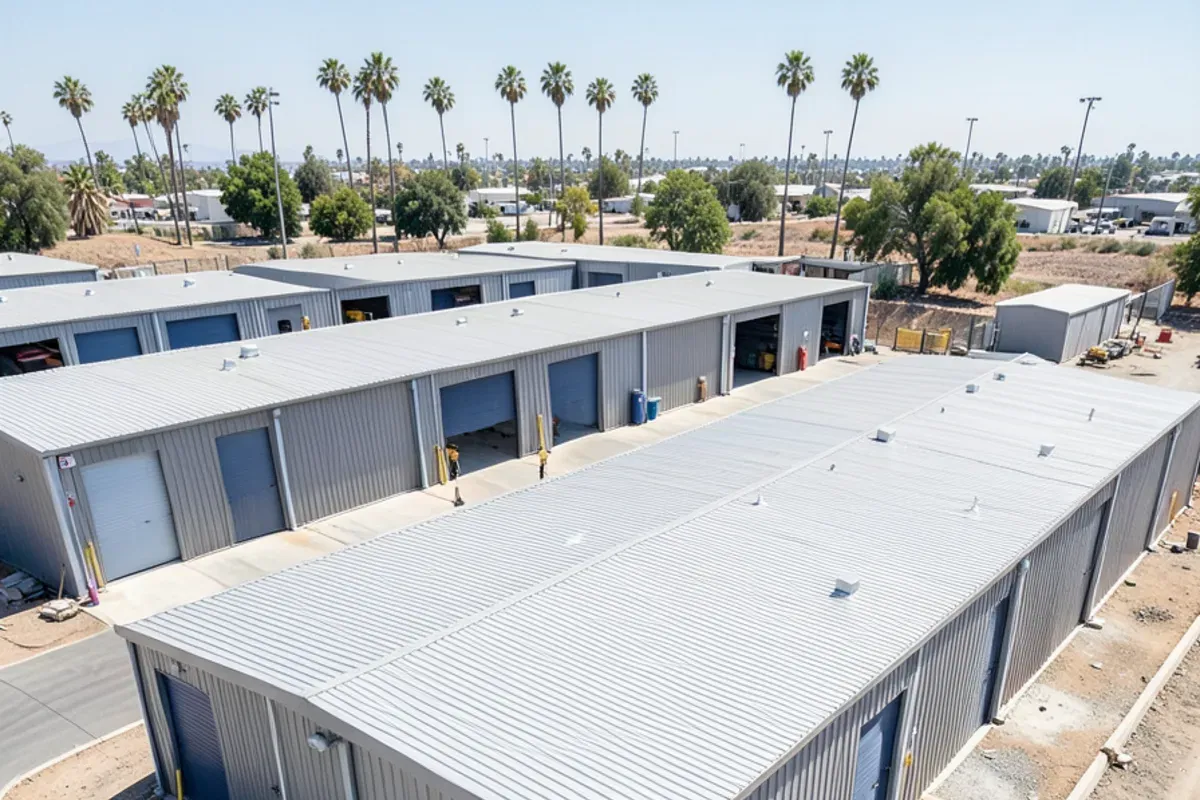
Self storage buildings and small metal warehouses share the same roof: long runs of corrugated or ribbed steel panels fastened with exposed screws. The panels themselves last a long time. The details that hold them down and seal them do not. Our metal building and storage facility roofing page describes the work we do on these roofs. This post explains why leaks repeat and what stops them. It also connects to our commercial roofing section, and a short note for readers in Torrance who want to talk to a roofing contractor in Torrance directly.
Why do metal building roof leaks keep returning?
Three things happen every day on a metal roof, and each one works against a sealed joint.
- Heat cycles. A sun-baked panel is far hotter than the same panel at dawn, so it grows and shrinks daily.
- Wind and foot traffic. Panels flex and screws loosen over the years.
- Sun on rubber and sealant. Washers and mastic harden, crack and shrink.
A sealant-only fix fights all three at once and loses. The answer is to repair the joint so it can move, or replace the part that failed.
Which fasteners fail first?
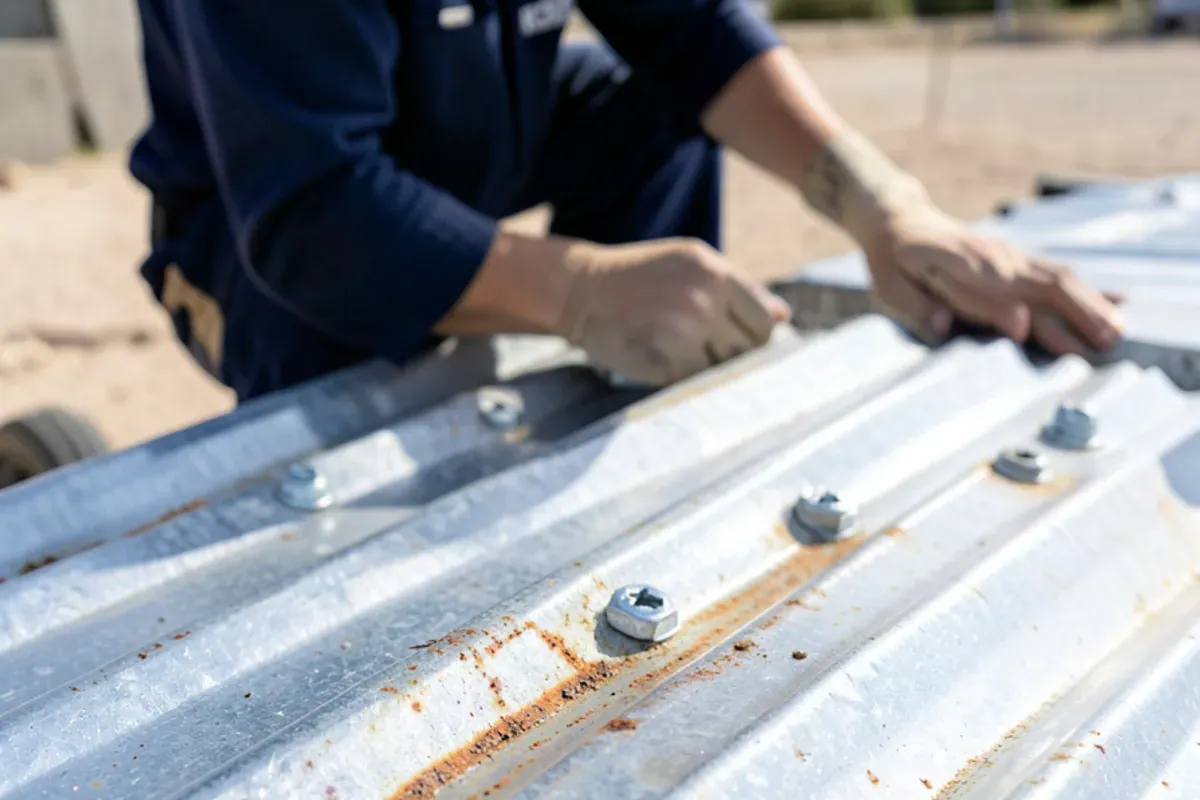
Exposed-fastener roofs depend on a rubber or neoprene washer under each screw head. Over time you see:
- Backed-out screws. Thermal movement slowly works them loose.
- Cracked or missing washers. The sun hardens them.
- Stripped holes. The screw spins and no longer pulls the panel down.
- Rust rings. Water has been getting in for a while.
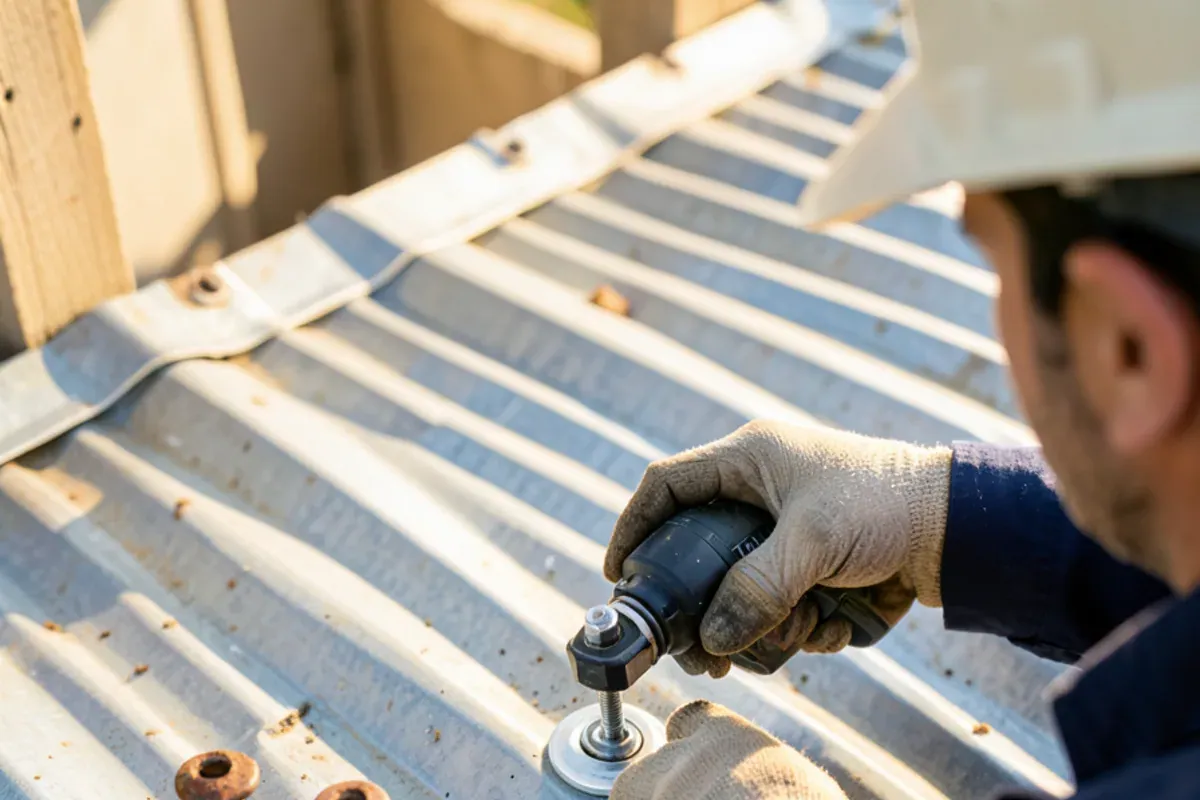
The common repair is a larger-diameter screw with a new washer in place of the old one, driven into solid purlin steel. Where holes are stripped, a larger fastener or relocated screw is needed. Cutting through hundreds of fasteners in a roof is a job for a trace, a plan and a count. It is not an afternoon of dabbing sealant.
How do panel laps and skylight strips leak?
Panel laps are where one sheet overlaps the next. They depend on a bead of tape or sealant between the layers. When that dries or the panels shift, wind-driven rain gets between them. Fixes range from re-taping the lap and adding fasteners to replacing the sealant at the lap with a butyl or similar tape.
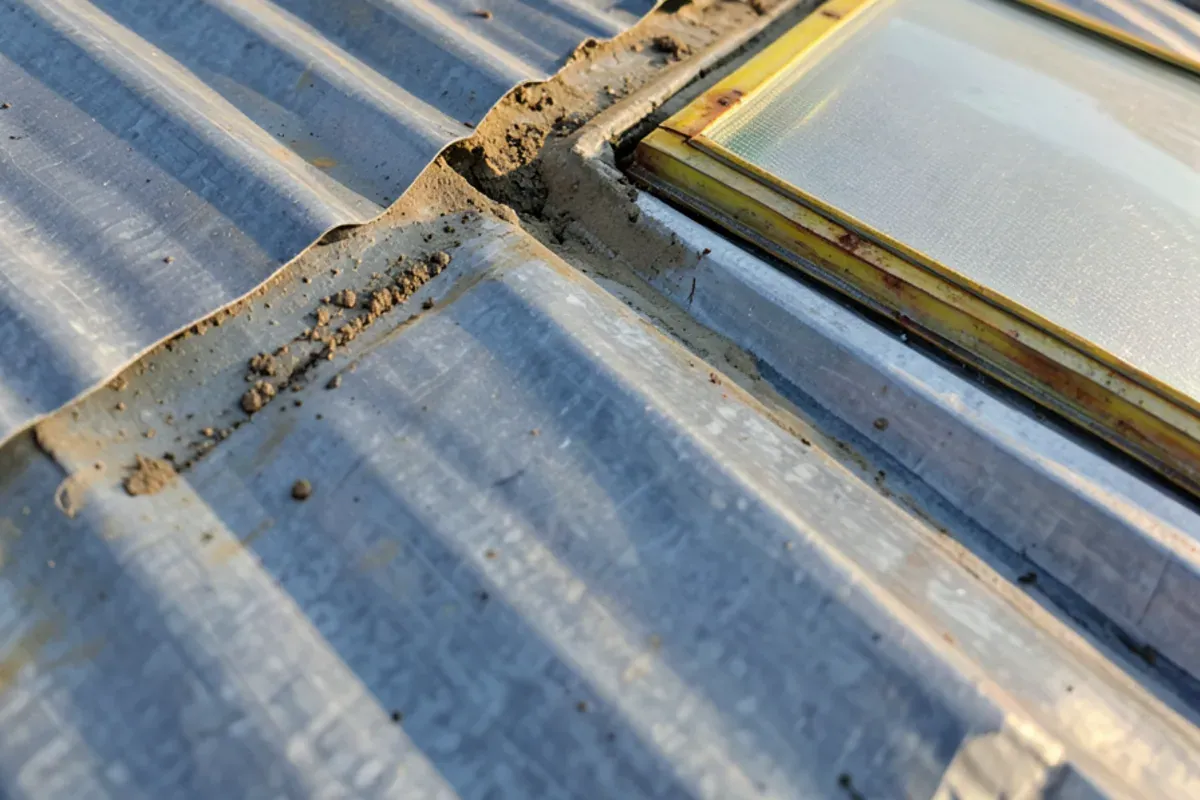
Translucent skylight strips are a repeat offender. Fiberglass panels yellow and crack. Their ribs do not always line up tightly with the steel next to them, and the closures beneath them can dry out. Options include re-sealing, replacing the translucent panel, or swapping the strip for a solid metal panel if the daylight is no longer needed. Our post on skylight leak causes covers the residential version of the same problem.
What does a lasting repair visit include?
A good visit is a sequence, not a single caulk tube. The steps below fit most exposed-fastener roofs.
- Walk and map. Number each roof section so findings can be matched to locations later.
- Mark the defects. Flag backed-out and stripped screws, cracked washers, open laps and rusted spots before touching anything.
- Replace the fasteners. Use larger-diameter screws with fresh washers set into solid purlins, and relocate where holes are stripped.
- Rework the laps. Remove failed sealant and re-seal with butyl tape or a compatible sealant, adding fasteners where laps have lifted.
- Address the skylight strips. Re-seal, replace or cover them, depending on condition.
- Treat the rust. Clean and prime surface rust, and flag panels that need replacement.
- Photograph and report. You receive before-and-after photos and a short list of what to watch.
Is it a leak or condensation?
Uninsulated metal buildings sweat. On cool mornings, warm moist air meets cold steel and drips from the underside of the panels, which looks like a roof leak. Clues that you have condensation: drips that show on dry days, drips spread evenly along the ceiling rather than at a point, and moisture that is worst in the early morning. Coastal marine layer makes this more common near the South Bay. If it is condensation, the answer is ventilation, insulation or a condensation-control liner, not more sealant. We say so when that is the case.
What do we check on a storage building roof?
An inspection starts with the whole roof, not the unit where water appeared. We look at fasteners row by row, laps, ridge and rake trim, skylight strips, gutters and downspouts, penetrations and any rooftop equipment. We photograph what we find and show you the pictures, with a plain explanation of repair and replacement options. One Google reviewer, who manages a storage facility in Torrance, described needing important repairs to the metal roofing and storage units. For multi-building sites, we map the buildings so findings can be tracked across the property.
We also work around tenants. Roof repairs mostly happen from above, but we plan for access to units, gates and customer traffic with the facility manager. We protect landscaping and driveways and clean up thoroughly when we leave.
What changes when a site has several buildings?
Multi-building sites call for a plan, because leaks in one building usually mean the others are due. Start with a quick survey of every roof, then rank the buildings by condition. Fix the worst first and schedule the others during dry months. Use the same repair details on every building so results stay consistent and tenant complaints do not move from one building to the next. Owners of coastal sites should also look at corrosion: salt air near the beach cities speeds rust on fasteners and panel edges. Our post on salt air and roofs in the beach cities covers what to watch, and the page on metal roof repair explains the residential side of the same work.
Strong Santa Ana winds can flex panels and loosen screws, so a check after a big wind event pays off. See what to check after a Santa Ana blow.
When does re-paneling make more sense?
Repair beats replacement when the panels are in good condition. Re-paneling becomes sensible when:
- Rust has eaten through the steel in several areas.
- Panels are dented, buckled or lifted across large sections.
- Fastener holes are so worn that new screws will not hold.
- Repairs have been done again and again with no lasting result.
There are two basic routes. Removing the old panels and installing new ones lets you see and fix the purlins and any wet insulation. A retrofit of new panels over the old can save tear-off time on some buildings, though it adds weight and can hide problems, so it needs a structural and moisture check first. Ask whether your building has insulation or a vapor barrier below the panels.
Timing and next steps
Storage buildings in Southern California get most of their water from November through March. Fix fasteners and laps in late summer or early fall so the roof is ready. If you are seeing active leaks, tell us how many buildings, what the panels look like and where water appears. Same day or next day service is available for urgent problems, and a free roof inspection is the easiest way to get a written list of what to fix first.