
By the Crown Trim Roofers team · Published · Updated
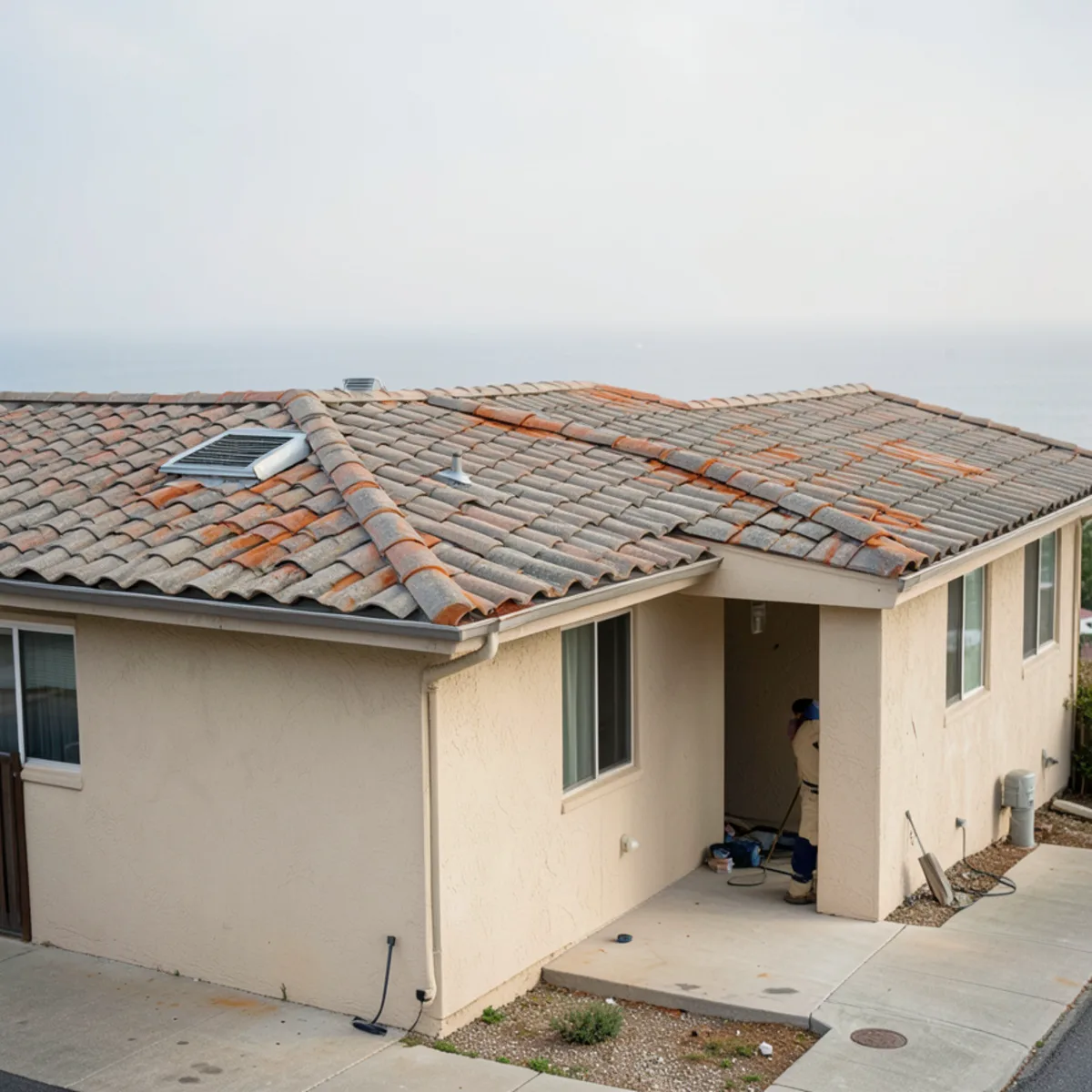
The Beach Cities sit under the marine layer for much of the year. That cool, damp air carries salt inland and leaves a film on whatever it touches. A roof near the water is working against that film every day. The shingles or tile may look fine while the metal parts tied to them are quietly giving up. If you already see a rust stain, our flashing repair page explains how a fix works.
What does salt air do to a roof?
Salt on a damp metal surface speeds up corrosion. Studies of coastal sites show zinc coatings, which protect galvanized steel, wear away much faster than they do inland. The metal under the coating then rusts, and the part fails long before the roof covering does.
Rain matters. Surfaces that get rained on are washed clean. Sheltered areas, like the underside of an overhang, an underlap or a hidden fastener head, keep their salt. That is why damage often looks worse in places you cannot see from the ground.
The parts that suffer first:
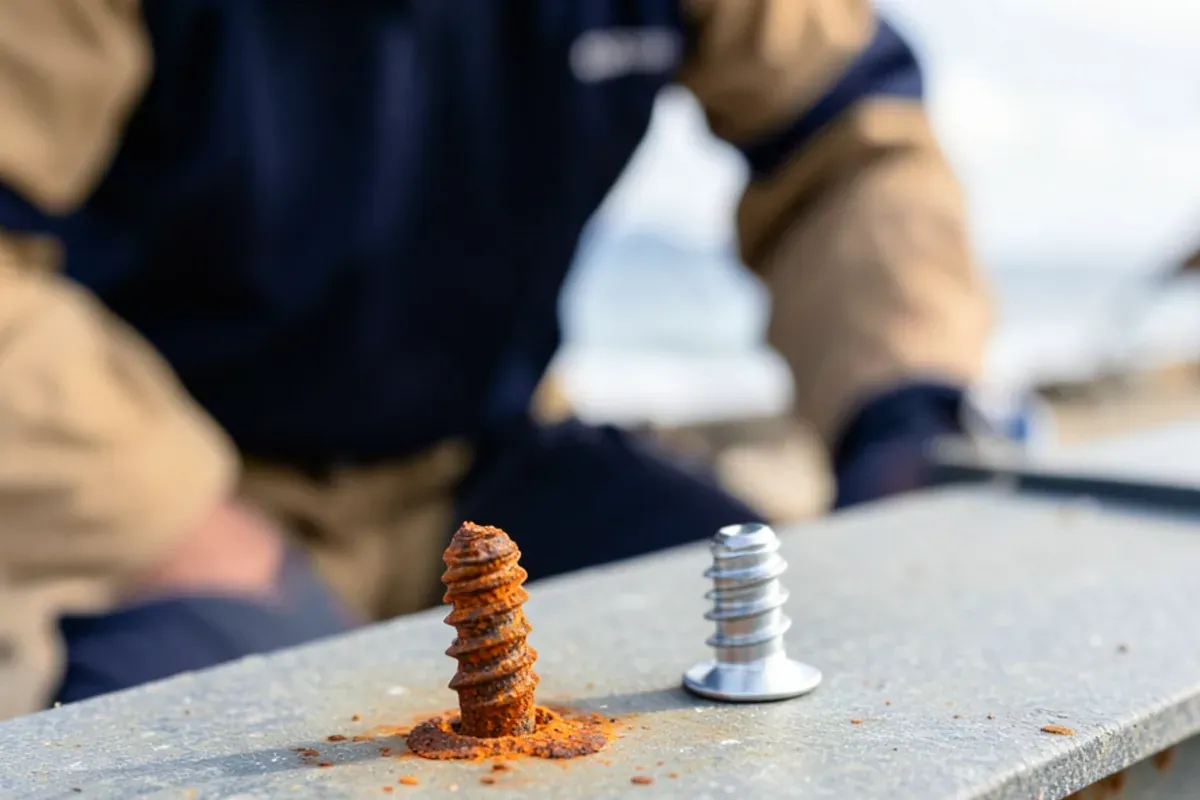
- Nails and screws. Exposed heads rust, then the shank, and a loose fastener lets the covering lift.
- Flashing. Step flashing, valley metal and wall flashing are thin, and a pinhole becomes a leak.
- Vent collars and covers. Painted or coated metal loses its finish in the sun and salt.
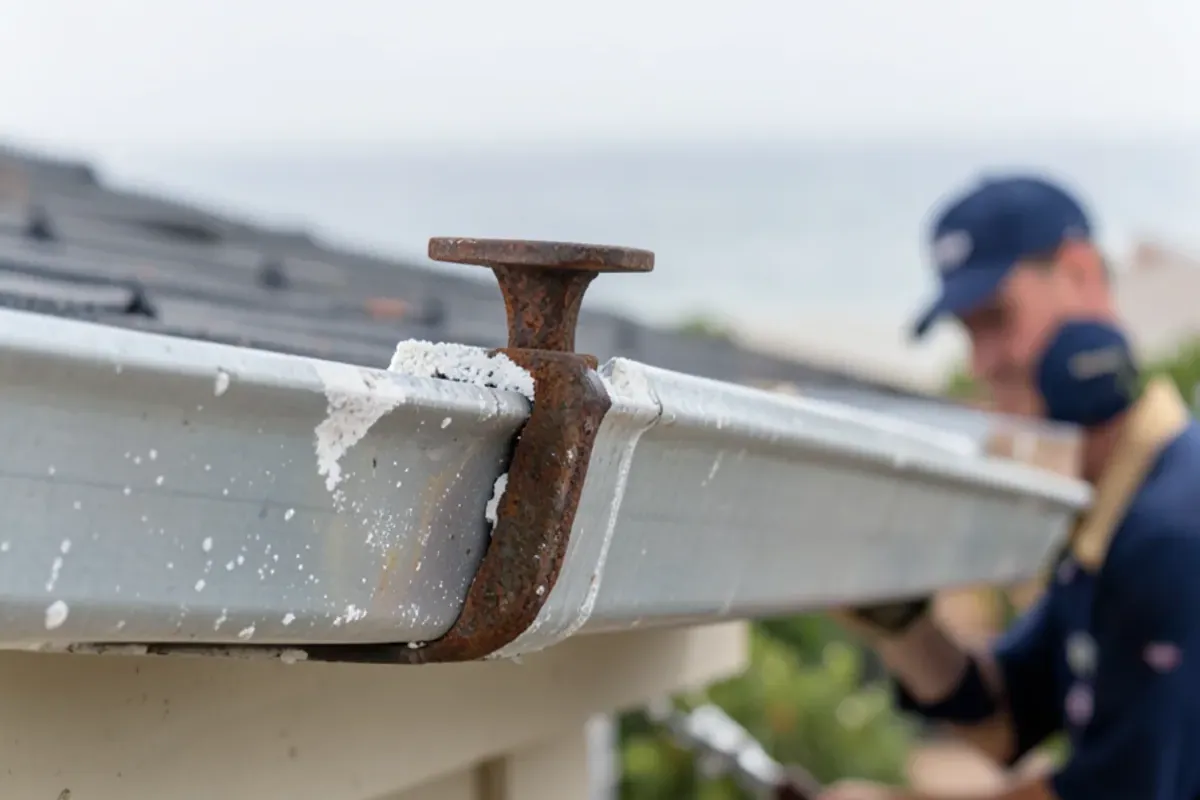
- Gutter hardware. Hangers and screws take wet-dry cycles.
- Drip edge and ridge hardware. Edges see the most wind-driven spray.
Where does salt collect first on a Beach Cities roof?
Flashings, valleys and gutters. Trade guidance for coastal metal work calls them salt traps, because they gather spray and drain slowly. A valley that holds a damp film of salt through a marine-layer morning corrodes faster than a ridge cap that dries in the sun. The National Weather Service describes the marine layer as cool, moist air trapped under a warmer layer, and it is most common along this coast in May and June.
That timing matters. The dry months deposit salt and the damp mornings keep it active, so the damage builds before the first winter rain washes anything clean. By then, the rust is already behind a shingle edge or under a tile.
Are Redondo, Hermosa and Manhattan Beach roofs different?
Mostly in exposure. The three cities sit along the water, and many streets slope up from the sand, so spray and fog reach well past the first block. Each city runs its own building department and its own permit process. See our pages for Redondo Beach, Hermosa Beach and Manhattan Beach for what we see on roofs in each place. Confirm permit details for your address with the city before work begins.
Moisture is the other half of the story. A marine layer that lingers keeps roofs damp, which feeds moss and algae on north-facing slopes. Our guide to moss and algae on coastal roofs covers that.
What should you check on a beach-city roof?
You can do the first pass from the ground with binoculars. Look for these in daylight:
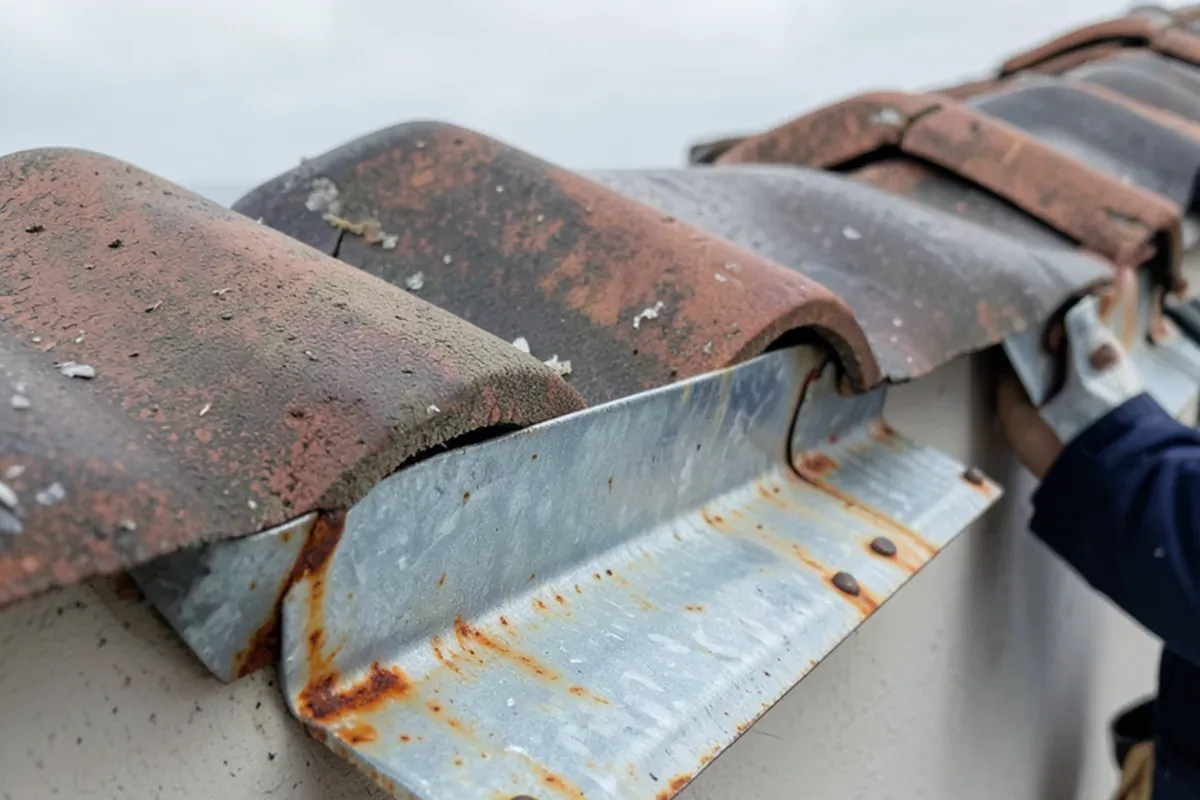
- Rust streaks below flashing, vent pipes or the chimney.
- White powder or bubbling paint on metal parts.
- Nail heads standing proud of shingles or tile.
- Stains on the fascia below the gutter line.
- Loose or sagging gutters, which often means the hangers are corroded.
If you see any of these, schedule a closer look. A repair at this stage is small. Waiting turns a metal repair into a leak, then into a deck repair.
Which roof materials hold up near the beach?
Material matters less than the metal around it. Tile is a strong choice because it does not rust, though its fasteners and flashing still need attention. Asphalt shingles do fine when the nails, flashing and vents are chosen for the setting. Metal roofing can work well on the coast, but the coating, the panel metal and the fasteners have to be matched so one part does not corrode another.
| Part | What to ask about near the water |
|---|---|
| Fasteners | Are they corrosion-resistant, and do they match the other metals? |
| Flashing | Is it a material that handles salt, such as stainless steel, copper or a coated product? |
| Vents | Is the finish rated for salt exposure, and can it be painted? |
| Gutters | Do the hangers and screws match the gutter metal? |
Mixing unlike metals invites corrosion where they touch. When someone asks about the best roof near the beach, we tell them the covering is only part of the answer. The accessories decide how long the roof lasts.
How do stainless, aluminum and galvanized parts compare?
Trade guidance for coastal work lists aluminum, stainless steel and copper as preferred metals, and it calls galvanized steel the weak option near salt. Each has a trade-off:
- Stainless steel. Resists rust well and costs more, and the grade matters, since lower grades can still show surface rust.
- Aluminum. Does not rust, but it can be damaged where it touches other metals or wet masonry.
- Copper. Lasts a long time, though its patina can stain what the runoff touches and it costs more.
- Galvanized steel. Fine inland and common, but the zinc coating wears faster in salt air.
Matching matters as much as picking. A stainless screw through galvanized flashing sets up a corrosion couple at the contact point. Ask your roofer to name the metal for every flashing, fastener and vent on the estimate, and to explain how they are kept apart. Our flashing repair page shows what that work involves.
What roofers tell customers about coastal roofs
Here is what we check and what we say when a call comes from near the water:
- We look at the metal parts first, then the covering.
- We photograph corroded parts so you can see how far the rust has gone.
- We tell you when flashing alone needs work and a full replacement is not called for.
- We suggest material pairings that avoid unlike metals touching.
- We explain what a spot repair buys you and when it stops being worth it.
One Google reviewer described a contractor who spent time inspecting the shingles and flashing, then came down and showed clear photos of what he found. Photos are the way we back up a recommendation.
How do you rinse and maintain a roof near the water?
Rain washes the exposed surfaces. You can help with the parts it misses:
- Rinse gutters, fascia and downspouts with a garden hose at low pressure, from the ground or a stable ladder.
- Clear debris so water drains. Standing water holds salt against the metal.
- Look for flaking paint or white powder on vents, collars and drip edge.
- Replace rusted screws with a matching metal, never a mixed one.
- Photograph rust streaks each spring and fall so you can see how fast they spread.
Stay off tile and wet shingles. Anything on the roof itself is a job for a roofer.
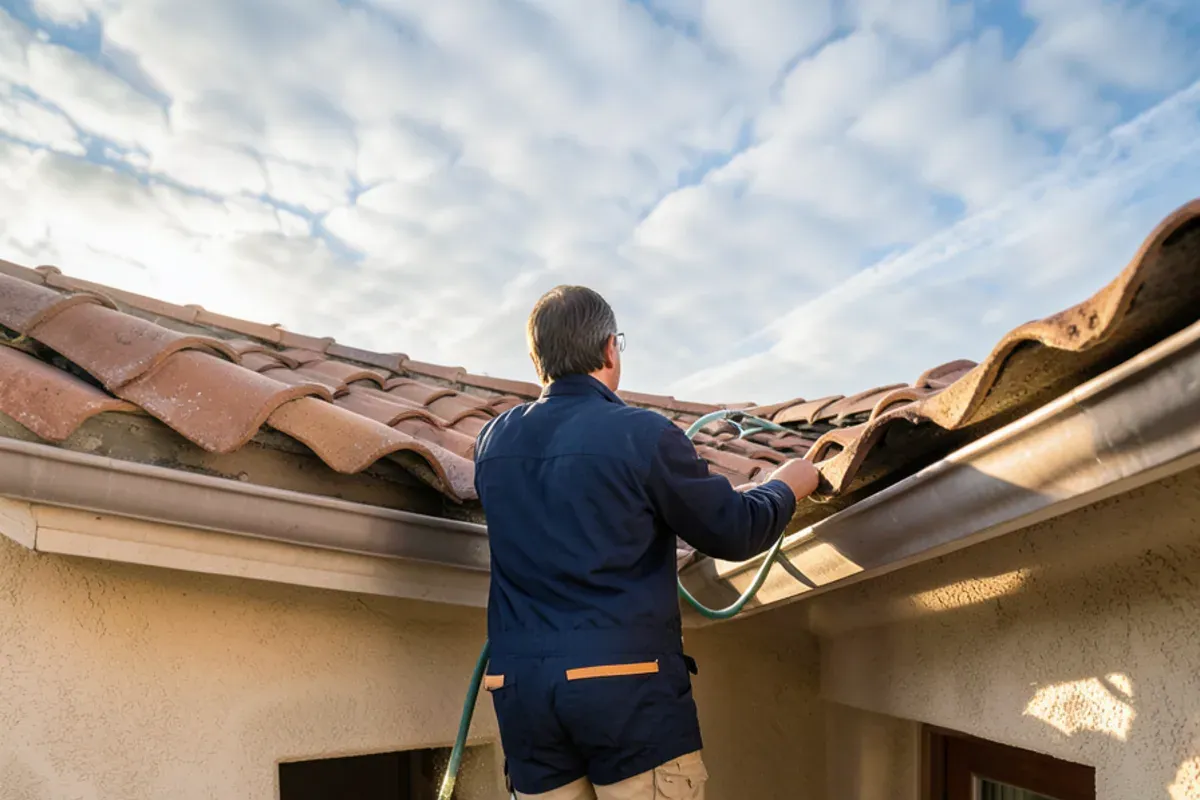
A simple routine
Rinse what you can reach, keep gutters running clean, and book a roof look once a year if you are within a few blocks of the water. We offer free roof inspections and free estimates. If your roof is in the Beach Cities and you are not sure where the rust is coming from, call Crown Trim Roofers and we will check the flashing, fasteners and vents together.