
Roof Flashing Repair in Torrance, CA
- 4.8★ from 73 Google reviews
- Free estimates
- Same day or next day service
- Photos of what we find
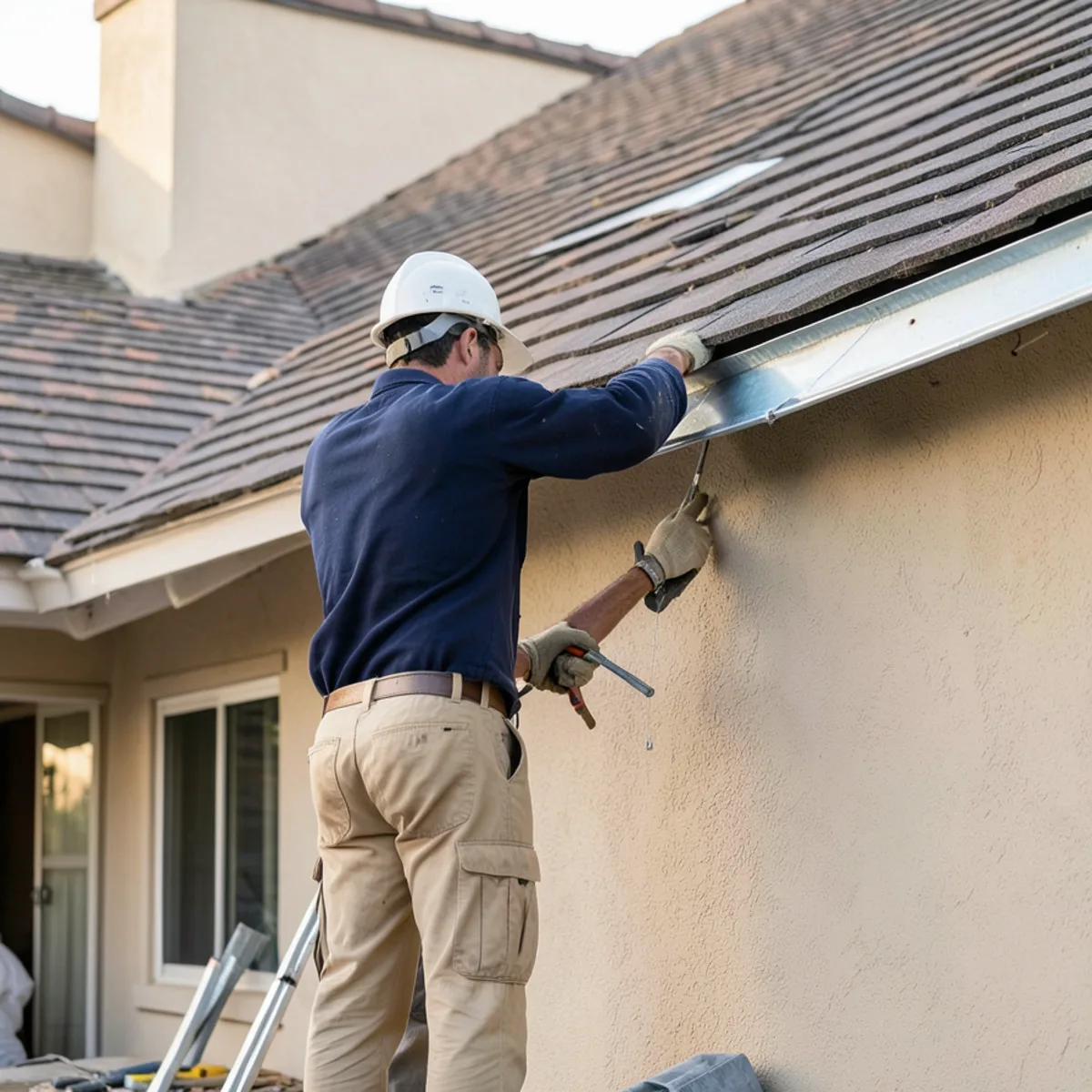
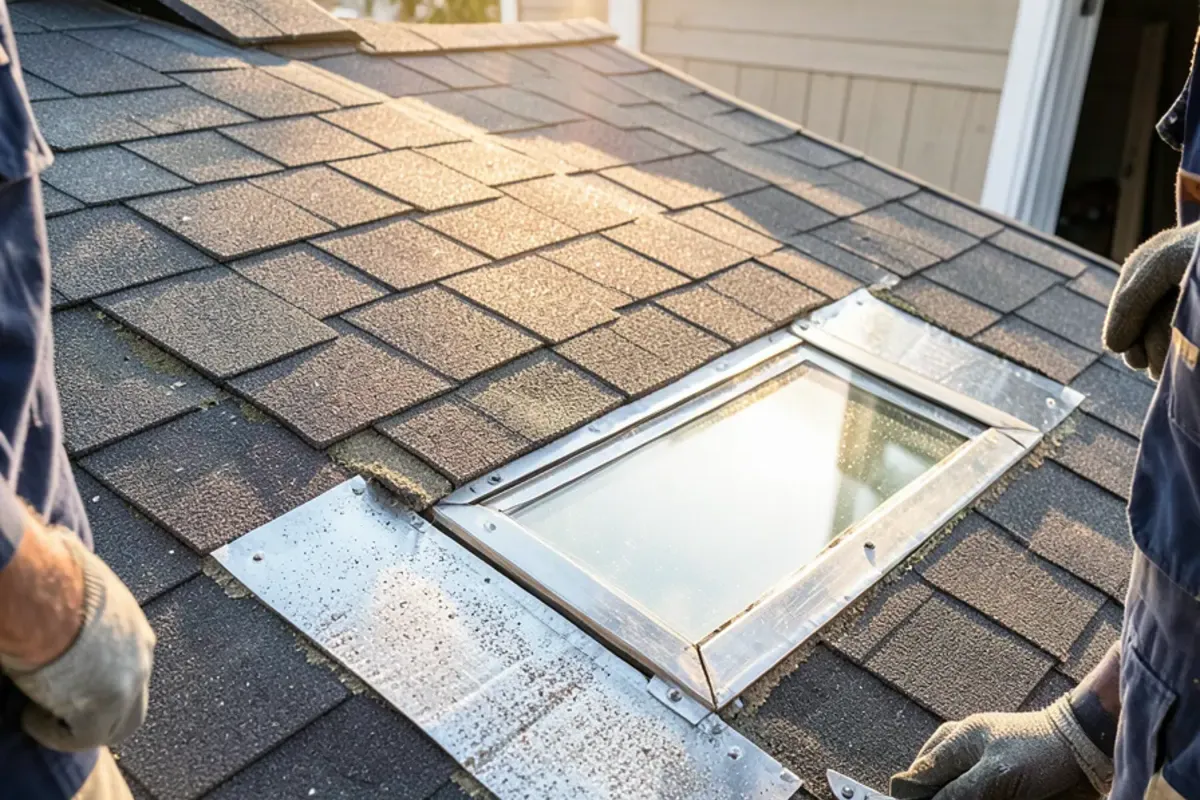
Take a roof and mark every place it stops being a plain slope: where it meets a wall, a chimney, a skylight, a vent pipe, a valley, an eave. Those are the joints where water tries to get in, and flashing is the metal that stops it. This page is about roof flashing repair in Torrance, as part of our wider roof repair work, and how we replace flashing so it stays sealed.
How do I know if flashing is the cause of my roof leak?
Flashing usually gives itself away by location. Think about where the water shows up.
- A stain on a ceiling or wall that follows the line of a roof-to-wall joint
- A leak near a chimney, skylight, vent or dormer
- Water that only comes in with wind-driven rain
- Dark streaks on the stucco below a roof edge
- Rust, bent metal, lifted edges or caulk that has cracked or pulled away
A leak in the middle of an open slope is a different story, and it usually points to shingles, tile or a nail problem. Our roof leak repair page covers how we trace those. One Google reviewer said a roofer gave "helpful advice about regular roof maintenance, flashing checks, and keeping the roof system in good shape to help prevent future leaks," which is the right priority: check the joints before they open.
Step flashing and wall flashing: where stucco meets roof
Torrance has many two-story stucco homes where a first-floor roof runs into a second-story wall. That joint has two jobs. Step flashing, a row of small bent pieces woven in with each shingle course, turns water away at the side. A headwall or apron flashing handles the top. A counterflashing, set into or over the stucco, overlaps the base metal so water cannot slip behind it.
Things go wrong in predictable ways:
- The metal was too short or lapped the wrong way
- The counterflashing is only caulk on stucco, and the caulk dried out
- Stucco was carried down onto the roofing, where it wicks water
- At the bottom of the wall, there is no diverter, so water runs behind the stucco
- Rust has eaten through old galvanized metal
When the joint is that old, new caulk is only a delay. The repair is new base flashing, a properly set counterflashing and clean integration with the roofing.
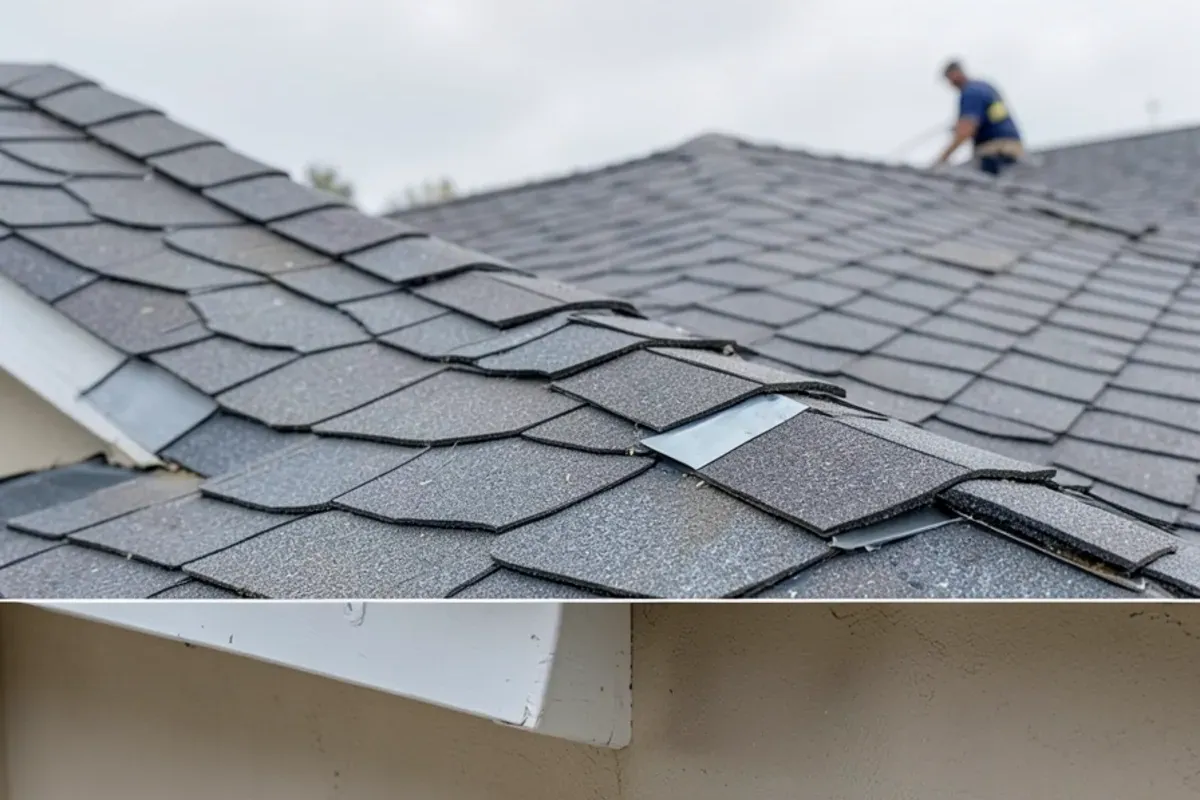
Counter flashing and eave flashing: the pieces you rarely see
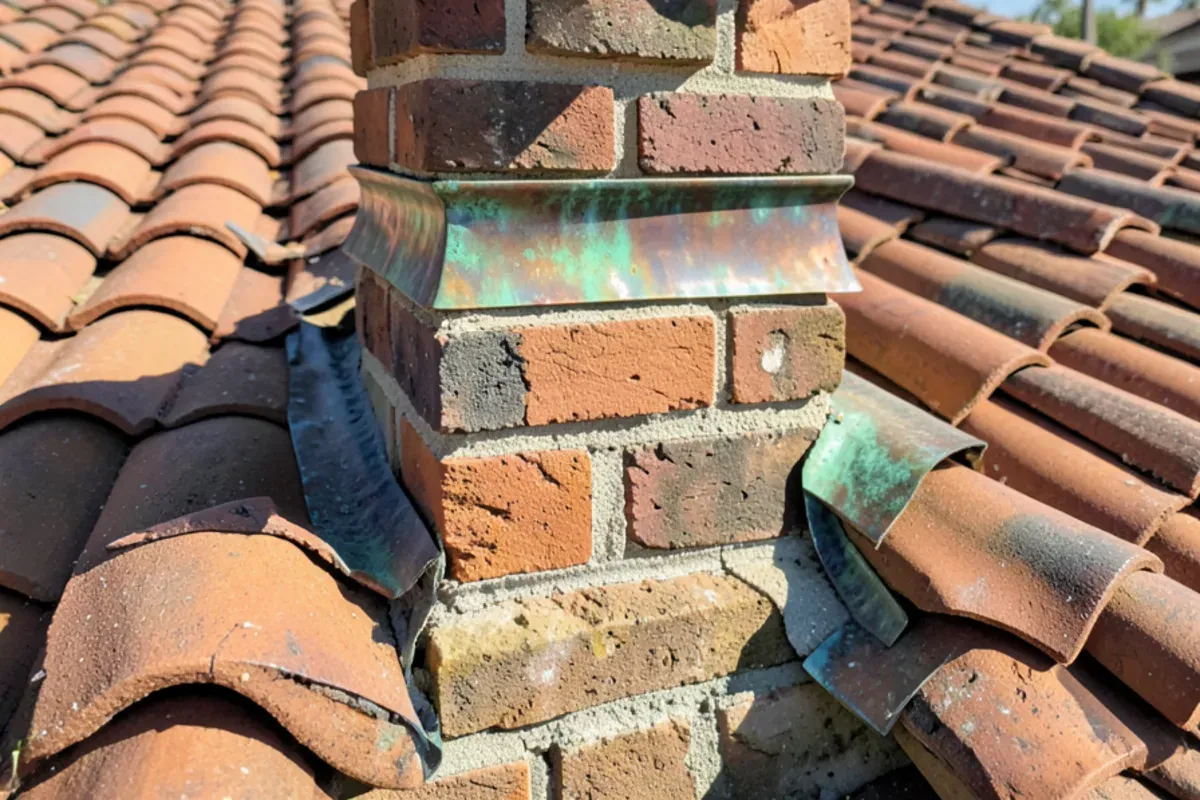
Counterflashing is the cap piece that laps over base flashing. On brick and masonry it sits in a mortar joint; on stucco it tucks into a cut or a purpose-made channel. When the mortar or sealant fails, rain gets behind it.
Eave flashing, usually a metal drip edge, steers water off the roof edge and into the gutter. Without it, or with it set wrong, water curls under and rots the fascia and roof sheathing at the edge. Our fascia, soffit and roof trim page covers the damage this causes.
Valley flashing carries the most water of any joint. See roof valley repair for the details.
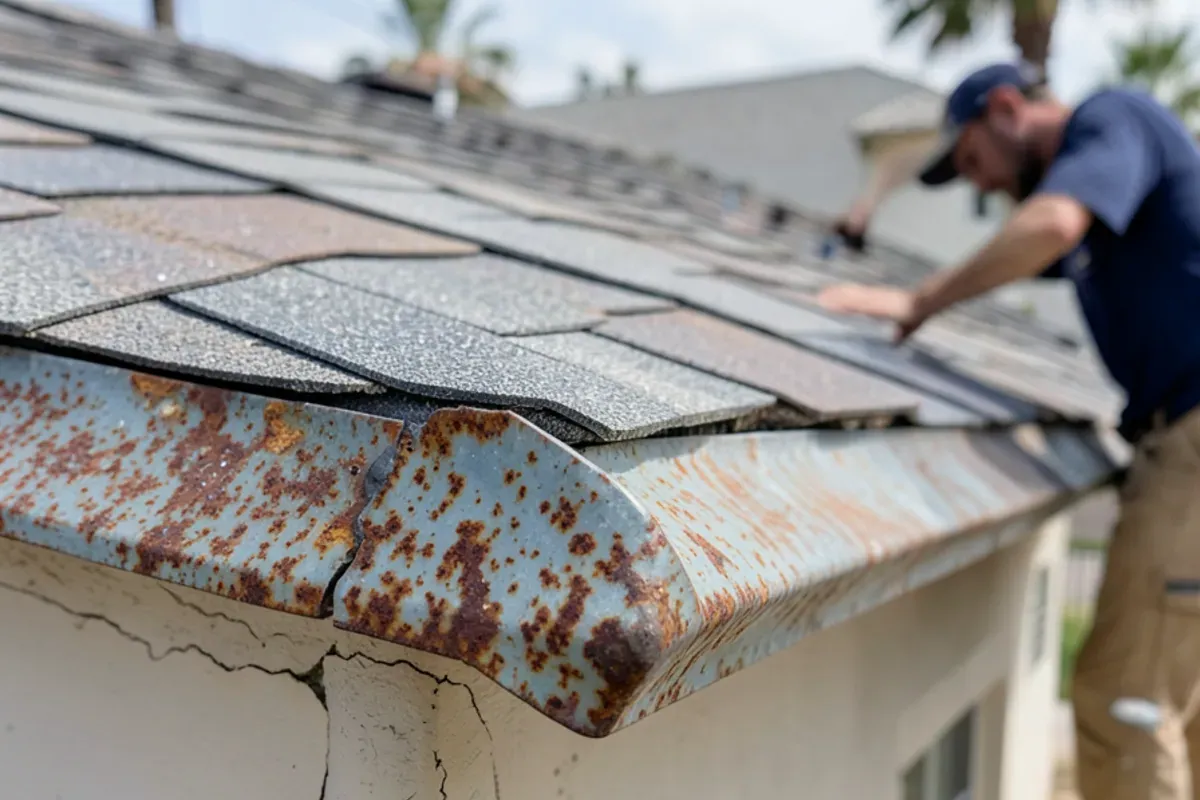
Is copper flashing worth it on a Torrance home?
Sometimes. The answer turns on how long the roof is going to last and how hard the joint is to redo.
| Galvanized or aluminum | Copper | |
|---|---|---|
| Cost | Lower | Higher |
| Rust | Can rust or pit, especially in salt air | Does not rust |
| Joints | Lapped and sealed | Can be soldered |
| Appearance | Painted to match | Ages to a brown or green patina |
| Best on | Roofs near the end of their life | Tile roofs, chimneys, skylights, long-term homes |
Copper has two cautions. It must not touch aluminum or bare galvanized steel, because contact corrodes the lesser metal, and runoff can leave green streaks on light stucco or concrete if the detail is poor. When we recommend copper, it is where the flashing would otherwise outlast the roofing around it, like a tile roof or a masonry chimney. For a shingle roof with limited life left, standard metal is usually the practical choice. The decision is yours, and we explain both.
Can flashing be replaced without a new roof?
In most cases, yes. Here is how a flashing replacement goes:
- Expose the joint. We lift shingles or remove tile along the flashing.
- Remove the old metal. We pull it, along with the old sealant and nails.
- Check below. Underlayment and deck are inspected and repaired if stained or soft.
- Add a waterproof layer. A membrane goes over the joint where the detail calls for it.
- Install new flashing. Pieces are lapped shingle-fashion, so water always sheds outward.
- Set the counterflashing. It is secured into masonry or stucco and sealed.
- Restore the roofing. Shingles or tiles go back in, matched as closely as we can.
- Test and clean up. We check the joint, clear debris and protect landscaping and driveways.
If the roofing around the joint is so old that it breaks apart when lifted, we tell you before we start.
What flashing repair includes, and which rules apply
A flashing repair covers these deliverables:
- Removing the failed flashing, old sealant and nails
- New base flashing and counterflashing, lapped so water sheds outward
- Waterproof membrane at the joint where the detail needs it
- Skylight, dormer and vent joints tied in when they share the failed run
- Roofing reset or replaced around the joint, photos and cleanup
Flashing repairs often need no permit, but a re-roof does. Torrance permits go through City of Torrance Building & Safety, (310) 618-5910. Unincorporated LA County uses LA County Public Works, and the City of LA uses LADBS. Confirm the rule for your address, and verify any roofer's California license on the CSLB site, cslb.ca.gov.
What drives the price of flashing work
We give free estimates and do not post prices. Published 2026 cost guides put most roof repairs at $300 to $1,500, which is market data and not a quote; flashing jobs can sit at either end. The factors:
- Linear feet of flashing, and how many joints
- Material: galvanized, aluminum or copper
- Roof type, since tile has to be removed and reset
- Second-story walls, access and roof pitch
- Cutting into masonry or stucco, and any finish repair after
- Skylights or equipment tied into the same joint
Ask about financing at your estimate if the work grows into a bigger project.
Why Crown Trim for roof flashing repair
- A photo of the failed joint, so you see the gap, rust or missing lap yourself.
- Copper versus standard metal explained in plain terms, with the choice left to you.
- Free estimates and free inspections.
- Replace the flashing, not the roof, when flashing is the problem.
- A clean worksite, with landscaping and driveways protected.
- 4.8 stars from 73 Google reviews.
One Google reviewer noted that the crew "paid attention to detail around flashing, trim, and gutter lines." We repair flashing in Carson, Redondo Beach and Rancho Palos Verdes. Salt air near the coast shortens the life of galvanized metal, while hillside homes on the Peninsula face stronger wind, and both change what we recommend. Permit questions go to your city's building department, so confirm the rule for your address.
Where we do roof flashing repair around Torrance
Each place brings its own version of this job.
- Laguna Beach: Steep canyon streets and salt air are hard on roof flashing, and design review shapes what can change on cottage roofs.
- Hermosa Beach: Roof decks, parapets and shared walls near The Strand multiply wall-to-roof joints, and every one needs flashing that survives salt.
- Santa Monica: Pre-war Spanish bungalows and multi-unit buildings in strong marine air, where old wall and parapet flashing is a common leak source.
- Culver City: 1920s-40s bungalows and apartment buildings with rooftop equipment curbs and parapets that all depend on intact flashing.
- View Park-Windsor Hills: Hillside custom homes with low-pitched roofs and view decks, where deck-to-wall flashing is a frequent leak path.
- South Pasadena: Craftsman bungalows with steep roofs, dormers and a heavy tree canopy that clogs valleys and overloads old valley and wall flashing.
- Palos Verdes Estates: Clay tile roofs with masonry chimneys where copper flashing is the usual long-life choice and visible changes are reviewed by the Art Jury.
- Lennox: Small-lot homes with add-on rooms where the new roof meets the old wall, and unincorporated county permits apply.
- Long Beach: California Heights and Bixby Knolls period homes with chimneys, dormers and Belmont Shore salt exposure on the flashing metal.
- Eastvale: 2000s-2010s new-build homes with young tile roofs, where early flashing problems and builder-warranty questions are the usual reason for a call.
What customers say about this work
Crown Trim Roofers holds 4.8 stars from 73 Google reviews. Read all reviews
“He also shared helpful advice about regular roof maintenance, flashing checks, and keeping the roof system in good shape to help prevent future leaks.”
“This was the second roofing company I contacted for an estimate to fix our leaky roof in Torrance, and I’m glad I did.”
“most of them sent out commission-based folks to check our roof, and it felt like the price kept going up just so they could make more.”
Roof Flashing Repair: common questions
How do I know if flashing is the cause of my roof leak?
Look at where the water shows up. Stains near a wall, chimney, skylight or vent, leaks that only appear in wind-driven rain, and dark streaks on the stucco below a roof joint all point to flashing. Rusted, bent or gapped metal and cracked caulk confirm it. A leak in the middle of an open slope is usually something else. We trace it and show photos.
Is copper flashing worth it on a Torrance home?
On roofs meant to last, often yes. Copper does not rust, handles salt air and can be soldered, so it suits tile roofs, chimneys and skylights where redoing the flashing later is expensive. It costs more than galvanized or aluminum, and it should not touch other metals. On a roof near the end of its life, standard flashing is usually the sensible call.
Can flashing be replaced without a new roof?
Usually yes. We lift or remove the roofing around the joint, replace the flashing and underlayment there, and set the roofing back. On tile, we remove and reset tiles. The exception is brittle roofing that breaks when disturbed. If that is the case, we show you and explain whether a larger repair or replacement makes more sense.
Why does caulk around my flashing keep failing?
Sunlight dries caulk and daily heat moves the metal, so the bond cracks. Caulk can supplement flashing, but it cannot replace it. If you have re-caulked the same joint more than once, the metal is probably missing, wrongly lapped or too short, and a proper replacement stops the cycle.
What is the difference between flashing and counterflashing?
Base flashing sits on the roof and turns up the wall. Counterflashing is the upper piece that laps over it, often set into stucco, brick or mortar, so water cannot slip behind. Failures usually happen at the counterflashing, where it was set into masonry or stucco. We check both layers.
Do you also fix flashing around chimneys and vent pipes?
Yes. Those joints have their own details, so we have separate pages: chimney flashing repair and vent boot repair. A leak near a chimney or pipe is traced the same way, and we show photos of whichever joint failed.
Related services and guides
Chimney Flashing & Sealing
Vent Boot & Pipe Collar Repair
Salt Air and Roofs: Redondo, Hermosa and Manhattan Beach
Ceiling Stain After Rain: Emergency or Wait and Watch?
Roof Repair Cost in the South Bay: Small Fix or Big Job?
Where we work: Carson, Redondo Beach, Rancho Palos Verdes, Gardena and the rest of our service areas.
Leak near a wall or vent? Check the flashing.
Call first. A roofer picks it up from there.