

By the Crown Trim Roofers team · Published · Updated
You can spot a slipped tile from the street: one tile sits crooked, a row has a gap, or a piece lies in the planter below. It looks cosmetic. It is not. Tile roofs are a two-layer system, and a moved tile means the layer you cannot see has lost its cover. Our tile roof repair page describes the work; this post, part of our roof repair guides, explains the problem.
What actually moves a roof tile?
Tiles are held by nails, clips, foam adhesive or mortar, depending on how the roof was built and when. Over decades several things loosen that hold.
- Failed fasteners. Nails rust and clips fatigue, so the tile rides loose on its batten.
- Foot traffic. Gutter cleaners, satellite installers and solar crews walk on tile and crack or shift it.
- Wind. Gusts lift an unfastened tile edge and nudge it out of line.
- Aged underlayment. When the felt or membrane below dries out and shrinks, tiles lose their bed.
- Settling. Framing shifts and tile rows drift with it.
- Animals. Rats, squirrels and birds dislodge tiles to get under them.
How are tiles held on, and how does each method fail?
Knowing how your roof was built tells you what to expect when a tile slides.
| Fastening method | Where it is common | How it lets go |
|---|---|---|
| Nails through the tile into battens or deck | Older tile roofs | Nail rusts or backs out, tile rides loose |
| Metal clips or wire ties | Many mid-century and later roofs | Clip fatigues or the wire corrodes |
| Foam adhesive | Re-set tile and many repairs | Foam ages and loses its grip on the tile |
| Mortar bed on hips and ridges | Ridge and hip caps | Mortar cracks, caps shift and rain gets in |
Not every tile on a roof is fastened equally. Perimeter tiles and those on steeper slopes are usually fastened more heavily than field tiles, so the loose ones tend to be in the middle of a slope, where nobody looks.
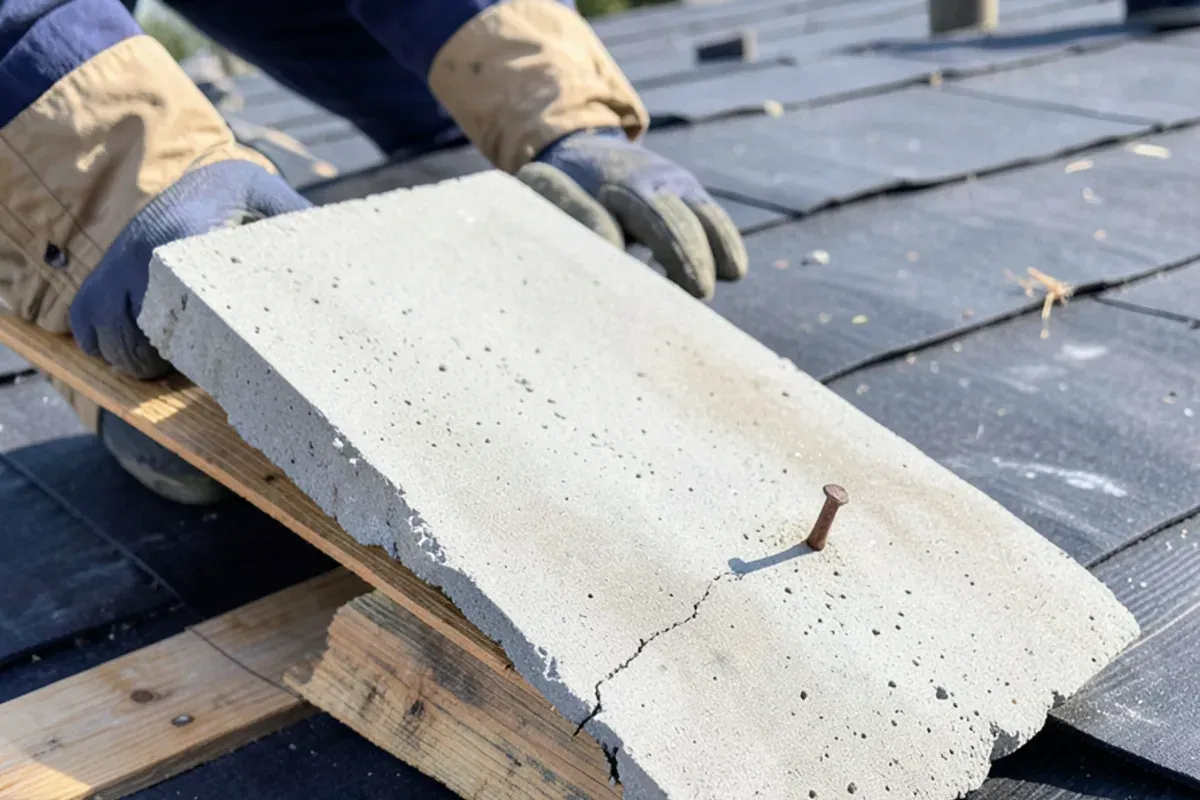
Why does a slipped tile cause a tile roof leak?
Tile does not make a roof waterproof. It shields the underlayment from sun and takes the bulk of the rain. The underlayment under it does the sealing. When a tile slips, the underlayment in that spot is bare to ultraviolet light and rain.
On a tile roof that is 25 or 30 years old, the underlayment may already be tired. A gap sends water onto brittle felt, which tears at nail heads, and the leak starts there. That is why a stain on a ceiling under a tile roof may be several feet from the slipped tile you can see.
How do you check tiles from the ground?
Do not walk the roof. Use binoculars or a phone zoomed in.
- Look for tiles that sit crooked or stand higher than their neighbors.
- Scan for gaps and dark shadows in a row.
- Check the ridge and hip lines for cracked mortar or loose caps.
- Look in planters, on walkways and in gutters for tile chips and sand-like grit.
- Check inside the attic for daylight or stains on the underside of the deck.
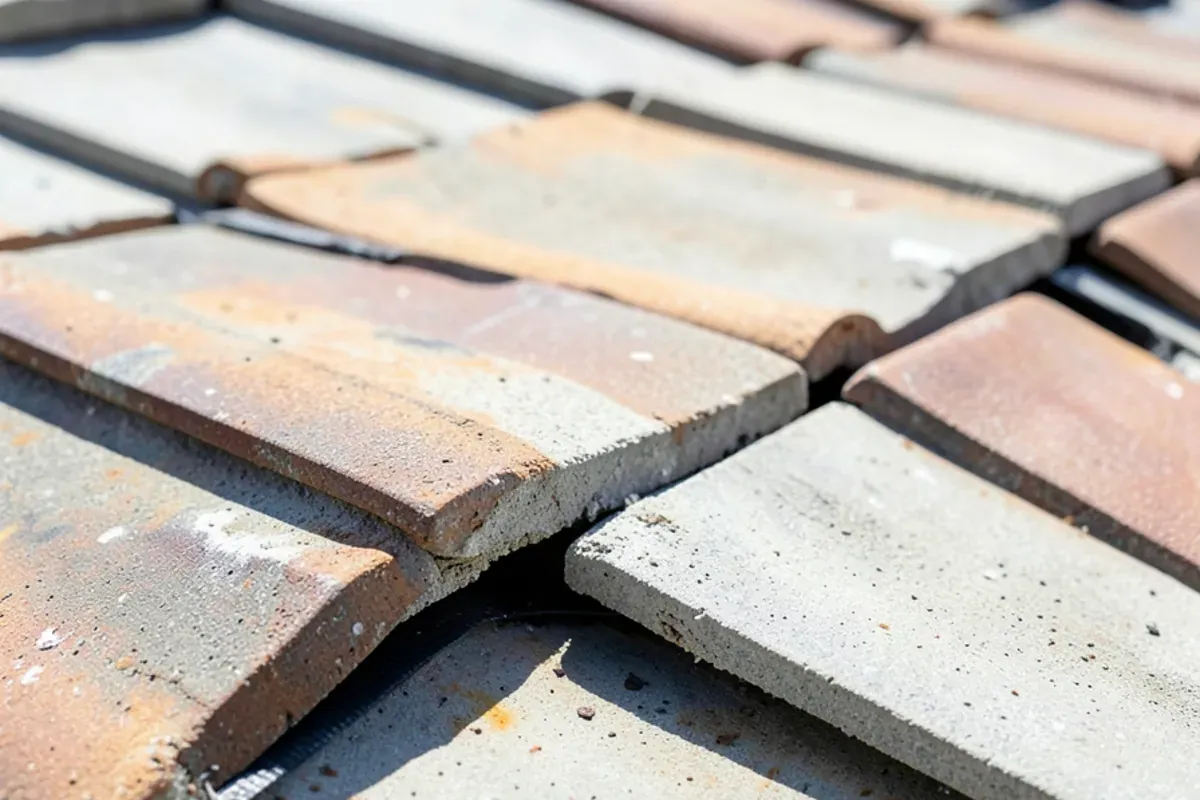
Who should be walking on a tile roof?
Almost nobody. Tile is strong in compression and weak under a heel, and a cracked tile can sit unseen until the next rain. Plenty of slipped and broken tile starts with a visit from someone who was not a roofer: a satellite installer, a holiday-light hanger, a solar crew or a gutter cleaner. Before anyone goes up, ask them how they plan to move across the slope and whether they have walked tile before. If a service visit leaves you with broken tile, photograph it that day, since the break is easiest to trace to the visit while it is fresh. Solar panels sit on tile through mounts that penetrate the roof, which is another reason to keep tile checks in a maintenance routine.
What does a repair involve and how is tile matched?
A good repair is more than putting the tile back. The roofer lifts the tile and the ones around it, checks the underlayment and the fasteners, replaces what is torn or brittle and resets the tiles with new fasteners or foam. Broken tile is replaced one at a time.
Matching is the tricky part. Old tile fades and weathers, and new tile looks cleaner. Crews often take salvage tile from a less visible slope and use it on the front, then fill the hidden spot with new tile. We match existing tile as closely as we can.
One Google reviewer called Crown Trim Roofers after noticing a few roof tiles slipping out of place. Another had several damaged S tiles replaced along with chimney repairs and a roof tune-up. S-tile, also known as Spanish tile, is the most common profile on South Bay homes, so it is the one most often matched.
Why do hillside tile roofs slip more?
On the Palos Verdes Peninsula, many homes sit on steep lots with open views to the ocean. That means more wind, more sun and sharper slopes, and tile on a steep pitch is more likely to creep. Our Rancho Palos Verdes page covers what roofs face on the peninsula. Santa Ana winds in the fall add gusts that catch loose tile edges.
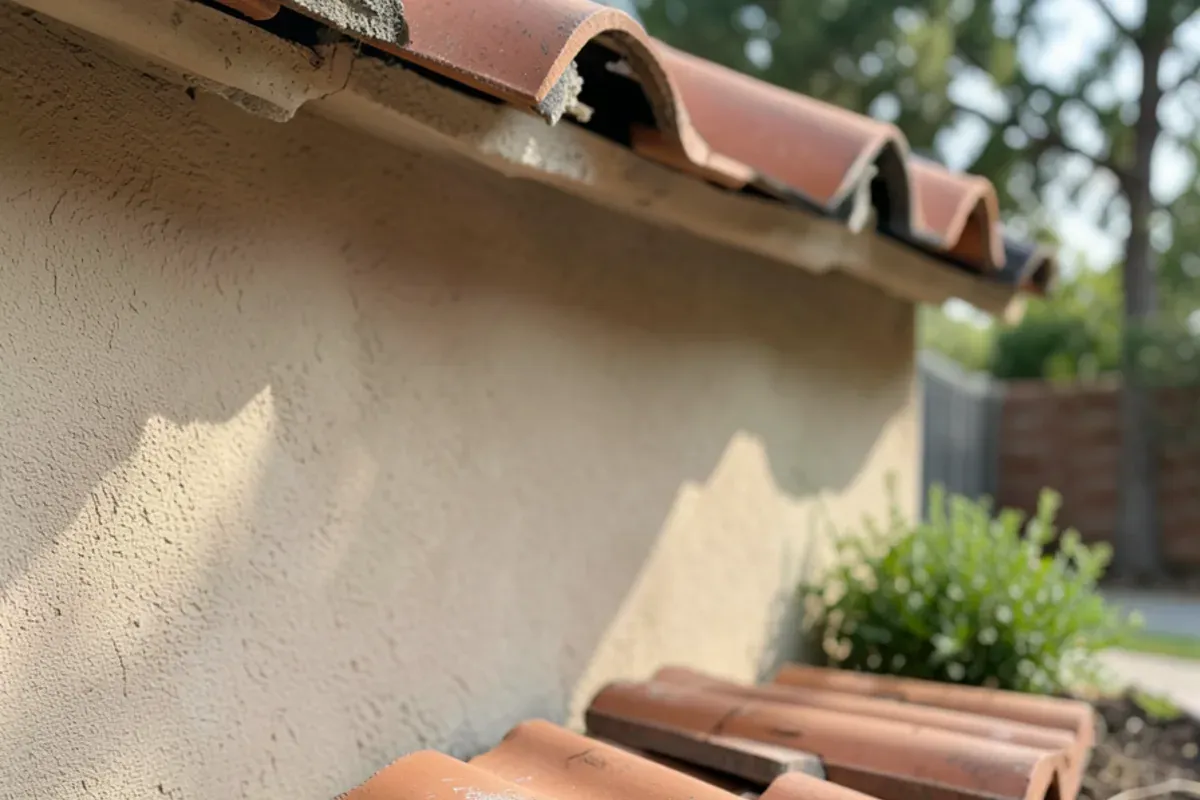
Can you keep the look of a tile roof in Palos Verdes Estates?
Palos Verdes Estates was laid out in the 1920s, and red clay tile is part of its character. Visible exterior changes there can go through the Palos Verdes Homes Association's Art Jury, so ask before changing tile color or profile on a front slope. A like-for-like repair with matched tile is a different request from a color change, and a salvage tile from a back slope helps keep a front slope unchanged. Our Palos Verdes Estates page covers the area, and our post on clay tile roofs in Palos Verdes Estates goes deeper on keeping the look.
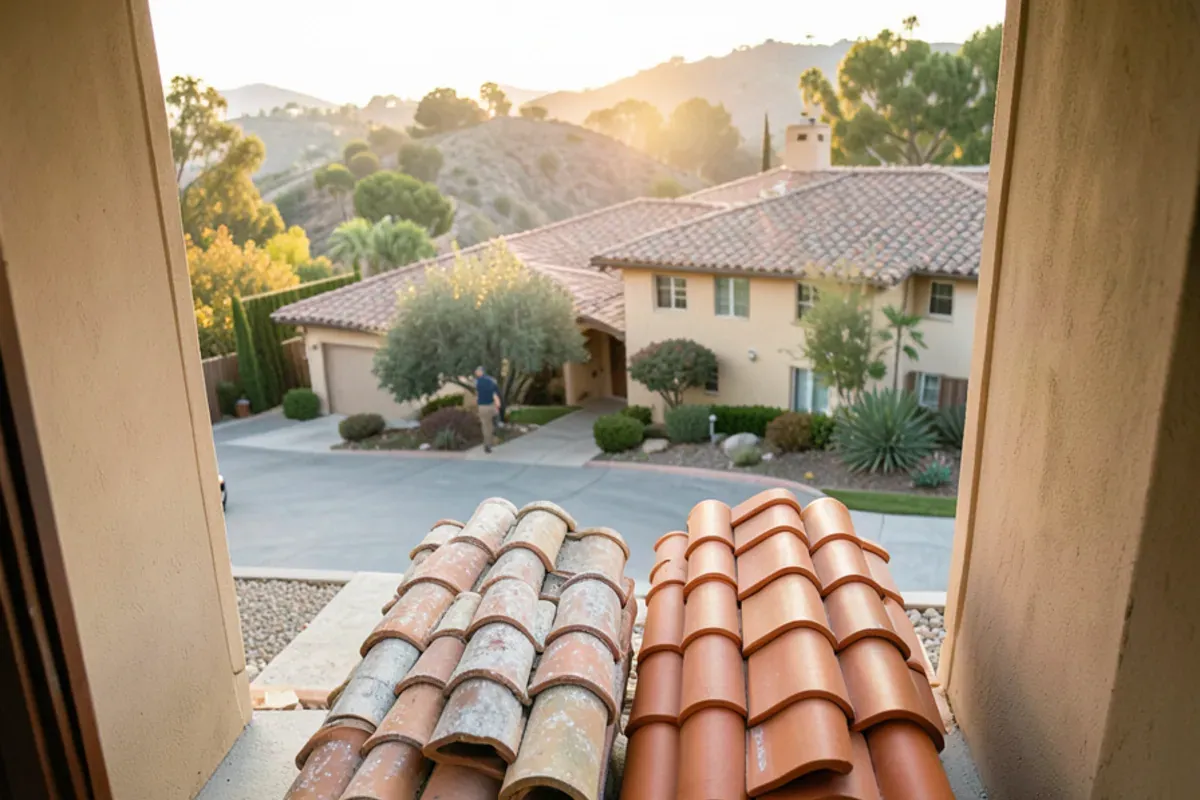
What happens if a slipped tile is left alone?
Nothing dramatic for a while, which is the trap. Sun ages the exposed underlayment first. The first heavy rain then finds a torn spot, and water runs under the neighboring tiles to wherever the felt is weakest. By the time a ceiling stain appears, the deck below may already be damp.
Cost follows the same path. Published 2026 cost guides put roof repairs at roughly $300 to $1,500, a market range and not a quote. A reset tile or two sits at the low end. A wet deck and torn underlayment push the job up, and a roof where the underlayment is gone across a slope becomes a larger project. That is the reason to deal with a moved tile early.
What roofers tell customers about slipped tile
- A slipped tile is a symptom. We look for why it moved.
- Test the underlayment, not only the tile. If it tears when lifted, say so and show photos.
- Ask about a tune-up. If several tiles have moved, resetting and re-fastening them in one visit is often a better value than separate calls.
- Repair first. A repair comes first when a repair will do, and we explain the options in plain terms.
Next step
Photograph the tile from the ground, note the date and check the attic ceiling under it. A free roof inspection from a roofing contractor in Torrance can check the underlayment and fasteners, then tell you whether this is a reset, a replacement or a sign the underlayment is due.