
By the Crown Trim Roofers team · Published · Updated
Replacing a commercial roof is rarely like for like anymore. California's energy code, known as Title 24, Part 6, can dictate the color and reflectivity of the new surface, the insulation below it and the forms that go to the city. Our commercial roof replacement page describes how we approach these projects, and this post is the code background that sits behind them. It forms part of our commercial roofing library.
This is general information, not legal or engineering advice. Rules change with each code cycle. Check with your building department and your design professional.
What is Title 24 and who writes it?
Title 24 is California's building standards code. Part 6 is the Building Energy Efficiency Standards, written by the California Energy Commission. The Commission has adopted the 2025 standards, which took effect January 1, 2026. Local building departments enforce them through the permit process. In Gardena that means the city's building division. In Torrance, Building & Safety handles it at (310) 618-5910, and in unincorporated areas the county does.
For roofs, the code touches two things most: the reflectivity of the surface (the cool roof rules) and insulation in the roof assembly.
What does the code say about commercial cool roofs?
A cool roof reflects more sunlight and sheds more heat than a dark one. For nonresidential buildings, the energy code sets minimum aged solar reflectance and thermal emittance values, or a solar reflectance index, for roofing products. The rules in the 2025 Energy Code apply to new buildings and also to additions and alterations to existing ones, including re-roofs.
What the code requires on a given roof depends on several factors:
- Roof slope. Low-slope and steep-slope roofs have different limits.
- How much of the roof is replaced. Small repairs and partial replacements are treated differently from larger ones.
- Climate zone. The state is divided into zones with different criteria.
- Building type and use. Heated or cooled space is treated differently from unconditioned storage.
- Exceptions. Some roof areas, such as those covered by solar equipment, may be exempt.
We will not hand you a single number here, because a number that fits one building can be wrong for the next. Your building department and plan reviewer will tell you the threshold for your project.
How much of the roof triggers the code?
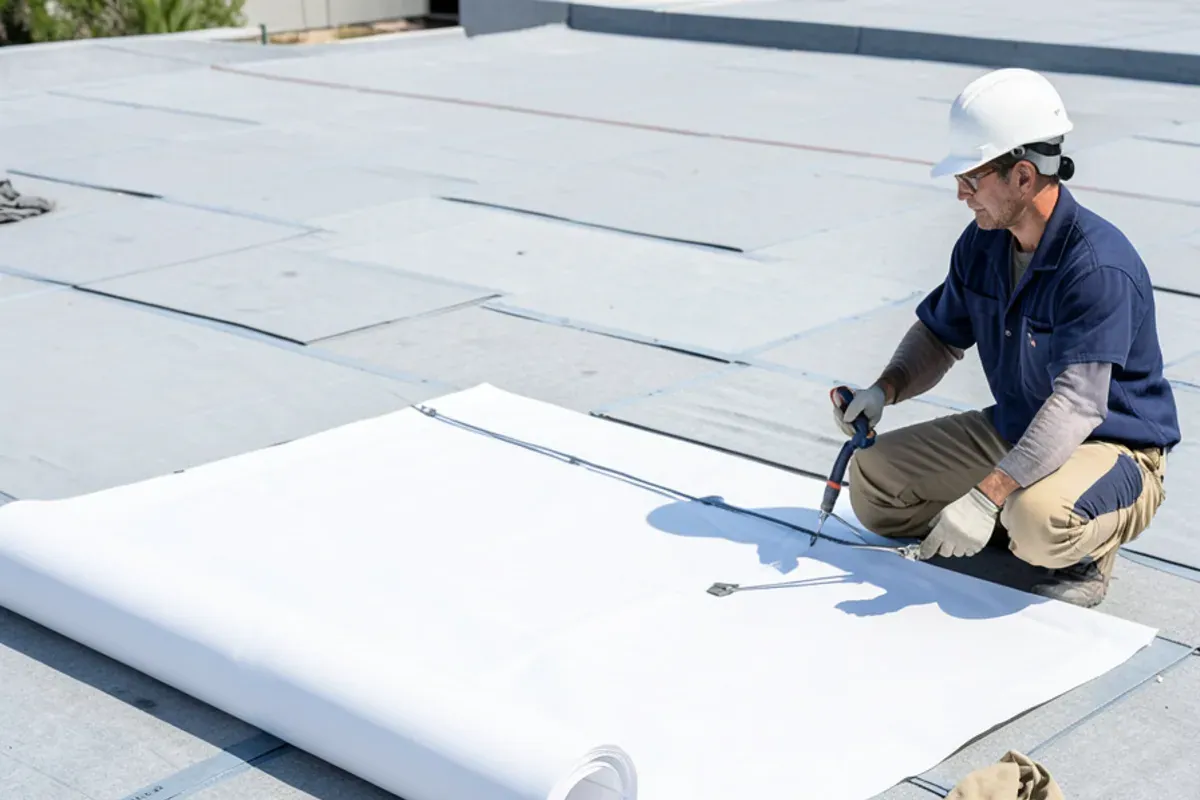
For nonresidential alterations, the Energy Commission's cool roof guidance ties the requirement to how much roof is replaced, recovered or recoated. As the Commission describes it, the rule applies when more than 50 percent of the roof area, or 2,000 square feet of roof, whichever is smaller, is being worked on. Read that as a pointer, not a ruling on your building: exceptions exist, such as certain roof areas covered by solar equipment, and local interpretation counts. If you are planning to do the work in phases, ask the building department how it counts the area, since splitting a project can matter.
How does a TPO roof fit with Title 24?
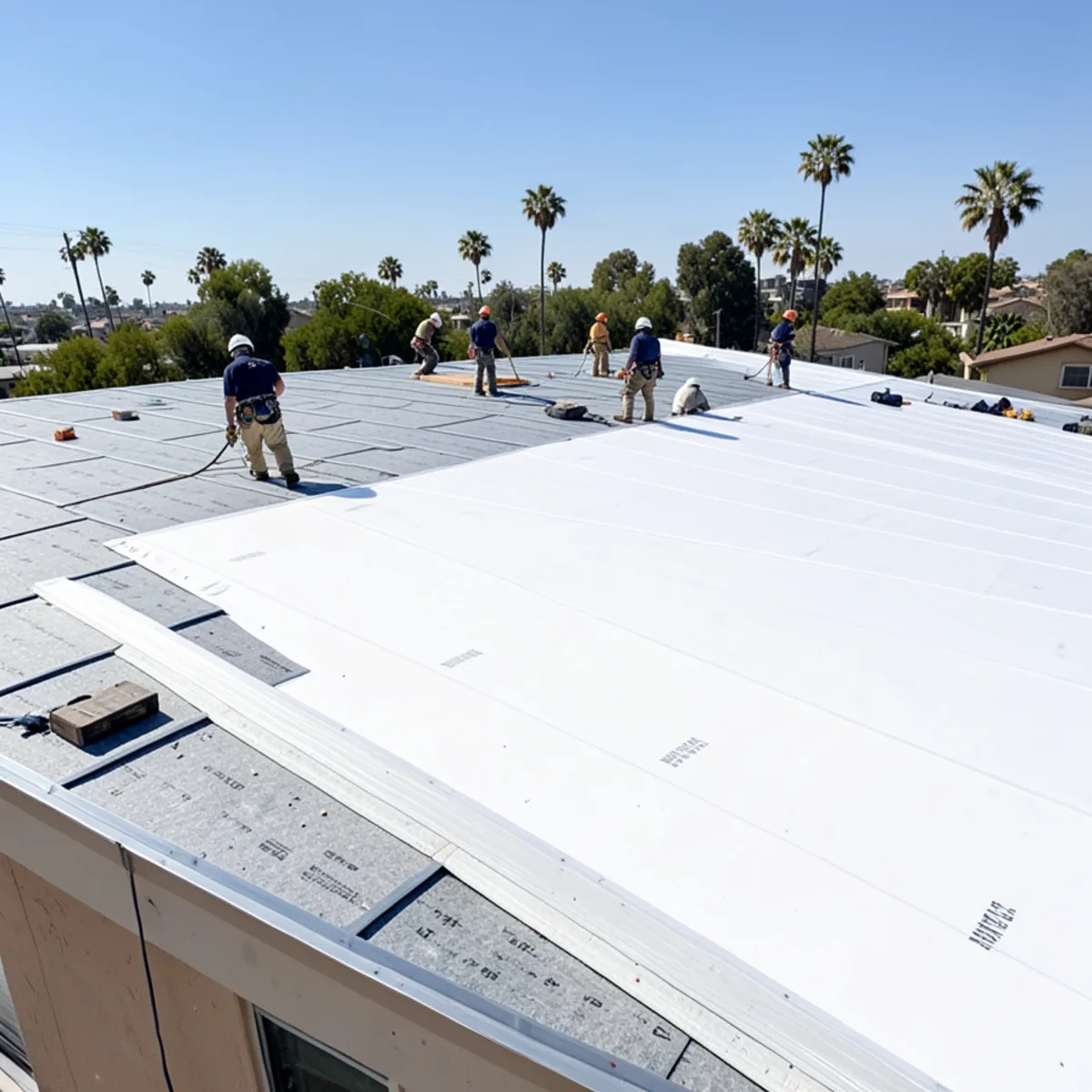
White single-ply membranes such as TPO and PVC are a popular way to meet cool roof requirements on low-slope roofs, since many listed products have the necessary reflectance and emittance values. The detail that matters is that the specific product has a CRRC listing, and that its aged values meet what the building department requires. Dirt and age reduce reflectance, which is why the code looks at aged values.
Other routes include reflective coatings over a sound roof, light-colored cap sheets on built-up and modified bitumen roofs, and light-colored metal panels. Our page on TPO and PVC roofing and the post comparing TPO, torch down and hot mop systems explain the materials. For a residential angle on the same rules, see cool roof rules in LA County.
Will a commercial re-roof need more insulation?
Possibly. The energy code can require roof insulation when an alteration removes the roof covering on a heated or cooled space and exposes the deck. Whether you must add insulation, how much, and what exceptions apply depend on the roof assembly, the climate zone and the use of the building. A warehouse that is not heated or cooled may be treated differently from an office or retail space. Ask your design professional or the plan reviewer to confirm what applies to your project, and ask each bidder to show how their proposal handles it.
If insulation is added, the roof edges, drains, curbs and parapet flashing heights may need adjusting as well. That adds to the scope, so it belongs in the first conversation, not as a change order halfway through.

What do our roofers check before a code-driven bid?
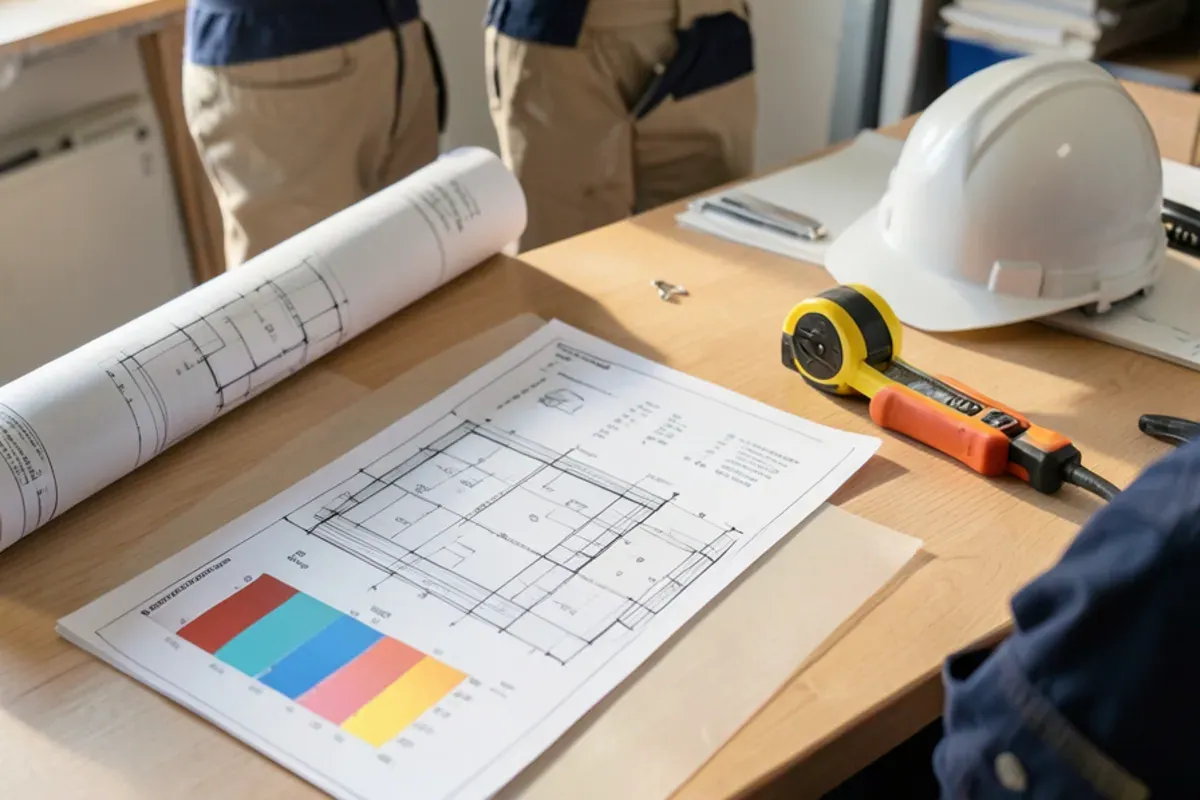
Before we write a number, we want to know what is already on the roof. We look at the number of layers, the type of insulation if any, the deck condition, drain locations and the height of curbs and parapets. A small test cut shows layers and insulation thickness, and we photograph it so you can see it too.
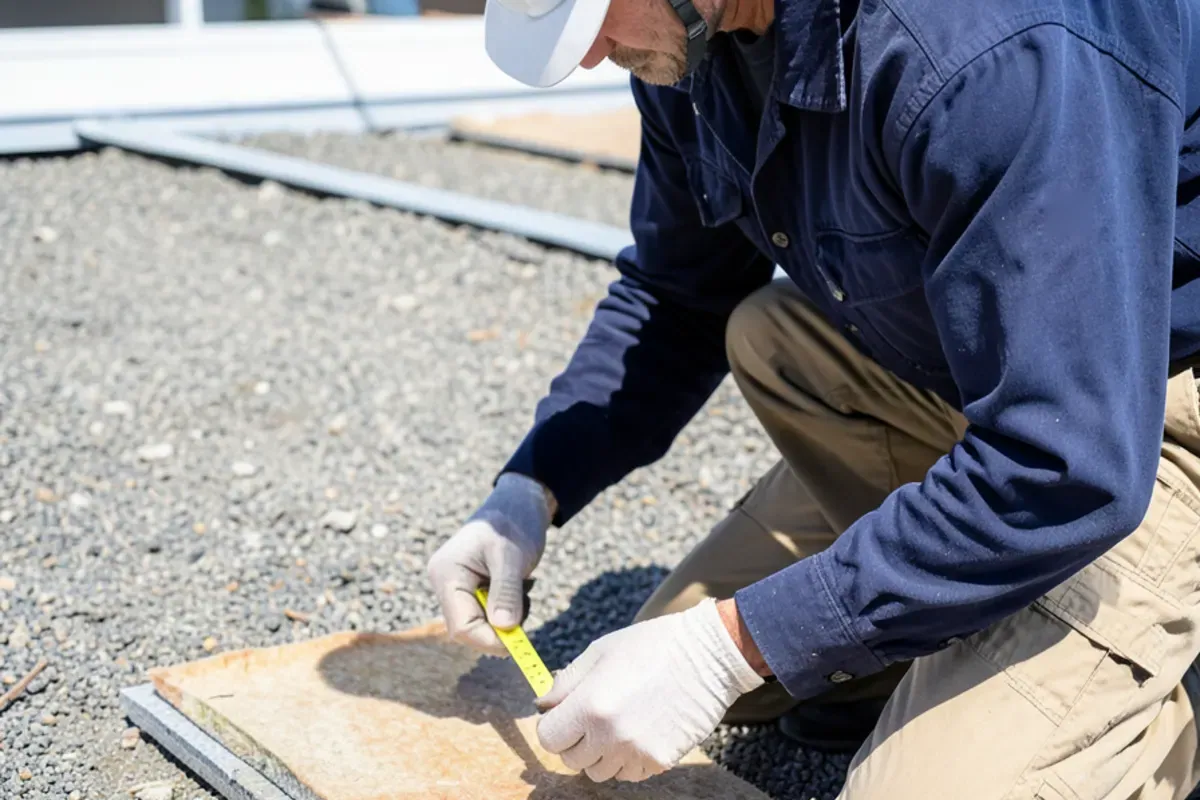
The honest trade-offs are these. A reflective coating over a sound roof can cost less than a tear-off, but it only suits roofs in good shape and may still trigger code review. Adding insulation improves performance but raises edges and may require new flashing and drain work. A tear-off costs more than a recover, but lets you fix wet insulation and decking. We lay the options out in plain terms, and we start with the least invasive route that fits your goals and the code. See our roof coatings page for how coatings work.
What paperwork should you expect?
For a re-roof that needs a permit, expect:
- Permit application and roof plan. Area, slope, existing and proposed materials.
- Product information. The roofing product's CRRC listing or equivalent data.
- Energy compliance documents. Forms that document the roof meets the code, and later forms that confirm it was installed as planned.
- Inspections. Typically during or after work, depending on the jurisdiction.
We handle permit details on re-roofs. Ask your roofer to tell you up front who prepares the energy compliance forms and who signs them, since that can be the contractor, an energy consultant or the architect depending on the project.
What questions should you ask bidders?
- Which Title 24 requirements apply to this roof, and where did you confirm them?
- Which product are you proposing, and can I see its CRRC listing?
- Does the price include insulation, edge and drain adjustments?
- Who prepares the compliance documents?
- How will inspections be scheduled?
A bidder who cannot answer these before the contract is signed is leaving you with a risk. We explain options in plain terms and show you photos of the existing roof so the scope matches what is really there.
Planning your project
If your building is in Gardena or elsewhere in the South Bay, call for a free estimate and bring any plans, permits or past roof records. A good time to ask about the energy code is before you finalize a budget, since it can change materials and insulation. Our post on Torrance re-roof permits and Title 24 shows what that process looks like locally.