
Chimney Flashing & Sealing in Torrance, CA
- 4.8★ from 73 Google reviews
- Free estimates
- Same day or next day service
- Photos of what we find
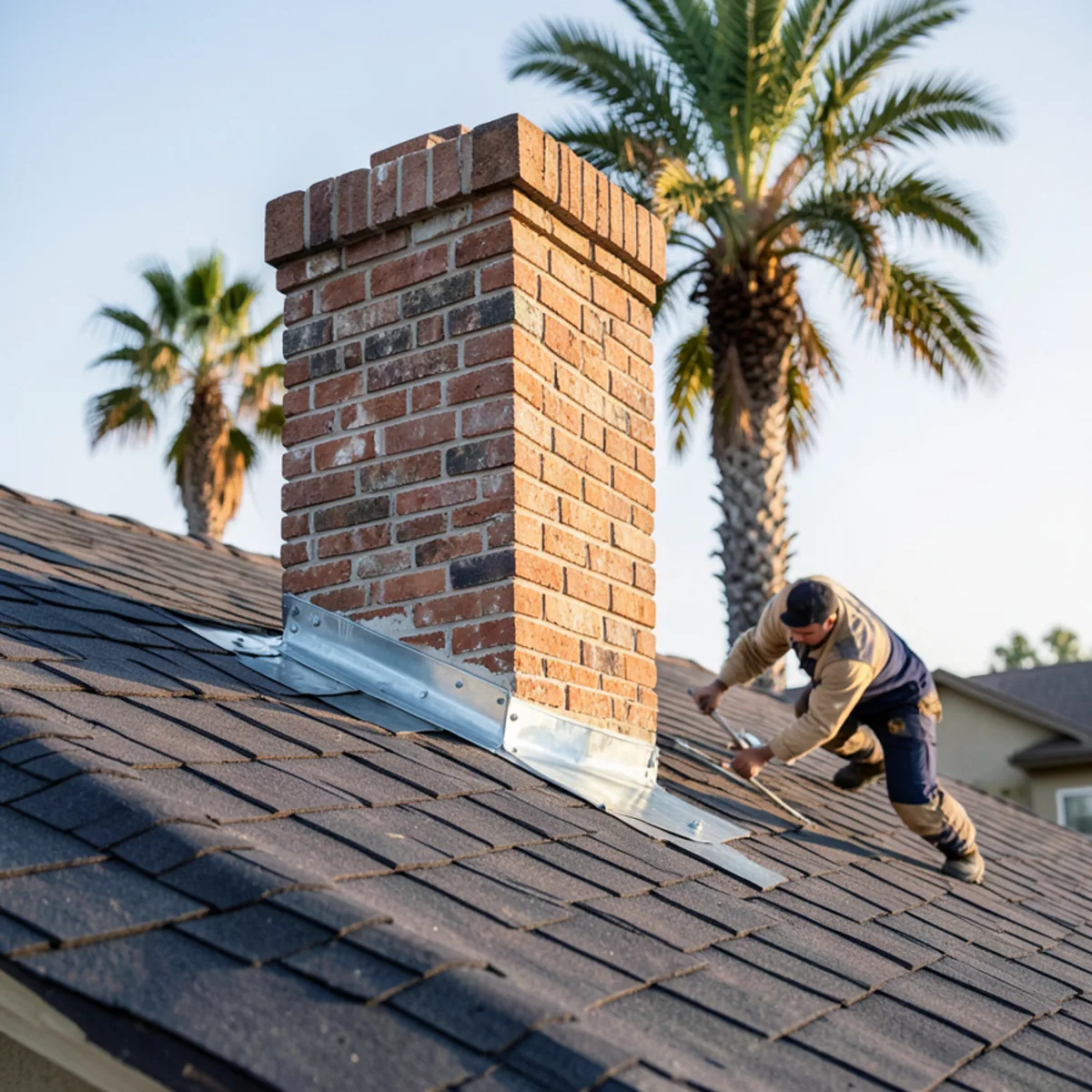
A chimney is the most complicated thing on most roofs. It is a masonry or metal box with four sides, each meeting the roof at a different angle, and every one of those edges needs its own piece of metal. This page covers chimney flashing repair across the South Bay: what fails, how we find it, and what the fix looks like. It sits inside our wider roof repair work, and our blog has a deeper read on chimney flashing leaks.
Why is there a water stain on the ceiling near my chimney?
Because the chimney gives rain five or six ways to get in, and ceilings sit right below them. A stain beside the fireplace wall, in the closet next to it or along the ridge line above is a classic pattern. One Google reviewer wrote that they "recently noticed water stains on the ceiling near the chimney" on a roof installed several years earlier. A newer roof does not rule it out. Flashing is hand-built on site, so one weak joint is enough.
Common entry points:
- Base flashing on the downhill face, where water runs straight at the brick
- Step flashing on each side, one piece per shingle course
- The back pan or cricket on the uphill side, which should divert water around the chimney
- The chimney cap or crown, where rain enters from the top and runs down the inside
- Mortar joints and brick faces that soak up water and release it into the attic wall
Stains that also show in dry weather point elsewhere, like a bathroom fan duct or condensation. The attic visit sorts that out.
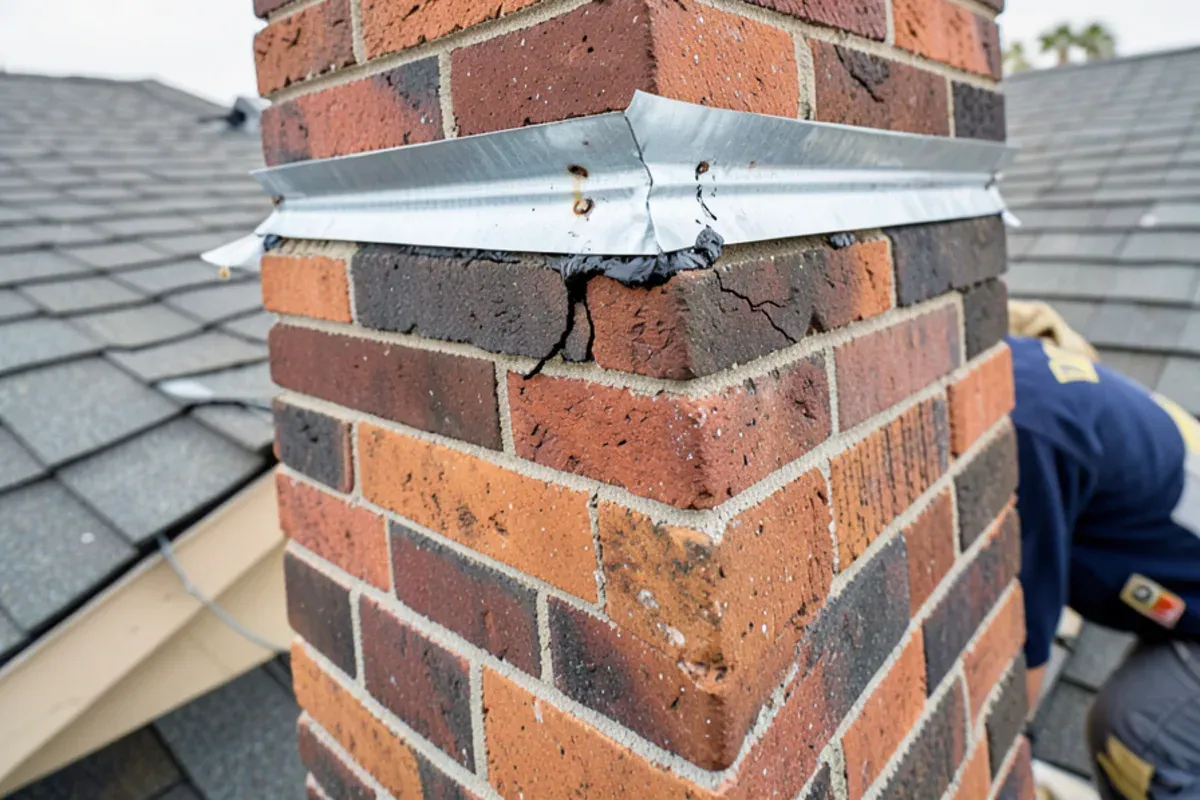
How counterflashing and step flashing work together
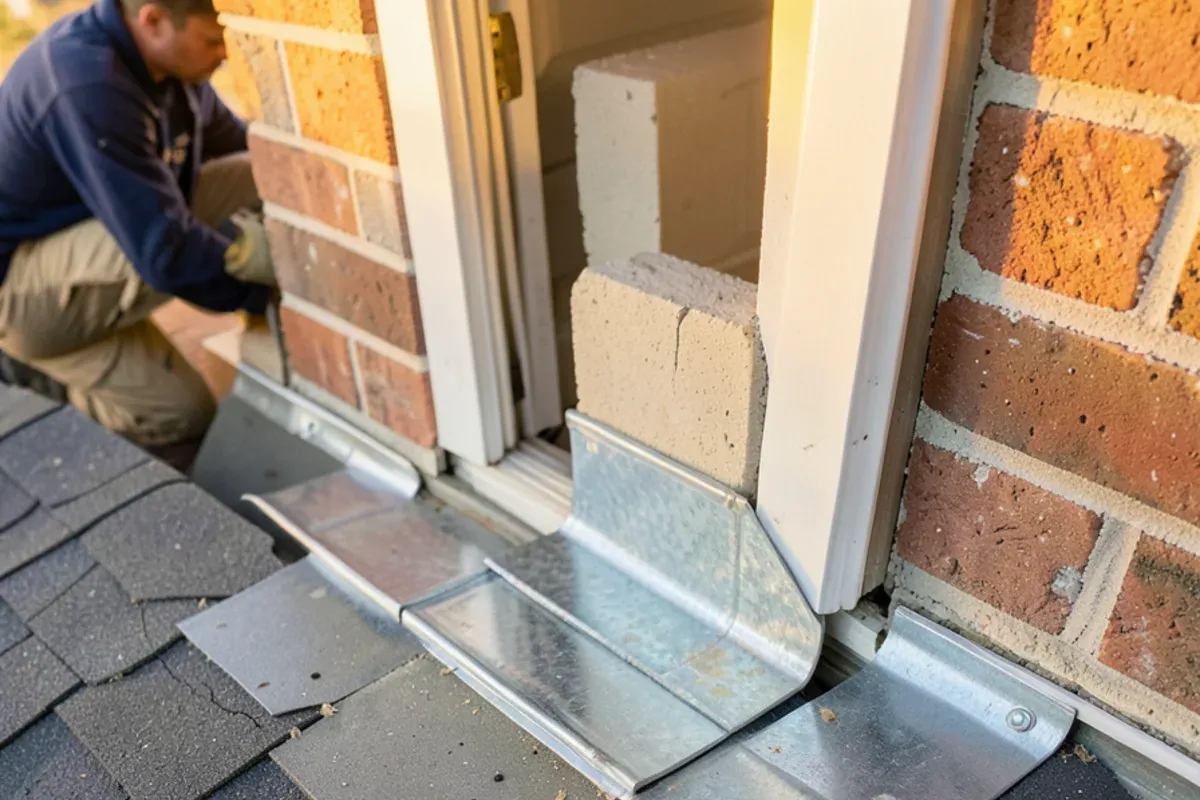
Flashing is layered, like a shingle. The lower piece lies on the roof and turns up the brick. A second piece, the counter flashing, comes down over the first from inside the brick joint. Water has to run down the wall, over the counterflashing and onto the roof metal. It cannot slip behind.
When a chimney leaks at the sides, the usual finding is one of three things. The counter flashing was never cut into the mortar and is just stuck to the face with sealant. The sealant has split because brick and metal move at different rates in the sun. Or the step flashing was reused during an earlier re-roof and has rusted at the bend. A correct fix cuts a groove into the mortar joint, sets new counterflashing into it, and seals the cut. It costs more labor than a tube of caulk, and it does not reopen next summer.
Does a wide chimney need a cricket?
A cricket (also called a saddle) is a small peaked roof built behind a chimney on the uphill side. Without one, water and leaves pile against the wide back face and push through the seam. Model residential building codes generally call for a cricket when the chimney is wider than 30 inches across the slope. The rules section below says who to ask.
Many older Torrance ranch homes have a flat-backed chimney with only a strip of flashing behind it. If your stain sits on the uphill side of the fireplace wall, that missing cricket is a leading suspect. Adding one means framing a small ridge, covering it with underlayment and metal, and lapping it into the existing roofing. It is a roof carpentry job, not a sealant job.
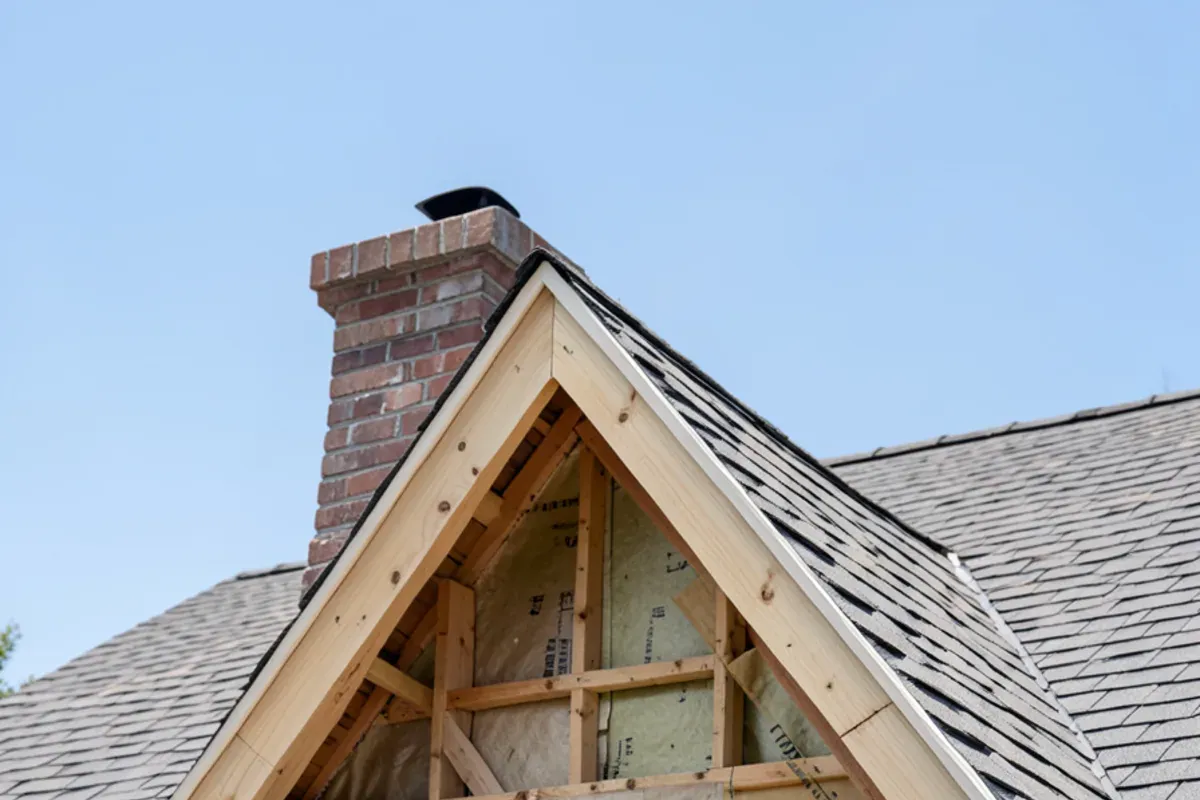
Metal chimney caps and custom chimney caps
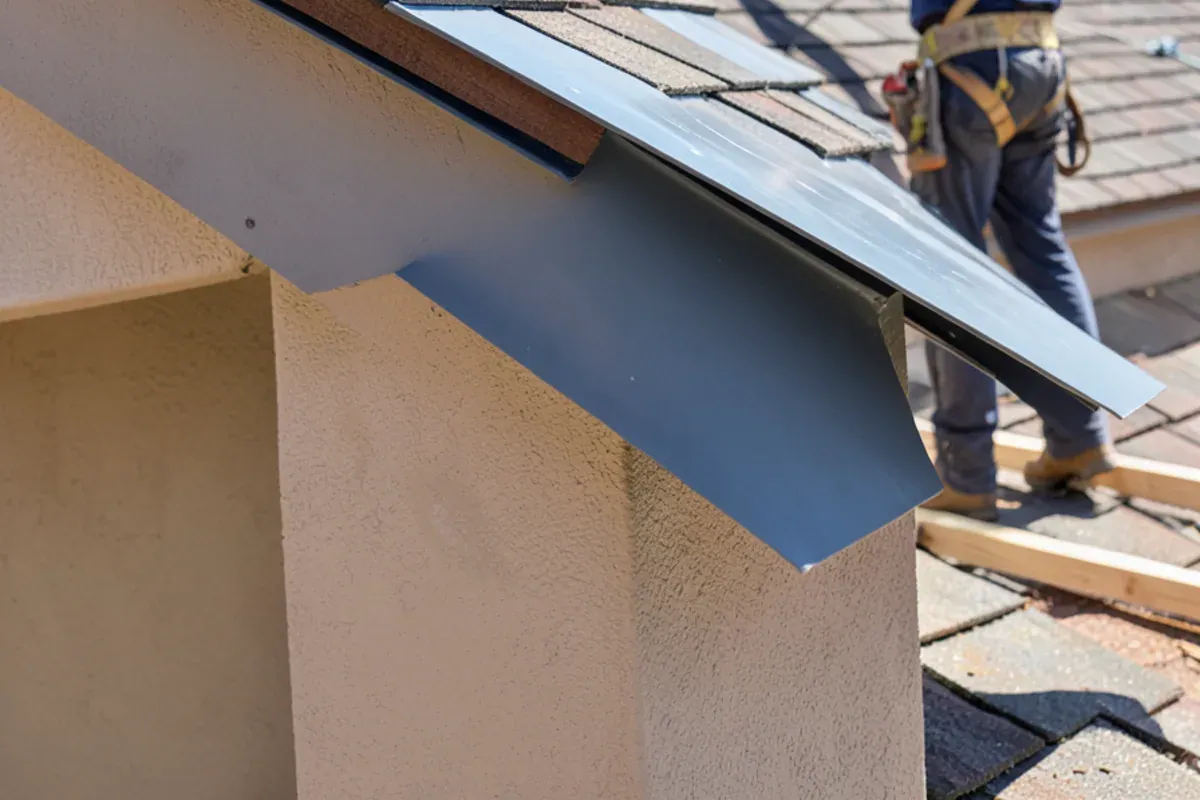
Not every chimney in the South Bay is brick. Many are stucco-clad framed chases with a metal flue pipe, topped by a metal cap or chase cover. These are the pieces that crack, rust through and lift in the wind. Reviewers have mentioned both a leak around a metal chimney cap and a custom cap built during a leak visit.
A good metal chimney cap repair starts with the question of whether the old cover can be saved. Light rust or a split seam can sometimes be reworked. A cover that has pooled water for years usually cannot. In that case we measure the chase and fabricate a new cap with:
- A raised, sloped top so water leaves instead of ponding
- A folded drip edge that overhangs the chase on all sides
- Sealed corners and fasteners, with the flue pipe collar separated from the cover
- Metal chosen for the exposure, since coastal air eats thin steel faster
Chimney sealing: when it helps and when it only hides the problem
Chimney sealing covers two different jobs. One is sealing joints, meaning the sealant where metal meets masonry. The other is treating the brick with a water-repellent coating. The first belongs on new flashing as a last step. The second can slow water soaking through porous brick, but it does not fix a split flashing or a cracked crown, and it can trap moisture if the brick is already damp.
If a mason needs to repoint the joints or rebuild a cracked crown, that is a separate trade, and we will say so after we inspect. If the cause is on the roof, we fix the roof side.
What does a chimney flashing repair include?
A visit covers all four sides of the chimney, because water that stains one wall often entered at another. The scope is built from the parts that failed, and you see photos of each before work starts.
- Attic check of the framing and decking around the chimney
- Base, step and counter flashing, with failed pieces cut out and replaced
- Cricket repair, or a new cricket behind a wide chimney
- Custom metal cap or chase cover fitted to your chimney
- Sealant only as the finishing step, never the only barrier
- Cleanup, with landscaping and driveways protected
How do we fix a chimney leak, step by step?
- Ask what you have seen. Where is the stain, did it start after one storm, and has anyone patched the chimney before?
- Check the attic. We look at the framing and decking around the chimney for dark trails and wet insulation, and photograph them.
- Inspect the roof side. Base, steps, back pan, cap, crown, brick and the roof surface for a few feet around.
- Show you what we found. You see the photos before anything is touched, and we explain repair and replacement options in plain terms.
- Strip and rebuild the failed layer. Old sealant is cut away, new metal is lapped under and over, counterflashing is set into the mortar, and the cricket or cap is built if needed.
- Seal, clean and check. We seal the finishing joints, protect landscaping and driveways, clean up thoroughly and test the repair.
On a dry day the whole job is often one visit. Rain delays the sealing step, because sealants need dry surfaces.
What decides the price of a chimney repair?
Estimates are free and we do not post prices. For context only, 2026 published cost guides put most roof repairs between $300 and $1,500, and that is market data, not a quote. Chimney work moves with:
- How many sides need new flashing, and whether the damage is on one face or all four
- Whether a cricket must be built, or an existing one rebuilt
- Brick or stucco chase, since cutting counterflashing into brick takes longer
- Cap size and metal, and whether a custom cap is needed
- Roof pitch, height and access
- Underlayment or decking rot found once the old flashing comes off
Who sets the rules for chimney roof work in Torrance?
Permit needs depend on the scope and the city. Ask City of Torrance Building & Safety, (310) 618-5910, whether your flashing repair or a new cricket needs one. Unincorporated areas such as West Carson use LA County Public Works, and in Palos Verdes Estates the Art Jury reviews visible exterior changes. Masonry repair is a separate trade from roofing. California requires a contractor license for most roofing work, so check any roofer, and any mason, on the CSLB site before you sign.
Why Crown Trim for chimney leaks?
- Same day or next day service when water is coming in.
- You get photos of the attic stain and the failing joint, not just a verbal diagnosis.
- Estimates and roof inspections are free.
- If the flashing is the problem, we repair the flashing. A full replacement comes up only when the evidence supports it.
- We fabricate caps and flashing to fit your chimney, then clean up thoroughly and protect landscaping and driveways.
- Reviewers rate us 4.8 stars across 73 Google reviews.
Keeping the chimney seam dry
Look at the chimney from the ground with binoculars before the first rain of November. Cracked sealant, a lifted cap or a rust-orange streak down the brick are early warnings. Keep leaves out of the uphill pocket. Trim branches that drop debris on the roof.
We handle chimney leaks across the South Bay, including Carson, Redondo Beach and Rancho Palos Verdes. Vent pipes and valleys often leak in the same storm, so ask us to check vent boots and any roof valley on the same visit.
Where we do chimney flashing & sealing around Torrance
Each place brings its own version of this job.
- Carson: Carson: 1950s-60s tract homes with brick or stucco chimneys where flashing from a first or second roof is often the only thing sealing the seam.
- Redondo Beach: Redondo Beach: salt air corrodes thin chimney flashing and metal chase covers faster, and the stains show up on bungalow ceilings after the first rain.
- Rancho Palos Verdes: Rancho Palos Verdes: ocean-facing homes take wind-driven rain straight at the chimney face, and ground movement near Portuguese Bend can open flashing joints.
- Palos Verdes Estates: Palos Verdes Estates: masonry chimneys on red clay tile roofs, where a visible cap or flashing change goes through the Art Jury.
- Rolling Hills Estates: Rolling Hills Estates: wide ranch-house chimneys on long roof runs catch wind off the hills and collect debris in the uphill pocket.
- Lomita: Lomita: small post-war bungalows with flat-backed chimneys and old flashing sitting under layered re-roofs.
- Rolling Hills: Rolling Hills: large ranch homes with big fireplaces and wide chimneys, where long roof runs push a lot of water at the uphill side.
- Manhattan Beach: Manhattan Beach: rebuilt and view homes with stucco chimney chases and metal caps that salt air eats through.
- West Carson: West Carson: mid-century tract homes under LA County permits, where a cricket or flashing rebuild goes through the county, not a city.
- Villa Park: Large-lot homes with tile roofs give chimneys more roof to tie into, so the flashing around them is a common place to check.
What customers say about this work
Crown Trim Roofers holds 4.8 stars from 73 Google reviews. Read all reviews
“I decided on the tune-up, and they installed collars on all the vents, checked the flashing, and sealed the vent areas and ridge vent sealant to help prevent future leaks.”
“Our roof was installed several years ago, and we recently noticed water stains on the ceiling near the chimney.”
“I had already used a temporary sealant to help stop more leaking, and they clearly understood the situation and focused on the repair that was actually needed.”
Chimney Flashing & Sealing: common questions
Why do I see water stains on the ceiling near my chimney?
The chimney is a tall, wide obstacle that sheds water onto its own seams. Water gets in at the base flashing, the side step flashing, the uphill back pan, the cap or the masonry itself, then runs along the framing before it stains drywall. A stain beside a fireplace wall usually means one of those joints has opened. We check the attic first, then the roof side.
Do you build custom chimney caps for Torrance homes?
Yes. We fabricate metal caps and chase covers to the actual dimensions of your chimney, with a sloped top and a drip edge so water leaves the chase instead of sitting on it. One Google reviewer had us come out to check roof leaks and build a custom chimney cap. We show you the measurements and metal choice at the estimate.
Can a chimney leak be fixed from the roof without touching the bricks?
Often, yes. If the water is entering at the flashing, the cricket, the cap or a failed sealant line, the repair happens on the roof side and the brick stays as it is. If the brick is spalling, the mortar crown is cracked or joints are open, that is mason work. We tell you which situation you have and show the photos.
How long does chimney flashing last?
It depends on the metal, the sun exposure and how it was installed. Sealant-only flashing tends to open up first, often within a few seasons of Southern California sun. Metal that is lapped correctly and tied into the roofing lasts far longer. We will not promise a number, but we will tell you what condition your flashing is in today.
Is caulk around the chimney a real fix?
Caulk is a short-term patch, not a repair. It stops a drip for a season or two, then shrinks and splits where brick and metal move at different rates. We use sealant as a finishing step on new metal, never as the only barrier. If a previous patch is already cracked, we cut it out and rebuild the joint properly.
Will you work around my fireplace being in use?
Yes. Tell us when you last lit a fire and we plan around it. We need the chimney cool and the roof dry before we touch the flashing. We also look at the cap and spark arrestor from the roof, so mention any smoke smell or draft trouble. Flue cleaning and liner work belong to a chimney sweep.
Related services and guides
Vent Boot & Pipe Collar Repair
Roof Valley Repair
Chimney Flashing Leaks: Causes, Signs and Fixes
Ceiling Stain After Rain: Emergency or Wait and Watch?
Roof Repair Cost in the South Bay: Small Fix or Big Job?
Where we work: Carson, Redondo Beach, Rancho Palos Verdes, Gardena and the rest of our service areas.
Stain near the chimney? Get the seam checked first.
Call first. A roofer picks it up from there.