
Ridge Cap Repair in Torrance, CA
- 4.8★ from 73 Google reviews
- Free estimates
- Same day or next day service
- Photos of what we find
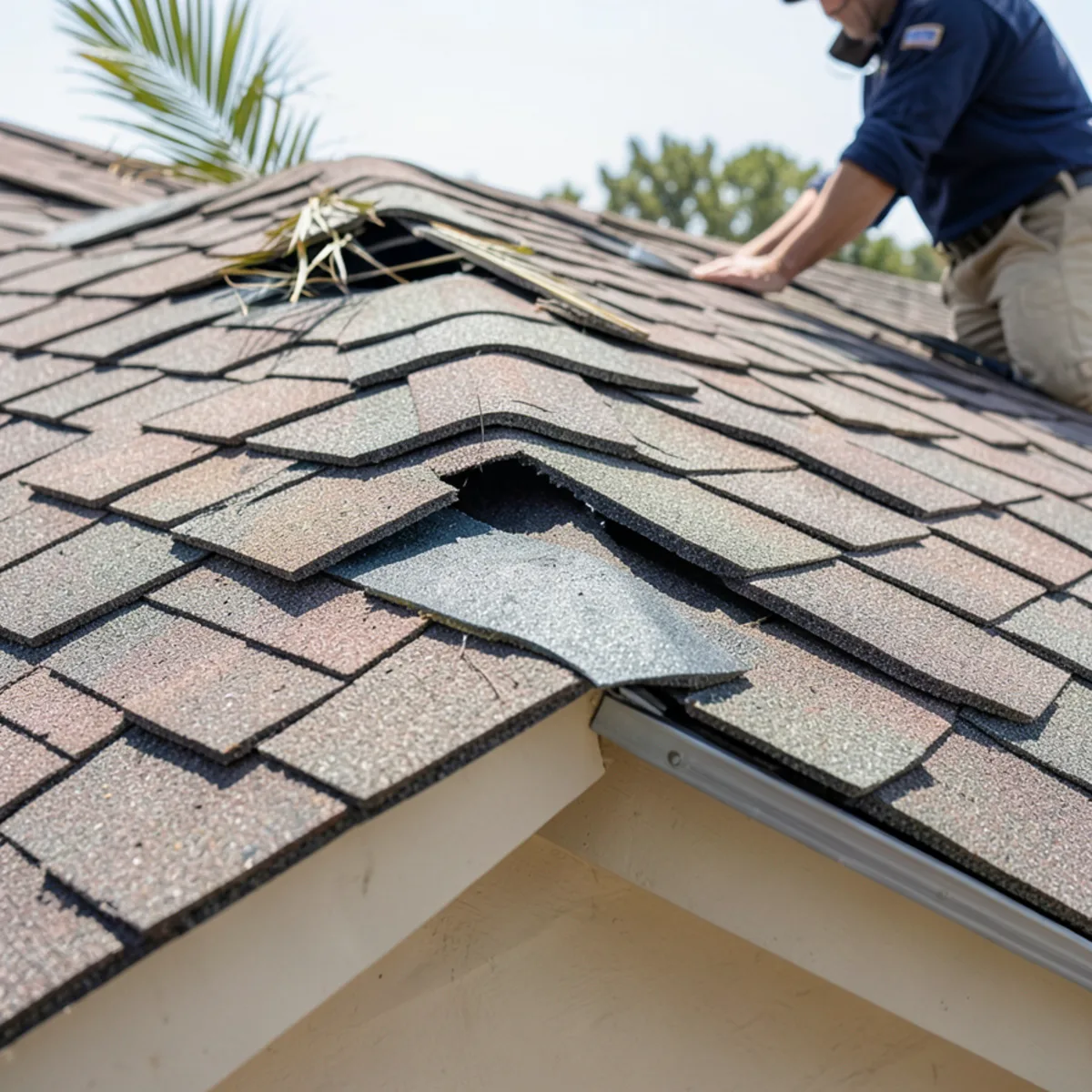
The ridge is where your roof meets the sky. Wind hits it first, sun bakes it hardest and water has nowhere to drain off except back down the slope. Ridge cap repair in Torrance is mostly about catching small failures before they become a leak. This page covers what we fix on shingle and tile ridges, how we do it and what it takes. It belongs to our wider roof repair work, and our post on Santa Ana wind roof damage lists what to check after a blow.
Why do ridge caps blow off first in a Santa Ana wind event?
Santa Ana winds blow from the desert side of the basin toward the coast, and they funnel down through gaps in the hills. When gusts reach a Torrance roof, they hit the walls, climb the slope and curl over the peak, creating lift along the ridge line. Caps are small, overlapped pieces held by a nail line and a bead of sealant. Over the years the sealant dries and the cap edges curl. A cap that cannot hold its seal lifts, and every cap beyond it takes more force.
That is also why damage starts as one missing cap and spreads. Your ridge line may look intact one morning and have a gap by the weekend. If you see caps in the yard after a windy night, the roof underneath needs a look. Widespread blow-off damage is covered on our wind damage roof repair page.
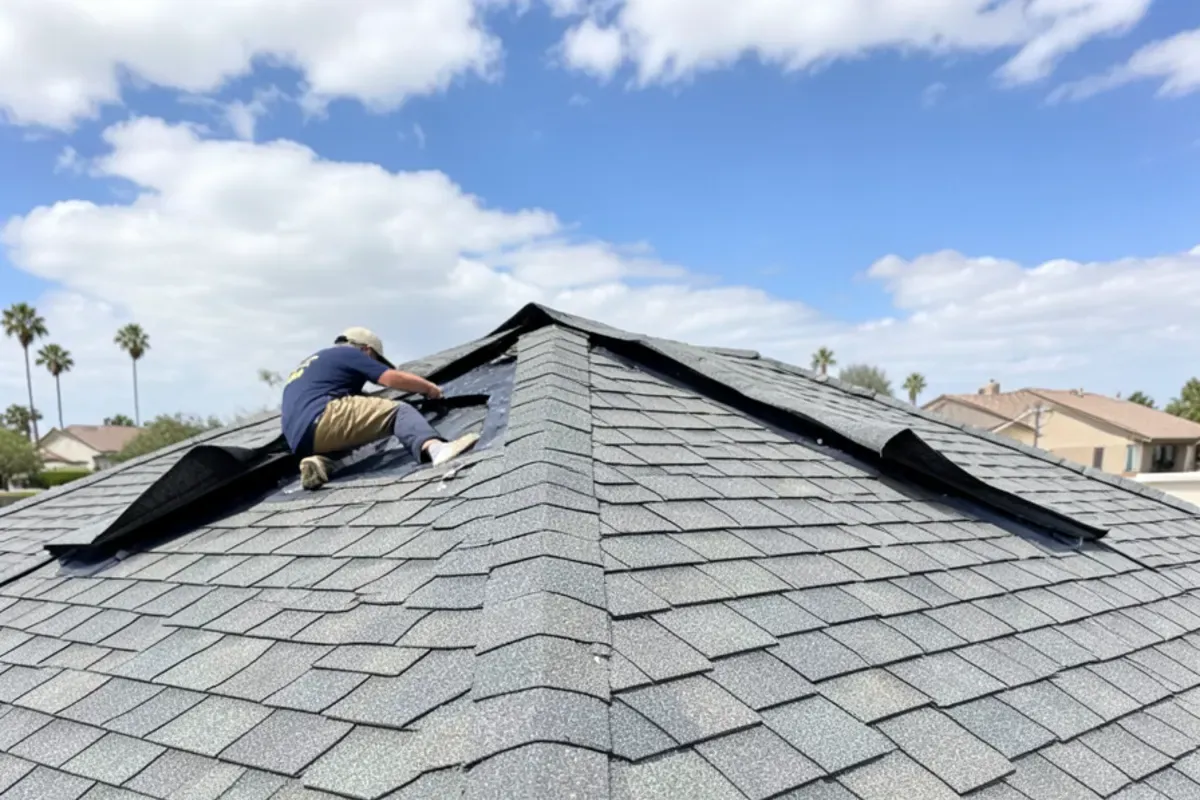
Ridge cap replacement and ridge shingles blown off
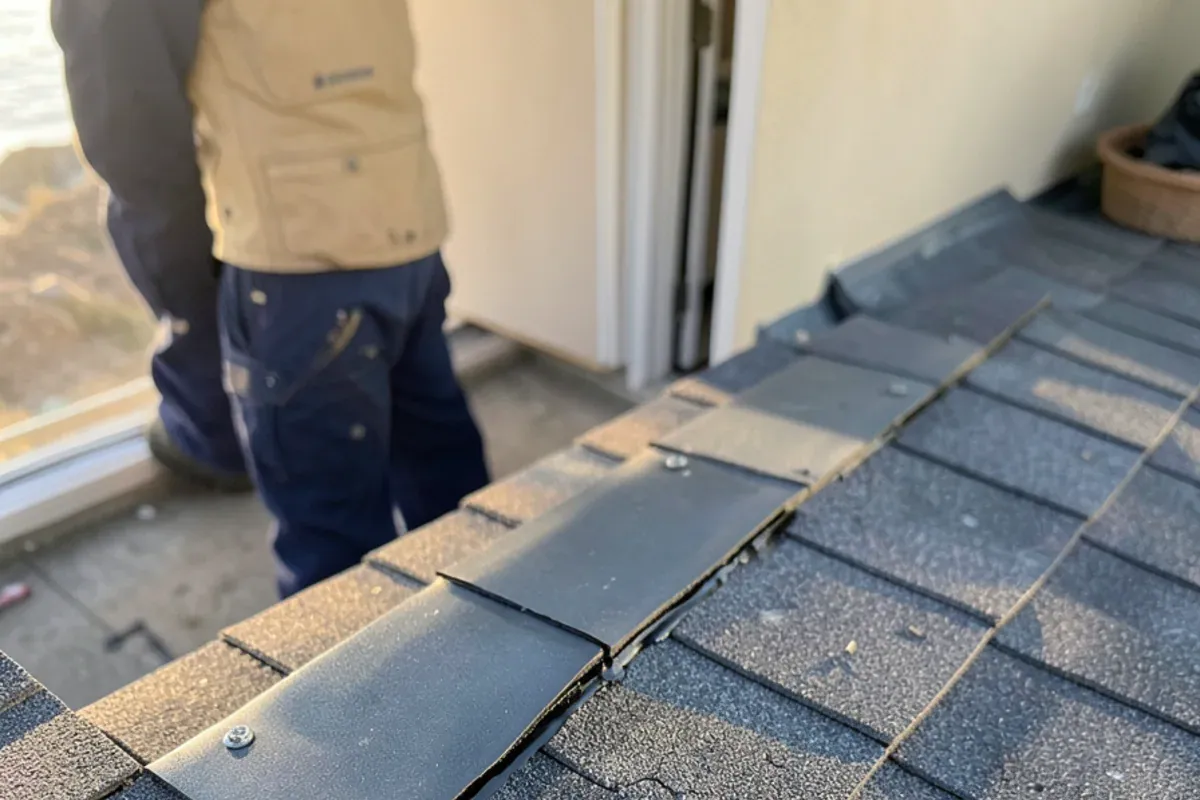
On an asphalt shingle roof, ridge caps are usually cut from three-tab or purpose-made cap shingles, bent over the peak and nailed on each side. A proper replacement does these things:
- Removes the cracked, curled or missing caps and old nails down to clean underlayment
- Checks the underlayment and the ridge board region for water damage or soft spots
- Lays new caps from the end that faces away from prevailing wind, so the laps shed water
- Nails them in the right zone, not through the exposed part
- Seals the caps down so they hold in gusts
If only a few have blown off, we replace them and reseal neighbors. If the existing caps are so aged they crack when lifted, we replace the whole run.
Hip and ridge repair: where the pieces meet
Hips are the sloping ridges at the corners of hip roofs. They meet the main ridge at a junction that gets the most pieces and the most stress. A leak at a hip-and-ridge junction is often a cap that was cut too short, a nail left exposed or a flashing that never lapped properly. Repair means reworking that junction, not only slapping sealant on top. We open it, check the underlayment, replace pieces and rebuild the laps.
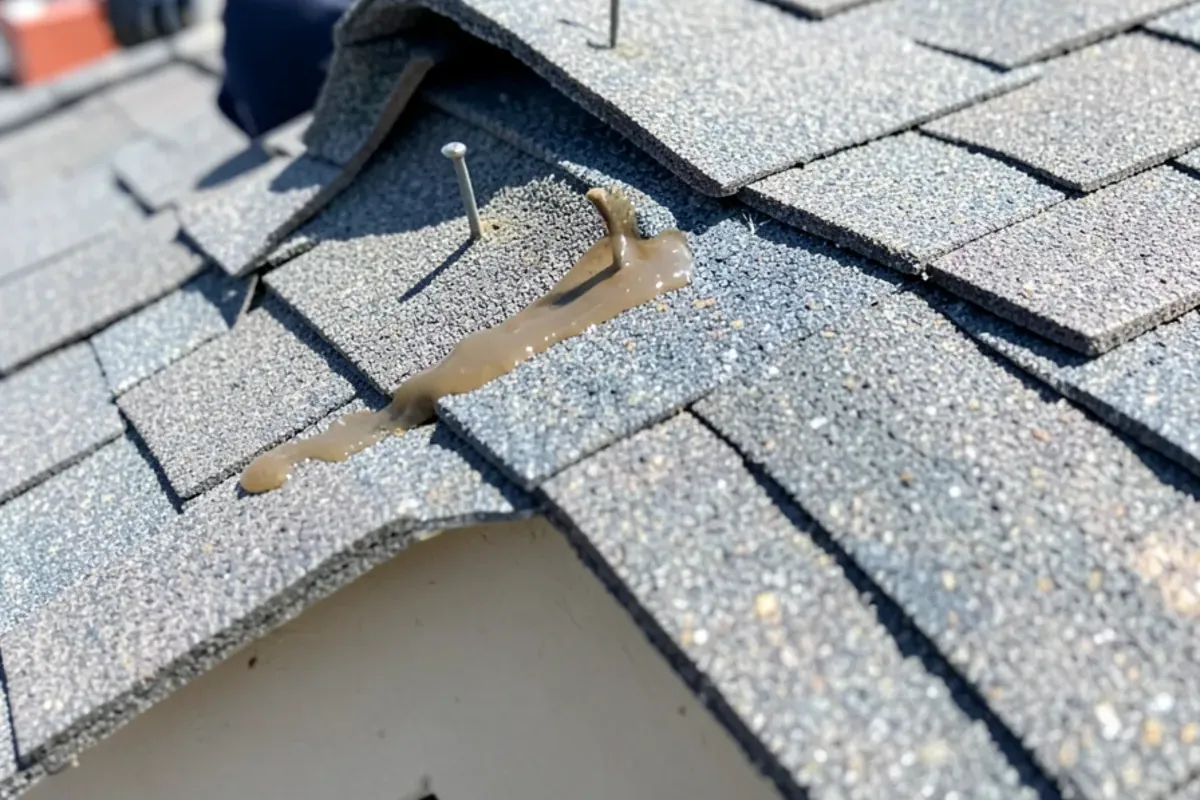
Tile ridge mortar repair and loose ridge tiles
Tile roofs have their own ridge story. Ridge and hip tiles sit on top of a bed of mortar, or on a mechanical system with brackets and fasteners. Both can fail:
| System | What fails | Typical repair |
|---|---|---|
| Mortar bed | Cracks open, mortar crumbles, tiles shift | Remove loose mortar, rebed tiles, add fasteners if appropriate |
| Mechanical fastening | Screws loosen, brackets rust, adhesive lets go | Reset tiles, replace fasteners and brackets |
Hairline cracks in the mortar line are common and not always urgent. A tile that rocks when touched, a visible gap between tile and mortar, or ridge tiles drifting out of a straight line are signs of a real problem. Loose ridge tiles can slide off in the next gust, so we secure them early. Our tile roof repair page covers the field tile around the ridge.
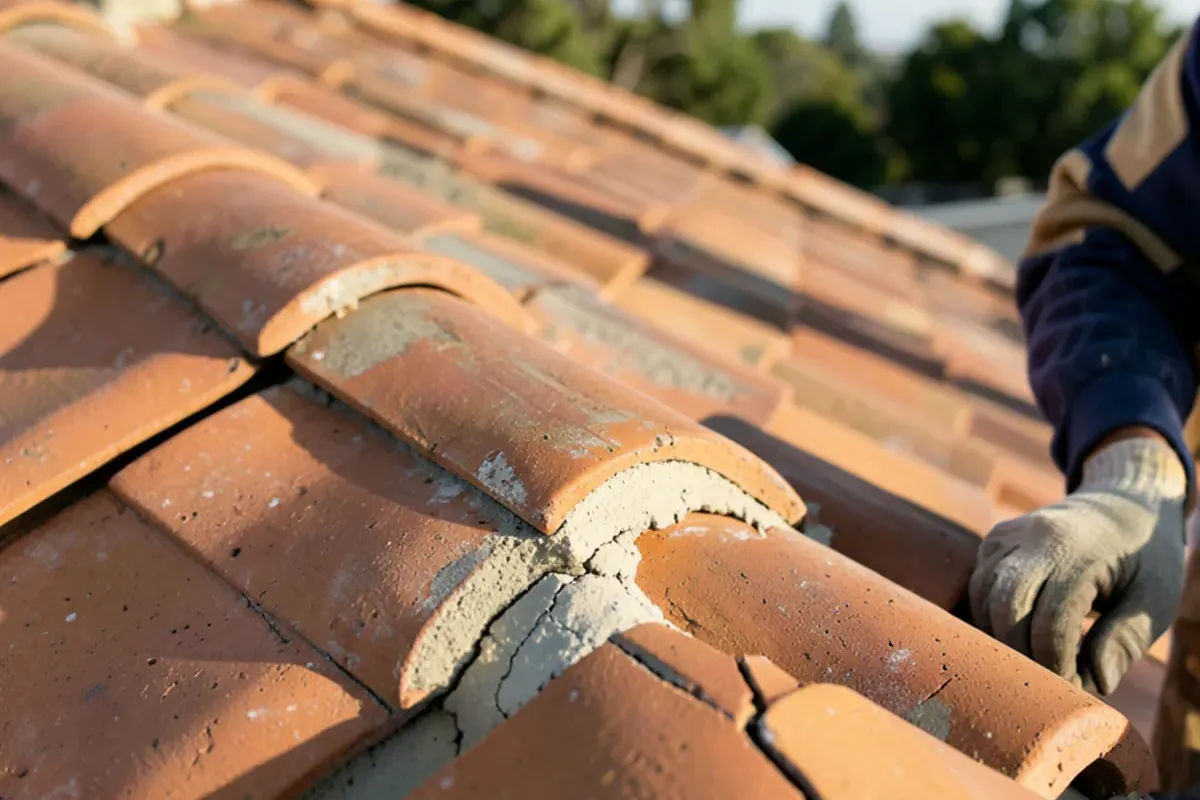
Ridge vent leak and roof peak repair
A ridge vent is a long slotted cap that lets attic air escape. It leaks when end caps loosen, when nails are driven too hard, when wind pushes rain up under it or when sealant at the shingle edges cracks. The signs: stains on ceilings near the top of walls, damp insulation near the peak, or daylight where you do not expect it. We check the vent, replace damaged sections, add fasteners and reseal.
General roof peak repair covers everything else along the top line: bent flashing at a gable end, a cracked ridge board cover, exposed nail heads. We look at the whole peak before choosing a fix.
What does a ridge cap repair include?
Ridge work covers the whole top line, because wind damage rarely stops at the one cap you can see from the yard. We check the full ridge and every hip from the roof and the attic, then photograph the weak points. The repair is sized to the failed run.
- Removal of cracked, curled or missing caps and old fasteners
- Rebedding or refastening of loose ridge and hip tiles
- Underlayment and ridge board check, with wet or soft wood replaced
- Ridge vent end caps, fasteners and sealant renewed
- Hip-and-ridge junctions rebuilt, not sealed over
- Temporary securing before a storm if the full repair must wait
How do we repair a ridge, step by step?
- Ask what happened. After a windstorm, with a visible gap, or with a stain near the top of a wall.
- Check from the ground and the attic. Gaps, curled edges, light at the peak and water trails inside.
- Walk the ridge. Caps, tile, mortar, vent and the first courses on both slopes.
- Show photos. You see what we see, and we explain repair and replacement options in plain terms.
- Repair the peak. New caps or rebedded tile, fresh underlayment where needed, fasteners and sealant.
- Clean up. Debris cleared, landscaping and driveways protected.
If a storm is coming and the repair cannot be done at once, we can secure the area temporarily and tell you plainly that it is temporary.
What decides the price of ridge cap repair?
Estimates are free and we do not post prices. As market context, 2026 published cost guides place most roof repairs between $300 and $1,500, and that is published data, not a quote. Ridge work moves with:
- Linear feet of ridge and hips that need work
- Shingle or tile type, and how well we can match what is there
- Roof pitch, height and the number of stories
- Whether the underlayment or ridge board has water damage
- Mortar versus mechanical fastening on tile
Pricing is mostly linear feet. A short gap on a one-story gable is a small repair, while a long hip-and-ridge system on a two-story hip roof is not. Wet underlayment or a soft ridge board under the caps adds carpentry, which is why the attic photos come first.
Which permits and fire rules touch roof-peak repairs?
Replacing a few caps is repair work, while a long run or a full tile ridge can cross into permit territory. Ask City of Torrance Building & Safety, (310) 618-5910, or the department for your address: LA County Public Works for unincorporated areas, LADBS in the City of Los Angeles. Parts of the Palos Verdes Peninsula sit in Cal Fire fire hazard severity zones, where roof materials may need to meet fire-rated requirements, so check the Cal Fire map for your address. HOAs and the Palos Verdes Estates Art Jury can also govern tile and cap color. Look up any roofer on the CSLB site before you sign.
Why Crown Trim for ridge and peak repairs?
- Same day or next day service when caps are gone and rain is coming.
- You get photos from the roof and the attic.
- Free estimates and free roof inspections.
- A repair first when a repair will do, with no push toward a full replacement.
- We match existing tile and shingles as closely as we can, with shingle samples on request.
- For wind damage claims we document with photos and can be on site for the adjuster's inspection.
- Reviewers rate us 4.8 stars across 73 Google reviews.
Preventing the next blow-off
Do a ground check after every windy week. Look for caps in the yard and light along the peak. Have the ridge looked at before the fall wind season and again before November rain. Animals sometimes lift ridge pieces and vent covers, which our animal damage roof repair page covers, and the wood under a long-leaking ridge may need roof deck repair.
We repair ridges across the South Bay, including Carson, Redondo Beach and Rancho Palos Verdes. Coastal and hillside homes catch the most wind, so their ridges get a closer look.
Where we do ridge cap repair around Torrance
Each place brings its own version of this job.
- Los Angeles: Los Angeles: San Pedro and Harbor City sit closest, and City of LA jobs run through LADBS, which matters when a long run of ridge is replaced.
- Marina del Rey: Marina del Rey: mid-rise condos on county-leased land face constant marine air that lifts cap edges, and HOA-managed roofs need documented repairs.
- Huntington Beach: Huntington Beach: salt reaches from Huntington Harbour to downtown, and 1960s-70s tract roofs on second or third coverings carry brittle, unsealed ridge caps.
- Newport Beach: Newport Beach: Balboa Island cottages and Corona del Mar homes take salt and ocean wind along the peak, and HOA rules often decide cap and tile color.
- Santa Monica: Santa Monica: pre-war Spanish bungalows with mortared clay ridge tiles and strong marine air that cracks old mortar beds.
- Los Alamitos: Los Alamitos: 1950s-60s tract homes beside the Joint Forces Training Base, on second or third roofs where ridge caps have lost their sealant strips.
- Norwalk: Norwalk: 1950s ranch homes around Norwalk Town Square have long, straight ridgelines that take wind along their whole length.
- South Gate: South Gate: 1920s-40s bungalows with hip roofs have several ridge-and-hip junctions, which is where caps crack and lift first.
- Lynwood: Lynwood: post-war small-lot homes with composition roofs at or past service life, where brittle ridge caps crack when lifted.
- West Puente Valley: Small post-war ranch homes have long ridge and hip lines where loose or cracked caps let rain in, and county permits apply.
What customers say about this work
Crown Trim Roofers holds 4.8 stars from 73 Google reviews. Read all reviews
“This was the second roofing company I contacted for an estimate to fix our leaky roof in Torrance, and I’m glad I did.”
“He spent close to 30 minutes inspecting the shingles, flashing, and other roof areas, then came down and showed us clear photos of the hail marks, wind damage, and a few missing shingles.”
“Insurance was difficult to deal with, but Miles from Crown Trim Roofers made the process much easier by giving an honest estimate and explaining that the main issue was in the roof valley, not the whole roof system.”
Ridge Cap Repair: common questions
Why do ridge caps blow off first in a Santa Ana wind event?
The ridge is the highest, most exposed line on the roof, and wind wraps over it and pulls up. Ridge caps are small pieces that rely on a nail line and a sealant strip, so once one lifts, the next feels more force. Old caps have lost their seal and become brittle, so they go first. A strong offshore gust loads that line more than any other part of the roof.
Should tile ridge caps be mortared or mechanically fastened?
Both are used. Mortar looks traditional and gives a solid bed, but it cracks as the roof and mortar move. Mechanical fastening with ridge boards, brackets or screws plus adhesive allows more movement and is easier to inspect later. The right choice depends on the tile, the pitch and the wind exposure. We explain it at your estimate.
Can a damaged ridge cap let water into the attic?
Yes. A missing cap exposes the nail line and the underlayment below, and rain follows. In a strong storm water can run into the attic along the roof peak, soaking insulation and staining ceilings near the top of walls. Even a small gap lets in wind-driven rain. A tarp or a quick repair stops it until the full repair is done.
Can you replace just a section of ridge cap?
Usually yes. If the rest of the ridge is solid, we replace the missing or cracked caps and rebed or reseal the loose neighbors. If the whole ridge has gone brittle, a full run of new caps costs little more per foot than patching. You see photos of the ridge and choose.
How soon should loose ridge tiles be fixed?
Soon. A loose ridge tile can slide off in the next gust and fall to the ground or yard. It also opens a path for water. If a tile has already come off, keep people away from that area and call. We secure or replace it and check the neighboring tiles while we are up there.
How do I know the damage is only the ridge?
Look from the ground with binoculars for gaps, curled edges or a wavy line along the peak. Check the attic near the ridge for light, water trails or damp insulation. Ridge damage often travels along with nearby shingle or tile damage, so we inspect the full slope on either side before calling it a ridge-only repair.
Related services and guides
Roof Deck & Structural Repair
Animal Damage Roof Repair
Ceiling Stain After Rain: Emergency or Wait and Watch?
Roof Repair Cost in the South Bay: Small Fix or Big Job?
Why Rubber Vent Boots Fail in Southern California Sun
Where we work: Carson, Redondo Beach, Rancho Palos Verdes, Gardena and the rest of our service areas.
Caps missing after a windy night? Get the peak checked.
Call first. A roofer picks it up from there.