
By the Crown Trim Roofers team · Published · Updated
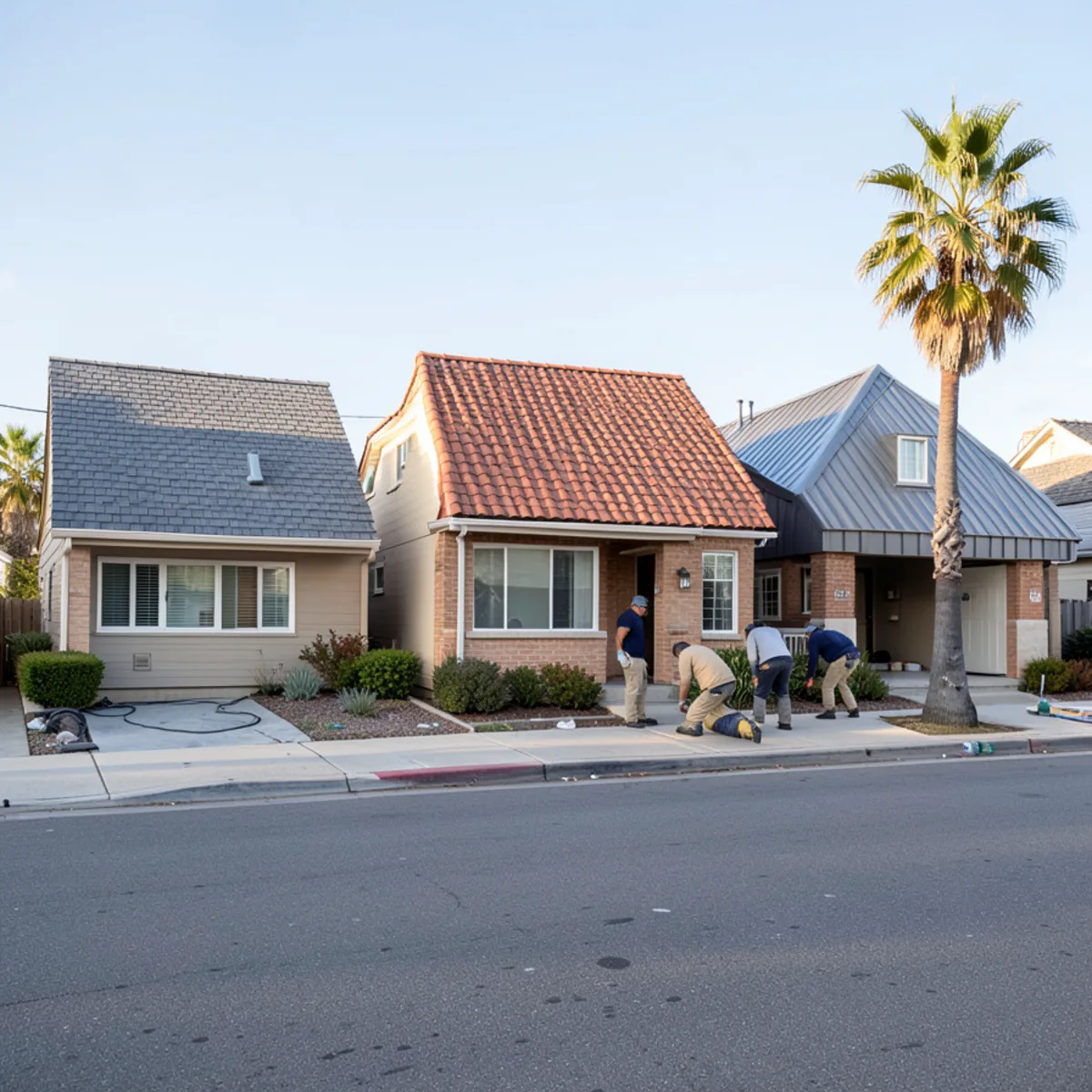
Homeowners from Torrance to Manhattan Beach usually narrow roofing to three choices. This guide compares them on the things that actually separate them here: cost, weight on the framing, salt air, heat and appearance. If you want the broader picture of who we are as a roofing contractor in Torrance, start there, then come back to the comparison.
How do shingle, tile and metal roofs compare?
| Asphalt shingle | Clay or concrete tile | Metal | |
|---|---|---|---|
| Upfront cost | Lowest | Highest | Middle to high |
| Weight | About 2.5 to 4 lb per sq ft | About 9.5 to 12 lb per sq ft (concrete, standard) | About 1 to 3 lb per sq ft |
| Typical life | About 15 to 30 years | 50 years or more | About 40 to 70 years |
| Heat | Dark colors absorb heat; cool-rated options exist | Air gap under tile helps; mass slows heat | Reflective finishes reflect heat |
| Salt air | Handles it well | Handles it well | Needs the right alloy, coating and fasteners |
| Repair | Easy and common | Needs tile matching and a careful crew | Depends on panel profile |
| Look | Wide range of colors | Spanish, Mediterranean, Mission | Modern or farmhouse |
Lifespans are typical ranges from published cost guides such as Angi, not promises from us, and they shrink when attic heat or poor installation get involved. Published 2026 market data puts installed asphalt at about $5 to $8 per square foot (HomeBlue). Tile and metal usually cost a multiple of that, and the spread between quotes is wide, so compare written estimates for your actual roof.
Which roof holds up best in salt air and sun?
Along Redondo, Hermosa and Manhattan Beach, salt in the marine layer corrodes unprotected steel and weak fasteners. Shingle and tile shrug it off. Metal can too, but only with a coastal-suitable alloy or coating and matching fasteners and flashings. Our salt air and roofs post goes into what to specify.
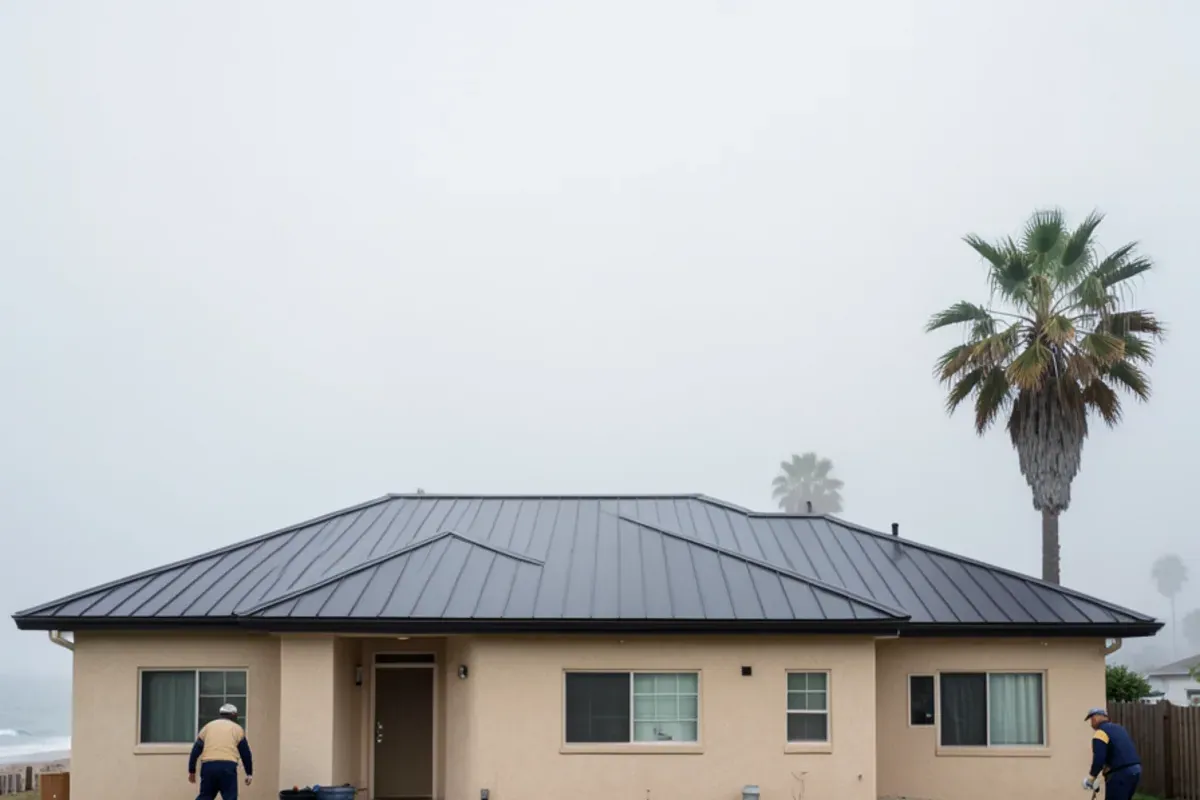
Inland, in Torrance and Lomita, the issue is sun and attic heat. Shingles dry out and shed granules faster on south-facing slopes. Tile and reflective metal both ride out the heat better. With about 4 days a year above 90 degrees in Torrance, heat is more a steady wear factor than an extreme one, and attic ventilation matters as much as the roof surface. Rain is light, about 14 inches a year, so drainage details and flashing decide whether a roof leaks, not the material.
The California Energy Commission sets cool-roof rules under Title 24 for some re-roofs. Whether yours apply depends on slope, climate zone and building type, so confirm with the City of Torrance at (310) 618-5910 for your address.
Can your house carry a heavier roof?
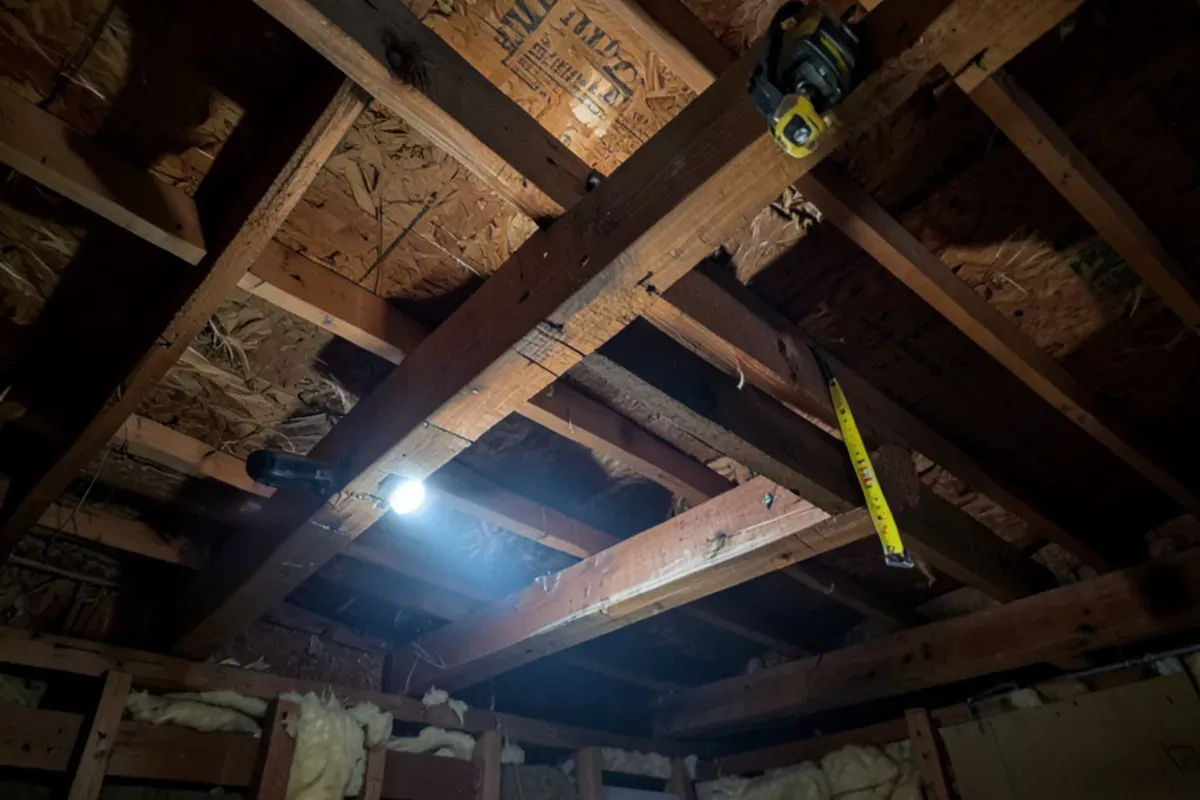
This is where homeowners get surprised. Concrete tile can weigh several times what shingles do. Many South Bay houses date from the 1950s and 1960s (the median Torrance home was built in 1964, per Census data) and were framed for lighter roofs. Switching to tile can need rafter reinforcement. Going from tile to shingle or metal is simpler on the structure, but you still need a permit and a deck check.
What does each roof cost to keep up?
Price at install is only the first number. Each material asks for a different kind of care.
- Shingle: expect granule loss on sun-facing slopes, then curling and cracking. Small repairs are cheap and common, and the whole roof is replaced when the mat wears out.
- Tile: the tile lasts, but the underlayment beneath it usually does not last as long, so a mid-life underlayment replacement is a normal expense. Foot traffic cracks tile, so keep rooftop work to a minimum. Our post on tile roof underlayment costs explains what moves that bill.
- Metal: painted or coated panels need their fasteners, sealants and flashing checked, and exposed fasteners on some profiles can back out over time. Walking on panels can dent or scratch the finish.
None of the three is maintenance free. A yearly look, ideally before the November rains, catches the cheap problems early. See the annual roof inspection checklist for what to check. Whichever material you pick, ask for the specification in writing: underlayment type, flashing metal and fastener type. Those hidden parts, more than the surface, decide how the roof ages.
How do fire ratings and HOA rules narrow the choice?
Sometimes they make the choice for you. Parts of the Palos Verdes Peninsula and other hillside areas fall within mapped Cal Fire fire hazard severity zones, and roof fire ratings are tied to them. Asphalt, tile and metal systems can all be built as Class A assemblies, but the rating belongs to the whole assembly, underlayment included, not to the material name. Ask the city building department which rating your address needs. Our guide to fire-rated roofs on the Palos Verdes Peninsula and the Class A fire-rated roofing page explain more.
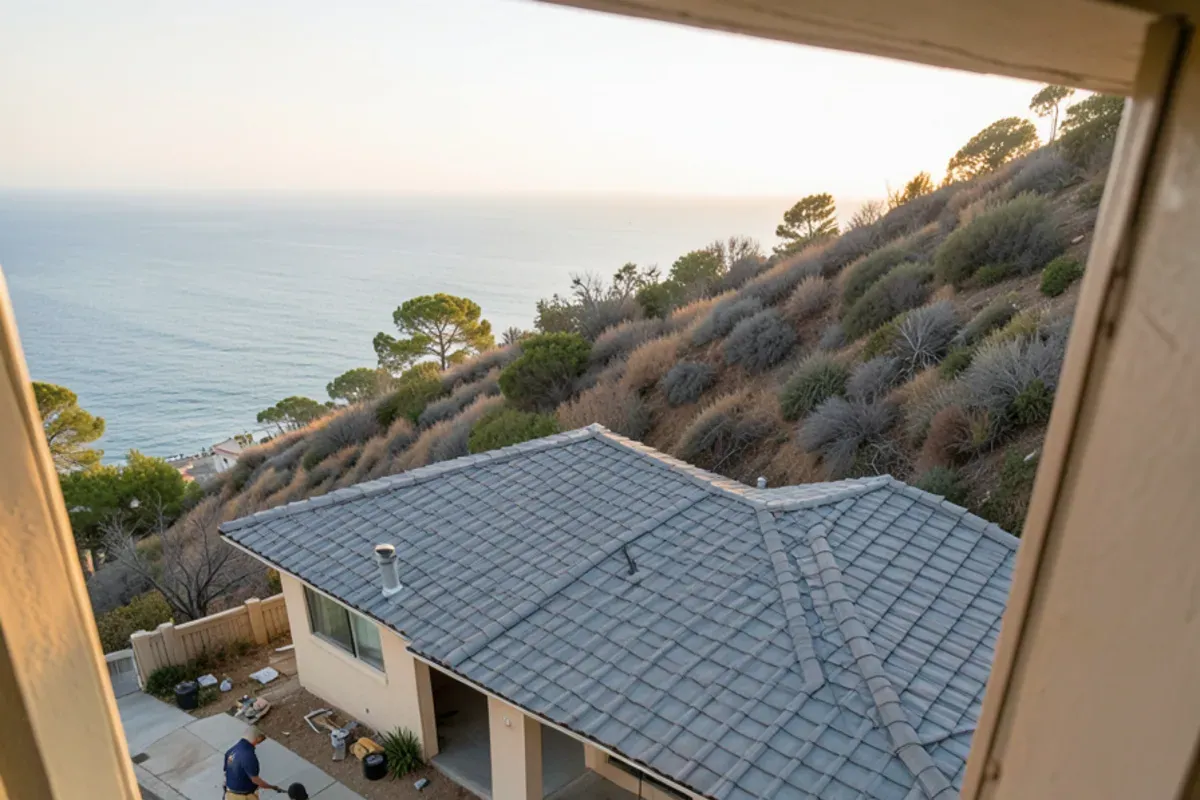
HOAs and design review boards add their own limits on color, profile and material. In Palos Verdes Estates, for example, exterior changes typically go through the city's review, so get approval before you order anything. Near the beach, in places like Redondo Beach, the finish and fastener spec for metal matter more than the panel brand.
What we tell customers about picking one
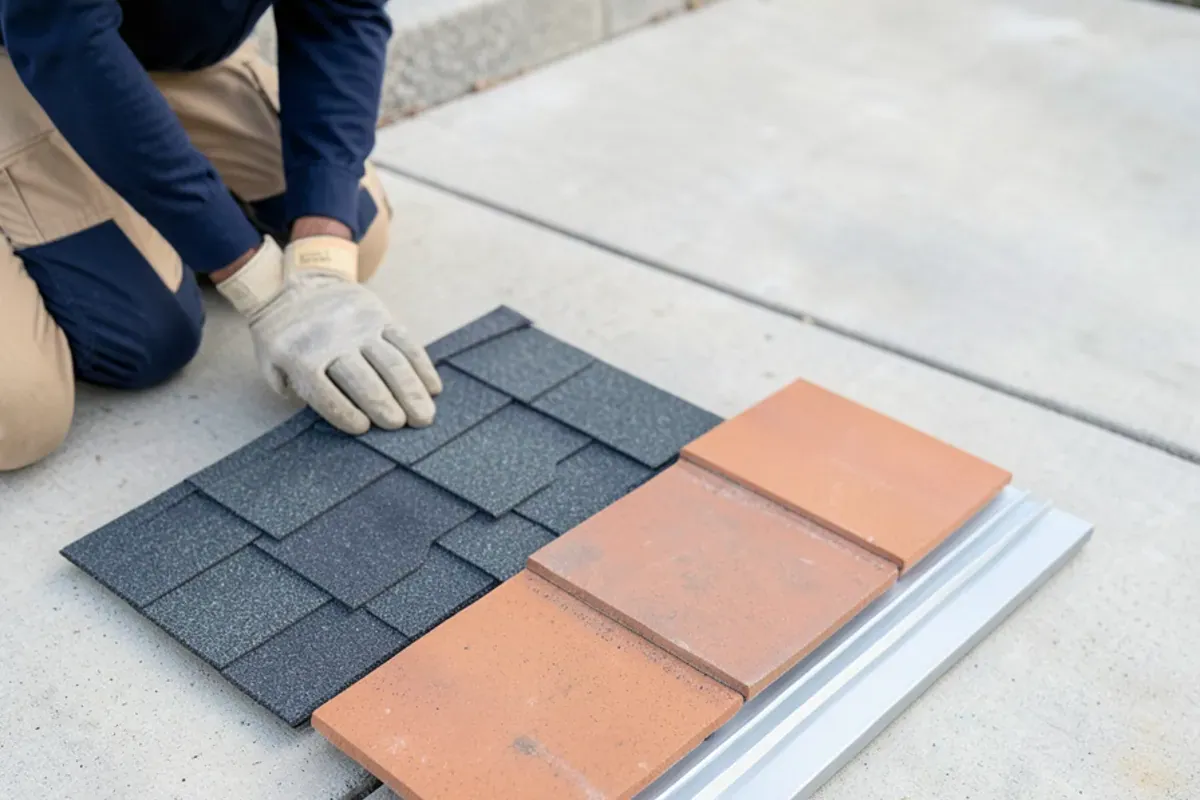
Expert insight from our roofers: the right material is usually the one the house already suggests. A Spanish-style home with tile in good shape rarely wants shingles. A ranch house with a worn composition roof usually wants a quality shingle, and the color matters more than the brand. One Google reviewer described how a roofing team explained materials in simple terms and shared shingle samples, which made the roof replacement easier to understand. We do the same, and if metal appeals, one reviewer described a crew removing old metal roofing and finishing the new panels in two days.
Expect an honest trade-off from us too: shingle is the easiest to repair and the least expensive, but it is also the roof you will replace most often. We also ask three questions. How long will you own the house? Does the HOA or city review exterior changes? Is the roof in a mapped fire zone? Our metal roof cost comparison and how roofs last here posts help with the first.
Which material for which situation?
- Tight budget or selling within a few years: asphalt shingle.
- Spanish or Mediterranean home with strong framing: tile, and see our clay vs concrete tile guide.
- Oceanfront or near-beach home, long-term owner: metal with a coastal finish, or tile.
- Hot inland lot, heavy air-conditioning load: tile or a reflective metal.
- Older framing with no budget for reinforcing: shingle or metal.
- Fire zone or HOA with strict rules: confirm the required fire rating and approved colors before you pick a material.
Details on each option are on our asphalt shingle roofing, tile and slate roofing and metal roofing pages. If you are still torn, a free estimate lets you compare real numbers on your own roof.