
Moss & Algae Removal in Torrance, CA
- 4.8★ from 73 Google reviews
- Free estimates
- Same day or next day service
- Photos of what we find
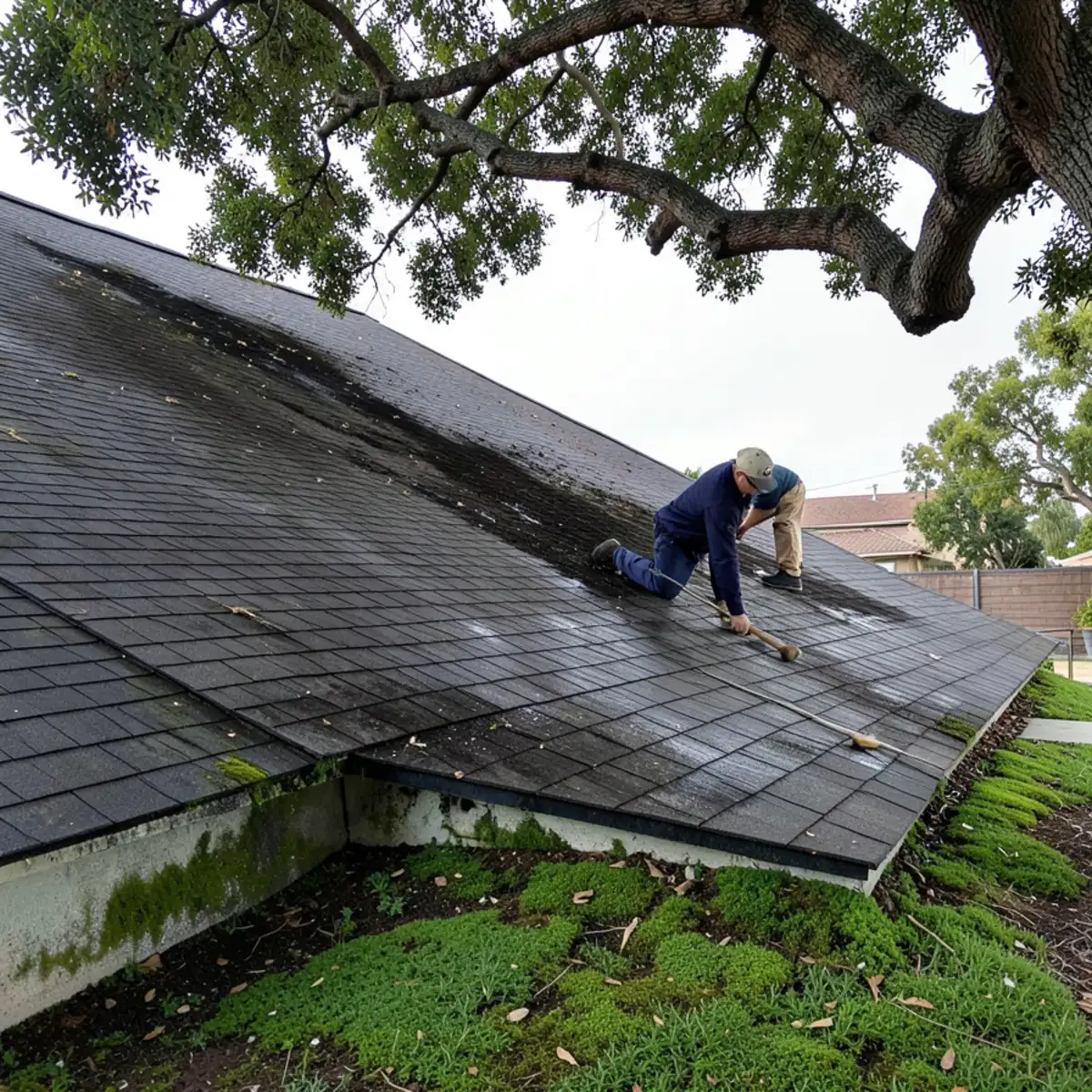
Moss is one of those roof problems that looks harmless and then isn't. On a shaded slope it takes years to build, and once the cushion is thick enough to hold water, the shingles beneath start to pay for it. This page is part of our roof inspection and maintenance work and covers how we identify what is growing, treat it and keep it from coming back.
What is actually growing on your roof?
Three organisms get lumped together.
- Algae looks like black or dark-gray streaks running downhill. It is by far the most common growth on South Bay shingles.
- Moss is green and raised, forming cushions along tab edges, eaves and the north slope. It roots in granule loss, debris and cracks.
- Lichen is a flat crust, pale gray, green or orange, bonded to tile and shingle surfaces. It is slow-growing and clings hard.
Moss is less common here than in the Pacific Northwest because our summers are dry. It shows up where shade, trees and trapped debris hold water long enough: north slopes, the underside of a pine, narrow side yards between two houses. One Google reviewer described a Torrance cleaning that removed "all the moss and algae without causing any harm to our shingles."
Why does the north-facing side of a roof grow moss?
Sun is the natural cleaner. In Torrance the north and east slopes get less of it, and on many mornings the marine layer keeps even the sunny side damp until late. These organisms need water that sits for days.
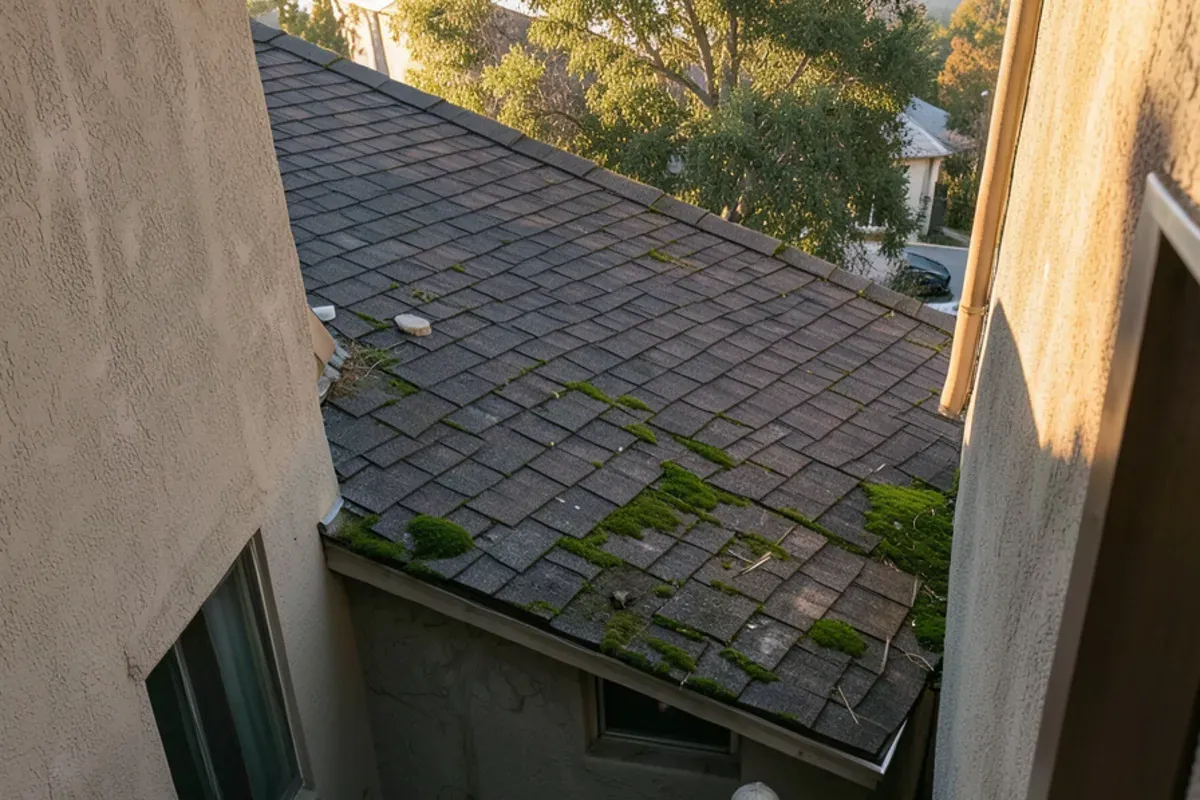
Four things stack the odds:
- Slope direction. North-facing planes stay shaded and cool.
- Overhead trees. Branches shade the roof and drop needles, leaves and seed pods.
- Debris lines. Anything lying in a valley or along a rake edge becomes a growing medium.
- Worn surface. Granule loss gives the growth something to hold.
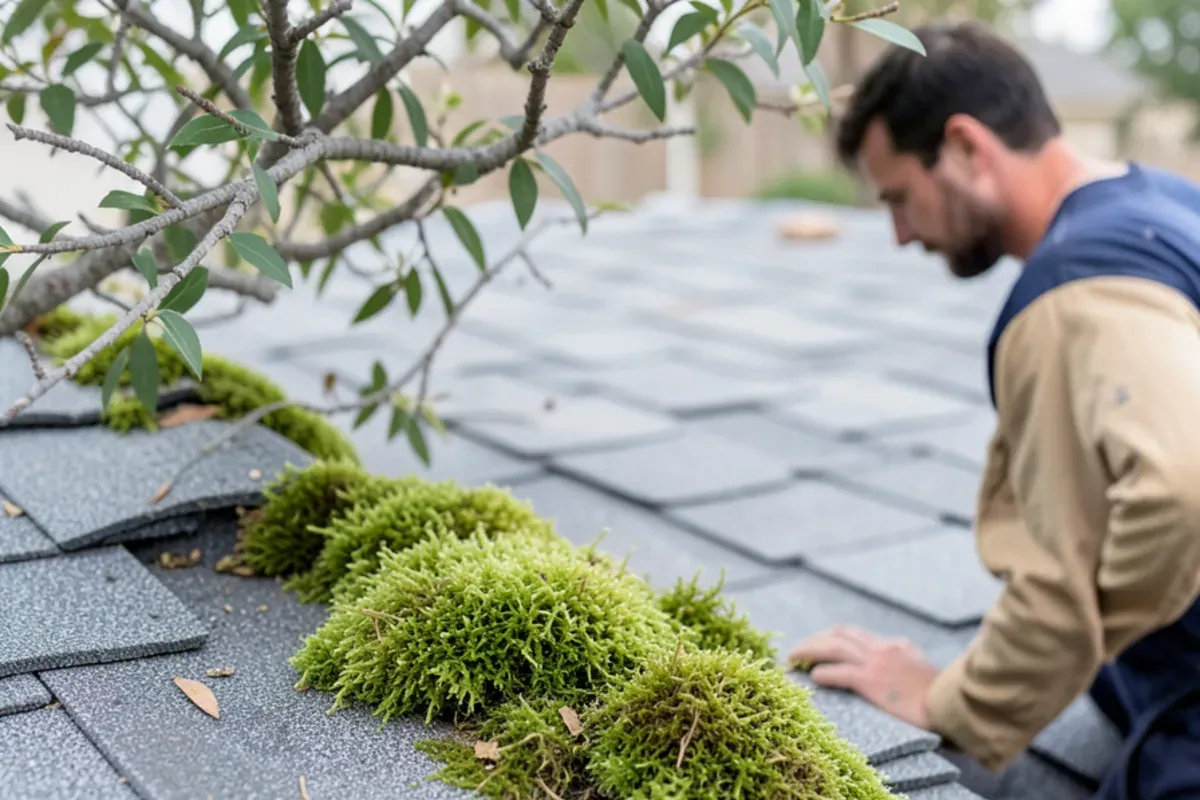
What does moss and algae removal include?
The order matters. Scraping dry moss is the fastest way to tear granules from a shingle, so treatment comes before removal. On a South Bay roof the scope depends on what is underneath: algae streaks on sound shingles need a light treatment, while a thick moss cushion on a north slope may need two visits. Tile and shingle get different solutions. A visit covers:
- Identifying the growth and photographing how far it has spread
- Clearing loose debris from valleys, eaves and behind chimneys
- A treatment matched to shingle, concrete tile or clay tile
- A gentle rinse and soft-brush lift once the growth has loosened
- A look at the surface underneath, with photos of wear
- A written note of the shade, branch or drainage cause
How moss and algae treatment runs, step by step
The steps run like this:
- Identify and photograph. We confirm what is growing and how far it has spread, and look at the shingle or tile underneath.
- Clear loose debris. Leaves and needles come off by hand and blower so the treatment reaches the surface.
- Apply a treatment. A solution suited to the roofing goes on at low pressure and sits to kill the growth. Planters are covered or wetted first.
- Rinse and lift. Once the growth has loosened, a gentle rinse and soft brush lift it off. Heavy moss may need a second pass.
- Check what was underneath. You see photos of any worn, curled or cracked areas.
We clean up thoroughly and protect landscaping and driveways. Wash water should not go to the storm drain. Check local rules with your city's stormwater program.
How is lichen on roof tile handled?
Lichen is the stubborn one. It sends tiny anchors into the surface, so it is slower to kill and harder to wash off than algae. On concrete tile, aggressive scrubbing removes the colored top layer along with it. On clay tile, the wrong chemistry can leave a pale patch.
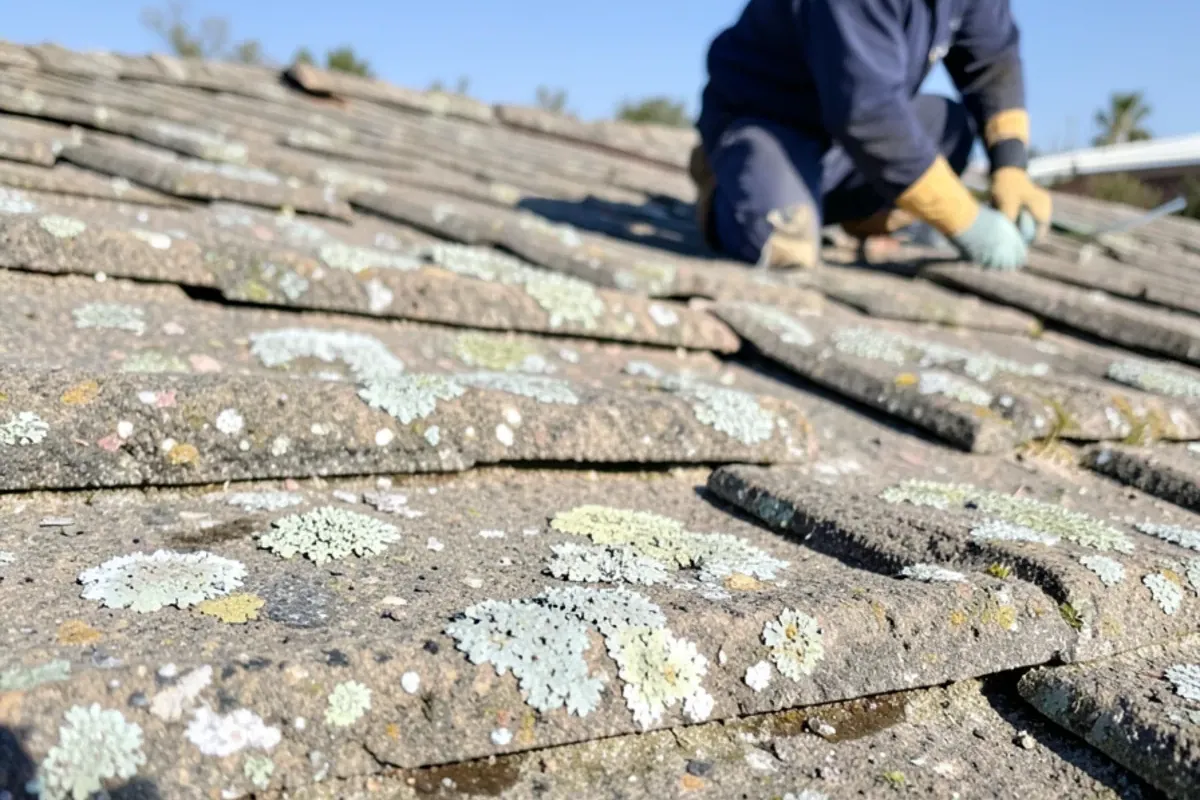
We start with the gentlest method and judge the result in daylight. Some staining fades over weeks. If tile is already cracked or slipping, the cleaning visit also surfaces that, and you can read more on our tile roof repair page.
Moss damage versus cosmetic staining
| What you see | Cosmetic or damaging | What we usually do |
|---|---|---|
| Thin black algae streaks | Mostly cosmetic, adds to granule wear | Low-pressure treatment and rinse |
| Green moss along eaves and tab edges | Can damage: holds water, lifts tabs | Treat, gently lift, check the shingle below |
| Thick moss over curled or bare shingles | Damaging, often a sign of age | Photos, repair or replacement options |
| Lichen crust on tile | Mostly cosmetic, hard to remove | Gentle treatment, patience, honest expectations |
What decides the price of moss removal?
We give free estimates and do not post prices. The number moves with:
- How much of the roof is affected and how thick the growth is, since heavy moss may need a second pass after it dies back
- Shingle or tile, and the pitch and height
- Whether branches or debris need clearing first
- Access to shaded side yards, where staging is tight
- Whether a prevention strip or follow-up wash is part of the plan
- Any repair the growth was hiding, priced as a separate line
Lichen on tile costs more time than loose moss on shingle, because it is treated gently and judged over weeks. Compare estimates by what each one includes.
What rules apply to treating roof moss in Torrance?
Treating a roof is not usually a permitted job, but repairs underneath can be, so confirm with Torrance Building & Safety at (310) 618-5910. Moss and algae treatments are pesticide products in California, and the label is the legal direction for use, including rinse and runoff instructions; the California Department of Pesticide Regulation oversees them. Municipal stormwater programs in Los Angeles County cities generally keep anything but clean rain out of the storm drain, so ask the city about your address. Zinc and copper strips also shed metal ions into runoff.
Check any contractor on the Contractors State License Board site. California requires a license for jobs of $1,000 or more in labor and materials, and a repair found under the moss can pass that mark.
Why Crown Trim for moss and algae removal?
- Reviewers rate us 4.8 stars across 73 Google reviews.
- Estimates and roof inspections are free.
- You see photos of the growth and of what is underneath it.
- We serve homes, apartments, HOAs and commercial buildings.
- We explain repair and replacement options in plain terms, and a repair comes first when it will do the job.
- We protect landscaping and driveways and clean up thoroughly.
- Same day or next day visits are available.
How do you stop algae from returning?
Think of it as keeping the roof dry and clean. Trim branches that touch or shade it. Clear leaves from valleys before the rain starts in November. Keep gutters flowing, since overflow soaks the eaves. A zinc or copper strip along the ridge helps on shingles, and an annual look from the ground or a full roof inspection catches regrowth early. If a roof is being replaced anyway, algae-resistant shingles are worth asking about. Airflow matters as well, since a damp attic keeps the underside of the deck wet, so see attic ventilation repair.
We treat roofs across the South Bay, including Carson, Redondo Beach and Rancho Palos Verdes. Beach-side roofs get salt and damp air, and Peninsula roofs sit under mature trees, so the growth we find varies by street. For the wider picture, read about salt air and roofs in the beach cities.
Where we do moss & algae removal around Torrance
Each place brings its own version of this job.
- Palos Verdes Estates: Red clay and concrete tile under old canopy near Malaga Cove grows lichen and moss slowly, and the Art Jury reviews visible exterior changes.
- Rancho Palos Verdes: Peninsula slopes under pines and eucalyptus stay damp on the north side, and fog drip from the trees keeps the growth fed.
- Redondo Beach: South Redondo bungalows catch marine-layer damp and salt, so north slopes and eaves hold algae and green film longest.
- Hermosa Beach: Narrow lots with shared walls shade one slope most of the day, and that shaded side is where moss starts.
- Rolling Hills Estates: Ranch homes under mature trees on larger lots get needle and leaf litter in valleys that feeds moss along the north side.
- Seal Beach: Old Town cottages face direct salt air and morning damp, which favors algae on shaded shingle and tile surfaces.
- View Park-Windsor Hills: Hillside homes with mature trees and low-pitched roofs hold leaf litter and moisture in the places moss likes.
- Downey: Large post-war ranch homes under mature tree canopy keep roofs shaded and gutters full, so moss and algae follow.
- South Pasadena: Craftsman bungalows under dense canopy with steep roofs and clogged valleys are where moss and heavy streaking usually set in.
- Carson: Tract homes on aging composition roofs have worn granules that give algae a foothold on north-facing slopes.
What customers say about this work
Crown Trim Roofers holds 4.8 stars from 73 Google reviews. Read all reviews
“We had our roof in Torrance cleaned by a local roofing company, and they did an amazing job removing all the moss and algae without causing any harm to our shingles.”
“Jack did a careful roof inspection to find where the leak was coming from, both inside the house and up on the roofing system.”
“jack responded fast, inspected the roof carefully, and explained everything in simple terms while sharing photos of what he found.”
Moss & Algae Removal: common questions
Why does moss grow on the shaded side of a South Bay roof?
Moss needs moisture more than anything. The north and east slopes get the least direct sun, so the marine layer's morning damp, dew and the occasional rain stay put there long after the south slope has dried. Overhanging branches add shade and drop debris that acts like a sponge. Take the shade or the debris away and the growth slows.
Does moss damage shingles or is it only cosmetic?
It is more than cosmetic once it thickens. Moss holds water against the shingle, lifts tab edges and can push moisture under laps. Algae streaks alone are mostly a looks and granule-wear problem. Either way, scraping it off dry can pull granules with it, which is why we treat first and remove gently.
How do you keep algae from coming back?
By changing the conditions, then adding a barrier where it makes sense. We trim back branches where we can, clear the debris that holds water and fix any slow drainage. A zinc or copper strip near the ridge can discourage regrowth on shingles. Algae-resistant shingles are also an option when a roof is replaced. See our roof cleaning page for the follow-up wash.
Is moss and algae removal safe for tile?
It is if the method is gentle. Tile cracks under footsteps and loses surface color under hard jets, so we use low pressure, a treatment that suits the tile type and a planned path across the roof. Lichen takes longer, because it grips the surface. We tell you honestly if some staining will fade rather than vanish.
Can moss tell me my roof needs replacing?
Sometimes. Thick moss over worn or curling shingles often means the roof is near the end of its life, and removing the moss will show you what is underneath. We show photos and compare repair with replacement in plain terms. Our guide on repairing or replacing a roof lays out the decision.
Related services and guides
Attic Ventilation Repair
Attic Insulation
Moss and Algae on Coastal Roofs: Prevention Guide
Signs of Poor Attic Ventilation in a Torrance Home
Get Your South Bay Roof Ready Before November Rain
Where we work: Carson, Redondo Beach, Rancho Palos Verdes, Gardena and the rest of our service areas.
Green or black patches spreading? Have us take a look.
Call first. A roofer picks it up from there.