
Roofing Contractor in San Gabriel, CA
- 4.8★ from 73 Google reviews
- Free estimates
- Same day or next day service
- Photos of what we find
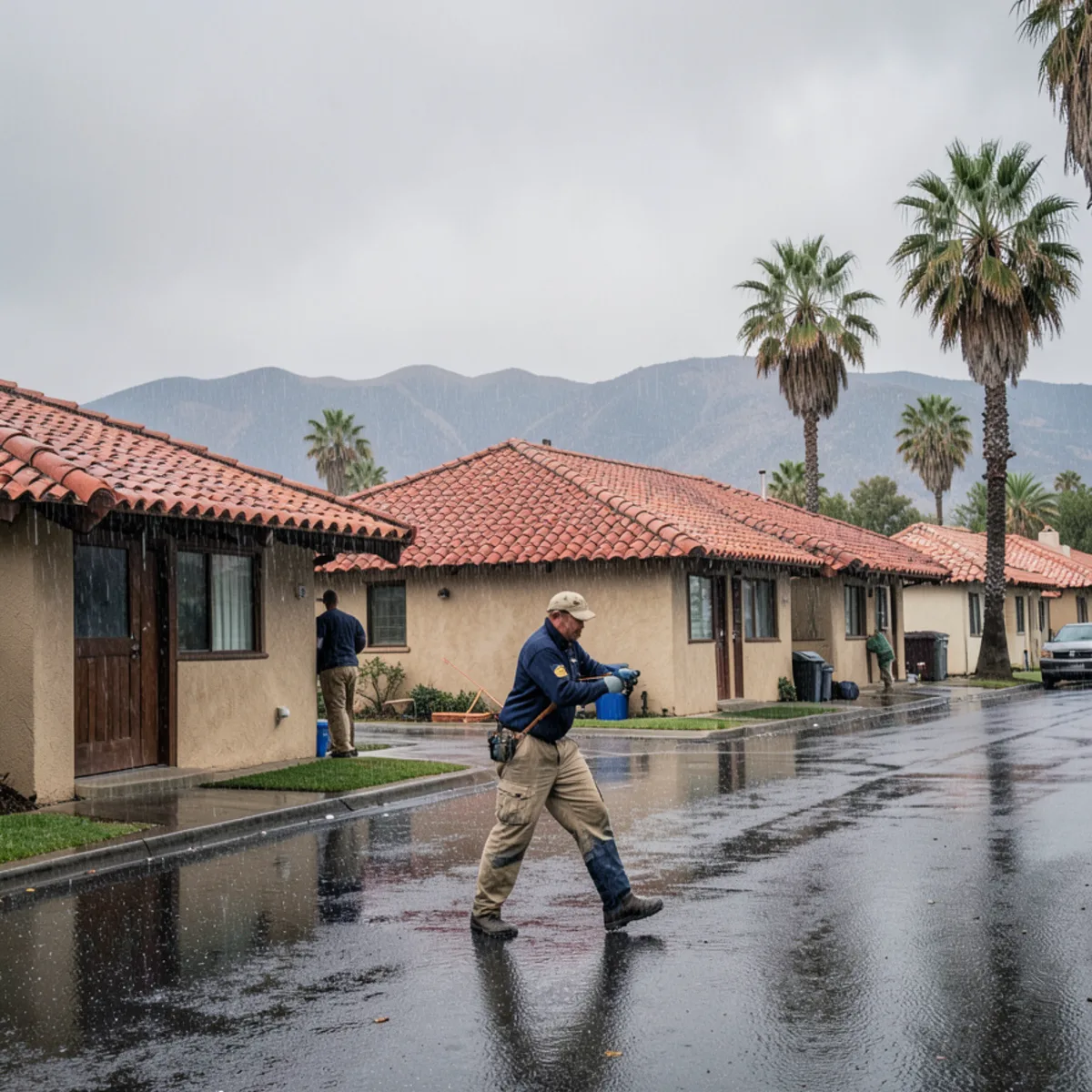
Our Pacific Coast Highway location is about 32 miles and 60 minutes from San Gabriel. The city grew around Mission San Gabriel Arcángel, founded in 1771, and its older neighborhoods show it: Spanish-revival stucco homes with red clay tile, small bungalows, and commercial strips along Valley Boulevard and San Gabriel Boulevard. Few cities have such a mix of old tile, old decks and strip-center flat roofs.
Roof work San Gabriel's older homes call for
Calls here involve tile matching, flashing leaks, drainage and upkeep.
Roof Replacement
Mid-century roofs and old clay tile systems can reach a point where a new underlayment and roof is wiser than repeated repairs. We open a sample area, photograph the deck and explain it.
Roof Repair
Slipped clay tiles and cracked flashing on older Spanish-style homes can often be repaired and matched, so a leak at one valley does not turn into a whole new roof.
Tile Roof Repair
Barrel and S-tile roofs on 1920s and 1930s homes lose tiles to wind, foot traffic and tree limbs. We reset the good ones and replace broken ones with the closest profile available.
Ridge Cap Repair
Mortar-set ridge and hip caps on older tile roofs crack as the house settles and the sun bakes the joints. Rebedding the caps stops water from running into the attic.
Tile Roof Underlayment Replacement
Underneath San Gabriel's older clay tile, felt underlayment has often outlasted its design life. Lifting the tile, replacing the layer and relaying the same tile keeps the look.
Chimney Flashing & Sealing
Brick chimneys are common on 1920s to 1950s homes here, and the flashing around them is a classic leak after the first heavy winter storm. Resealing it is a repair.
Gutters & Fascia
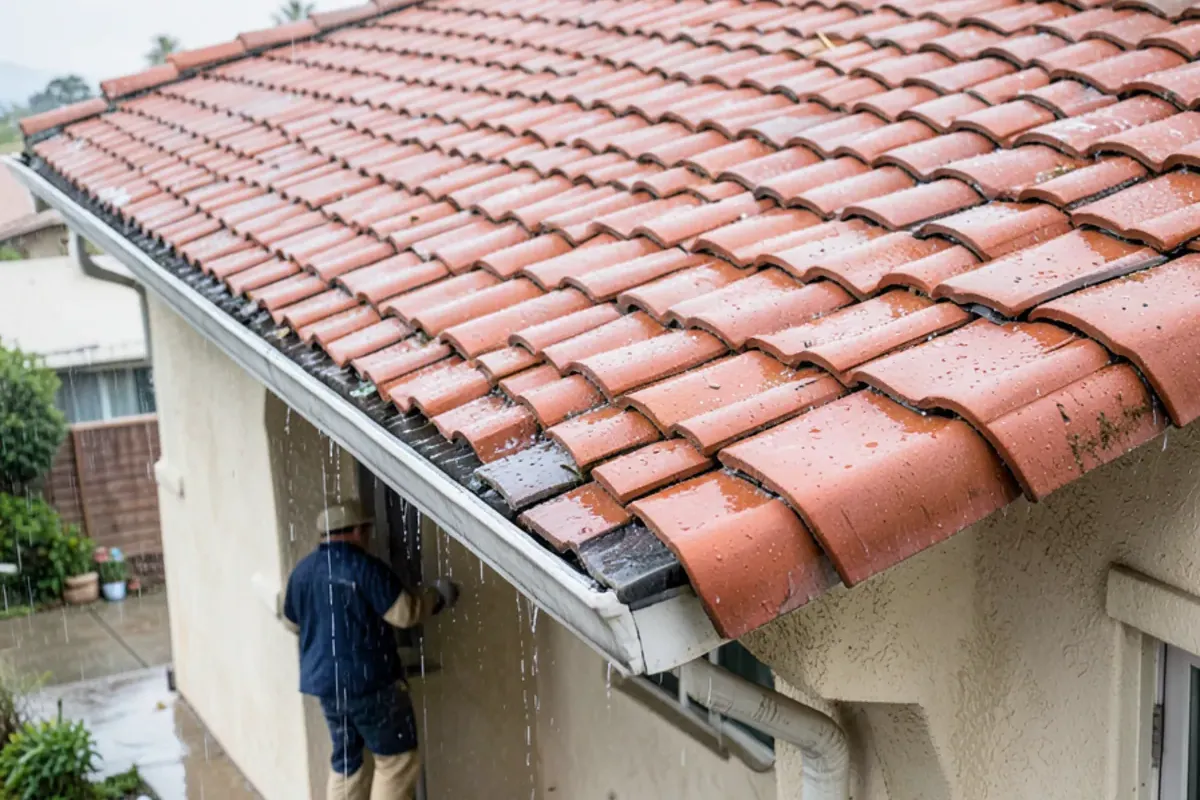
Gutters and downspouts on older homes with tile eaves need careful attachment so water clears the walls and does not wick into old stucco at the base.
Roof Inspection & Maintenance
A yearly check on aging tile, flashing and strip-center roofs catches small problems before winter, when the first storm is hardest on a roof nobody has looked at.
What 1920s to 1950s homes mean for the roof
Older homes often carry roofs that have been added to many times. Under clay tile there may be felt underlayment that has outlasted its design life, with plank decks that were never built for modern materials. Bungalows from the 1940s and 1950s often have layered composition roofs on lightweight decking. When we remove old material we show you the deck, and any added repairs are explained before work. Our tile underlayment guide explains why the layer below the tile matters.
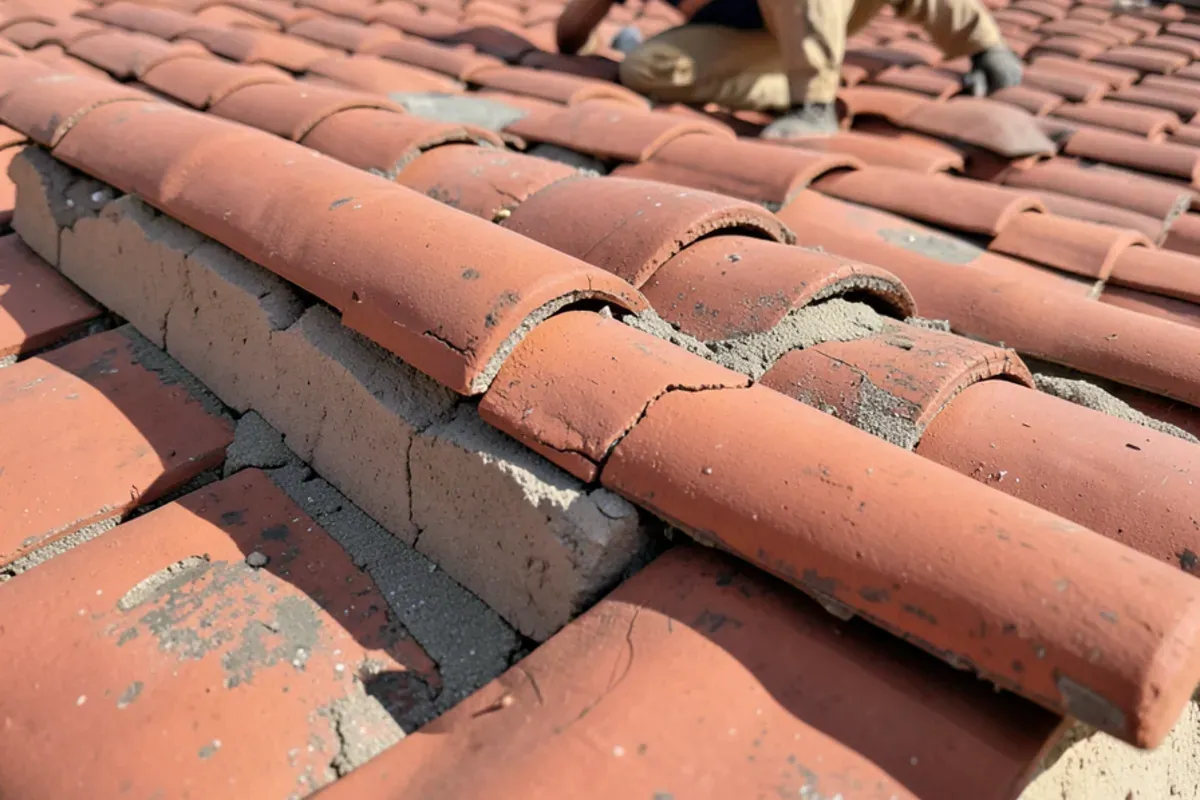
Mortar-set clay ridges and what resetting involves
On many Spanish-style roofs the ridge and hip caps are bedded in mortar. As the house settles and the sun bakes the joints, the mortar cracks and the caps shift. Water follows the crack into the attic, often well before a stain shows below. Fixing it means lifting the caps, clearing old mortar, checking the ridge board and the underlayment beneath, and bedding the caps back in place. Replacement caps are sometimes hard to match, so we ask about salvage options early. This is repair work, and our ridge cap repair page explains it step by step.
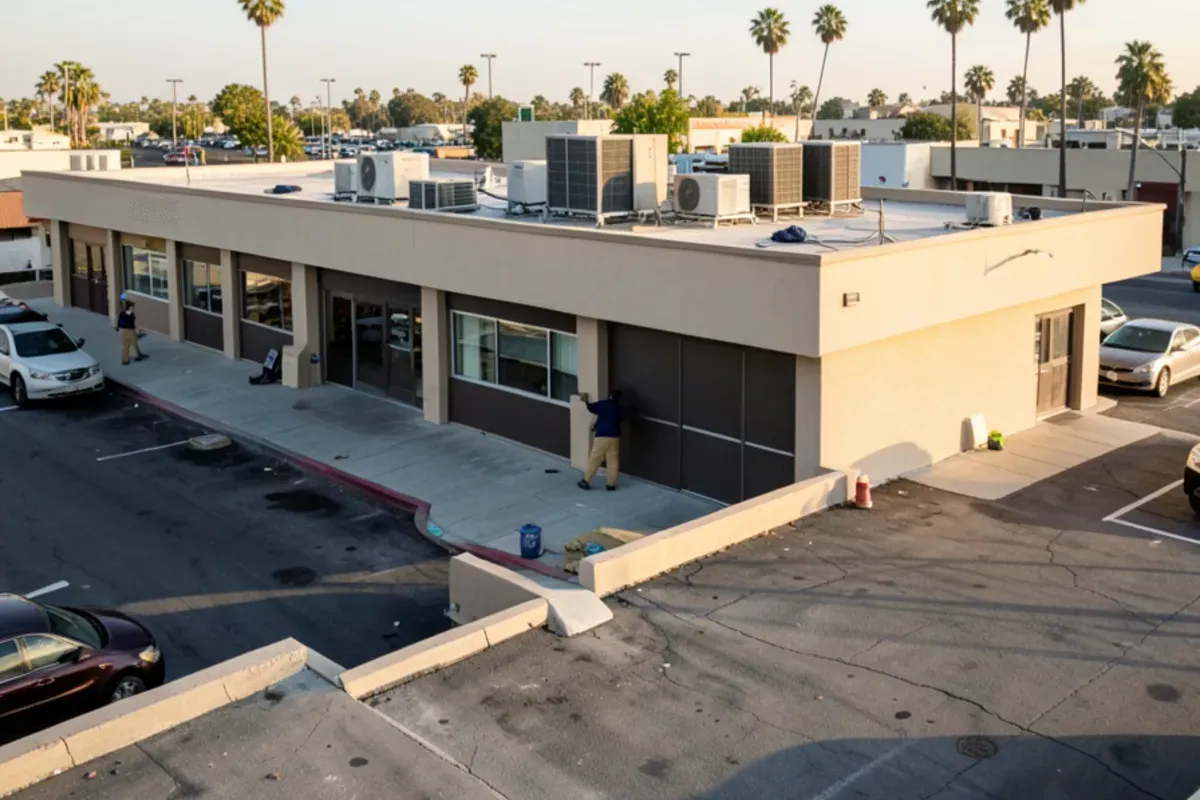
Valley Boulevard strips and the San Gabriel permit counter
Along Valley Boulevard, one-story shop rows use low-slope roofs with parapets and rooftop units. Seams, drains and flashing at those units are the usual leak points. Permits run through the city and not the county in San Gabriel, which is incorporated; our Los Angeles County service area page explains the pattern. The permit side of a re-roof is handled by us. Historic or mission-adjacent properties may have extra design rules, so check with the city.
Brick chimneys and old penetrations on 1920s homes
Older San Gabriel houses often have brick chimneys, wall-furnace flues and wood attic vents cut through roofs that have been redone several times. Each is a penetration, and each depends on flashing that was probably replaced once or twice. Counter-flashing set into mortar joints can open as the brick weathers. We look at them from the roof, photograph the joints and tell you whether a reseal will hold or the flashing should be rebuilt. Our chimney flashing leak guide shows the signs from inside the house.
A San Gabriel visit from Torrance
Same day or next day service is scheduled after you call, for a free estimate or roof inspection. Winter rain is the pressure point here, since old tile roofs can leak at flashing before the rain stops. Photos come first, then the nearest match to the tile already up there, and a thorough cleanup. On a strip-center roof we also check how rainwater drains toward the parapet scuppers, since a clogged scupper after the first storm of the season is a common cause of leaks on Valley Boulevard rows. Our slipped roof tiles guide helps you decide what to do while you wait.
Our base and how to reach us from San Gabriel
Crown Trim Roofers, 2765 Pacific Coast Hwy, Torrance, CA 90505. Approximate drive: about 60 min (32 mi).
Roofing questions from San Gabriel
Can you repair old clay tile roofs on San Gabriel Spanish-style homes?
Yes, often. Resetting or replacing cracked or slipped tiles is possible, with the closest match to your tile we can find. The real problem is usually the underlayment beneath older tile, which can wear out while the tiles still look fine. We inspect, photograph what we find and explain options. See our tile roof repair page.
How do older San Gabriel bungalows differ from newer homes for roofing?
Homes from the 1920s to 1950s often have lower-cost original framing, older decking, and layers of past roofing. Boards may be thinner or spaced, which can affect the nails and underlayment we use. We inspect the deck as the roof comes off and show you photos before any added repair is done.
Nearby areas we serve
More in Los Angeles County and across all service areas.
Old tile or bungalow roof? Book a free inspection.
Crown Trim Roofers · 2765 Pacific Coast Hwy, Torrance, CA 90505 · (209) 563-1278